
A River Landscape With Figures In A Boat By A Lock — History & Facts
Is this a mirror — or a memory? In A River Landscape With Figures In A Boat By A Lock, the tranquil waters evoke a sense of nostalgia, as if the scene captures fleeting moments now forever lost. Look to the right at the gentle curve of the river, where the soft brushstrokes create ripples that dance with the light. Notice how the figures in the boat are positioned just off-center, their subtle gestures and expressions communicating a silent connection. The use of greens and blues in the foliage and water reflects a serene harmony, while the occasional dash of warm color enhances the emotional depth.
The composition draws the viewer's eye along the water's path, guiding us not just through the landscape, but through a shared memory of companionship and tranquility. Yet, there is a contrast inherent in this scene; the stillness of the water belies an undercurrent of impermanence. The figures, seemingly at peace, hint at the inevitability of change — perhaps they are on an adventure that could lead to separation or loss. The quietness of the moment is tinged with the weight of what lies beyond, suggesting that even in beauty, life's transience lingers like an echo in the distance. Created during a period of artistic exploration in the mid-19th century, this work emerged from Watts's engagement with the natural world and its ability to evoke deeper emotional truths.
Living in England, he painted this piece amidst the Romantic movement, which sought to connect human emotion with nature's beauty. The era was marked by rapid industrialization, prompting artists like Watts to retreat into the reverent quiet of landscapes, where artistry intertwined with reflection on life's fragility.
More Artworks by Frederick Waters Watts
Browse all →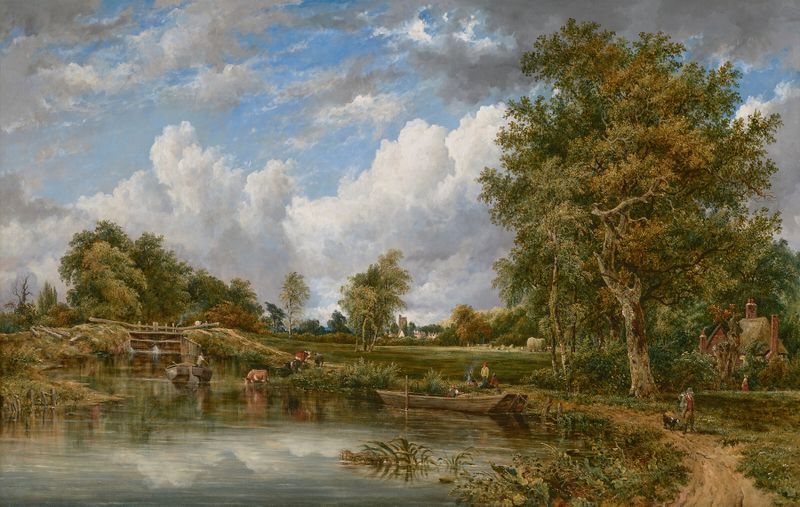
Dedham Lock on the River Stour
Frederick Waters Watts

A View in Suffolk
Frederick Waters Watts

Landscape with Cottages
Frederick Waters Watts

Haymakers Resting
Frederick Waters Watts

A wooded landscape with a cattle and cottage beyond
Frederick Waters Watts
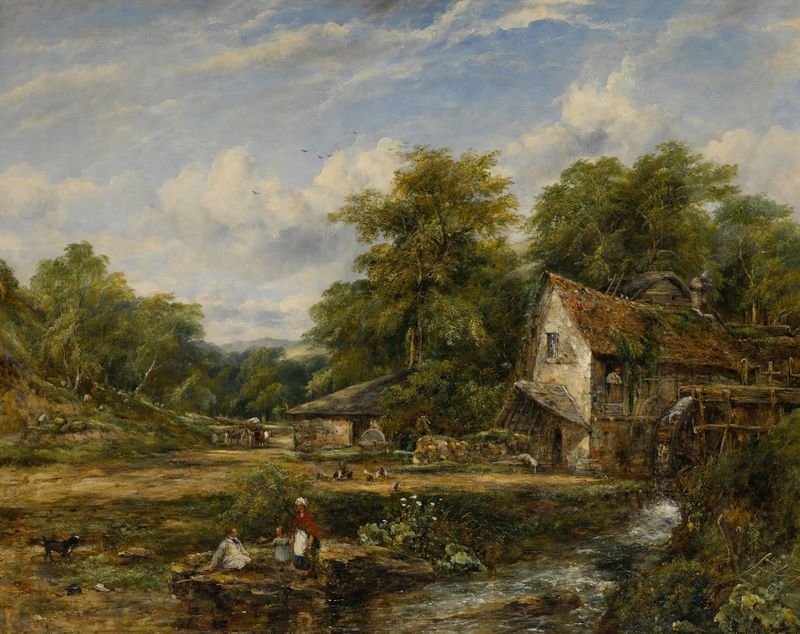
The Watermill
Frederick Waters Watts

A View near Canterbury
Frederick Waters Watts

An Old Bridge at Hendon, Middlesex
Frederick Waters Watts

Rocky Hillside
Frederick Waters Watts
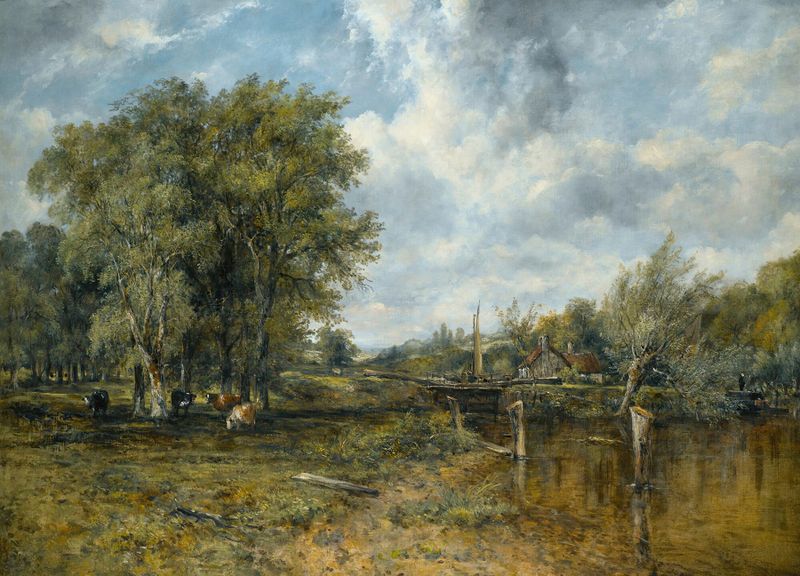
A Wooded Landscape With Cattle And A Cottage Beyond
Frederick Waters Watts





