
Haymakers Resting — History & Facts
Is this a mirror — or a memory? In Haymakers Resting, the stillness of the moment invites contemplation, as the laborers pause, allowing us to glimpse their world of toil and respite. Look to the center where a group of men, weary from their work, recline on the lush grass. The earthy tones of their clothing, touched with hints of ochre and olive, contrast beautifully against the vibrant greens of the landscape. Notice how the soft sunlight filters through the trees, casting dappled shadows that dance across their forms, lending a sense of tranquility to their ruggedness.
The composition draws the viewer’s eye from the foreground figures to the expansive sky above, creating a serene connection between earth and heaven. In this tableau, the juxtaposition of labor and rest speaks to the relentless cycle of work and the preciousness of downtime. The men, with their muscular frames, embody strength, yet their relaxed poses hint at vulnerability and the fleeting nature of life. The quietude is amplified by the distant horizon, which symbolizes both the promise of another day’s labor and the eternal passage of time.
Here, reflection intertwines with memory, inviting deeper contemplation on the satisfaction found in both effort and stillness. Frederick Waters Watts painted Haymakers Resting during a period when rural life was increasingly romanticized in art. Created in the 19th century, as industrialization began to reshape society, Watts sought to capture the essence of agrarian life, celebrating the dignity of laborers. His work reflects a broader movement in art towards realism and sentimentality, as artists endeavored to portray authentic human experiences amidst changing times.
More Artworks by Frederick Waters Watts
Browse all →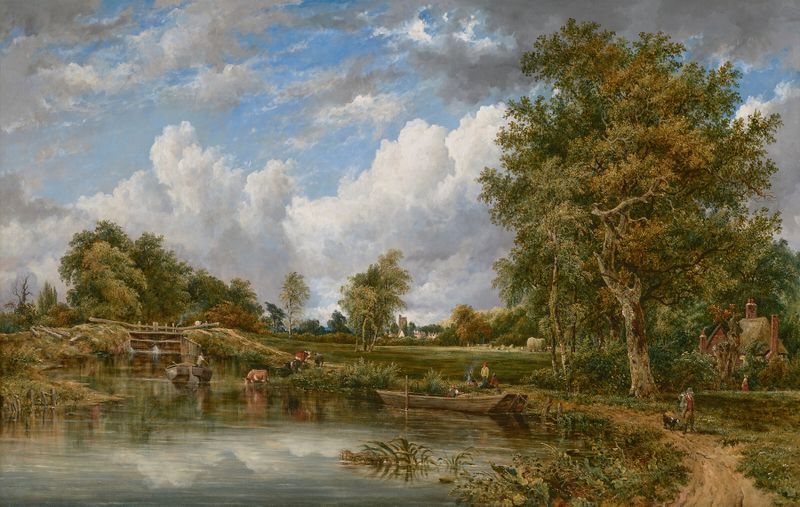
Dedham Lock on the River Stour
Frederick Waters Watts

A View in Suffolk
Frederick Waters Watts

Landscape with Cottages
Frederick Waters Watts
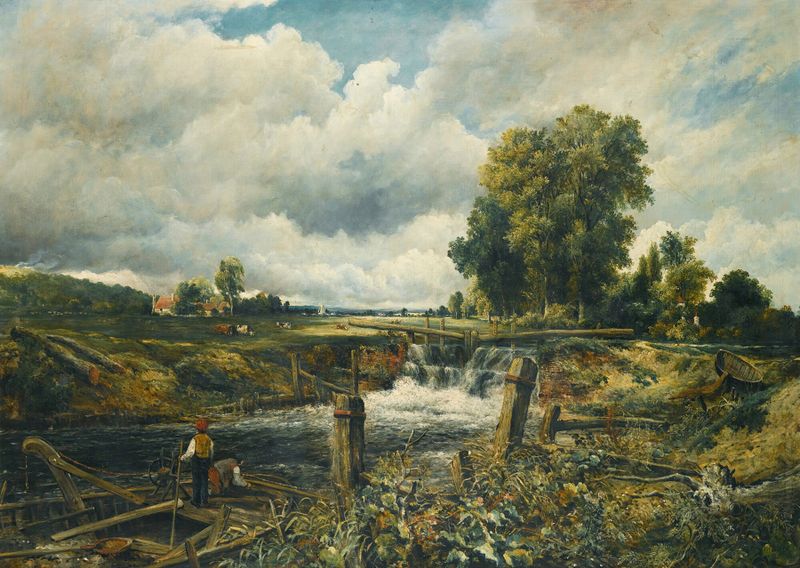
A River Landscape With Figures In A Boat By A Lock
Frederick Waters Watts

A wooded landscape with a cattle and cottage beyond
Frederick Waters Watts
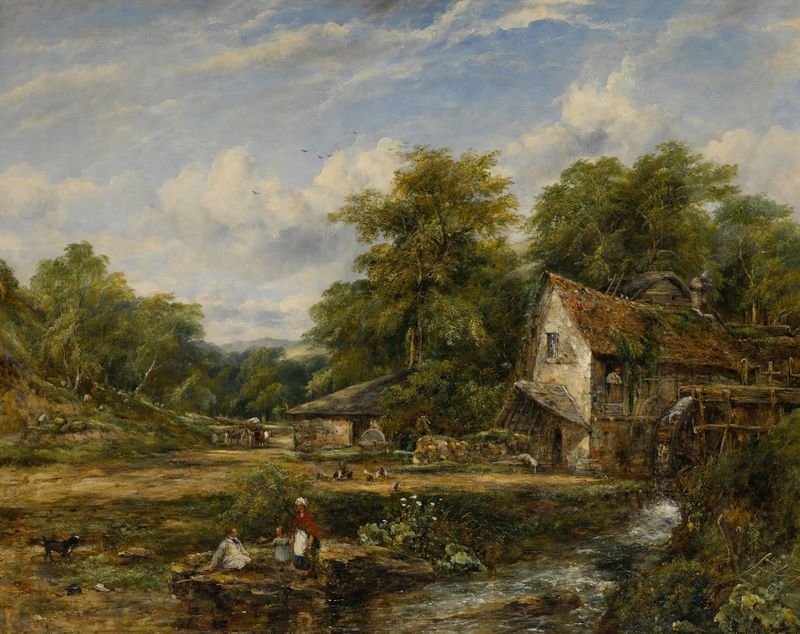
The Watermill
Frederick Waters Watts

A View near Canterbury
Frederick Waters Watts

An Old Bridge at Hendon, Middlesex
Frederick Waters Watts

Rocky Hillside
Frederick Waters Watts
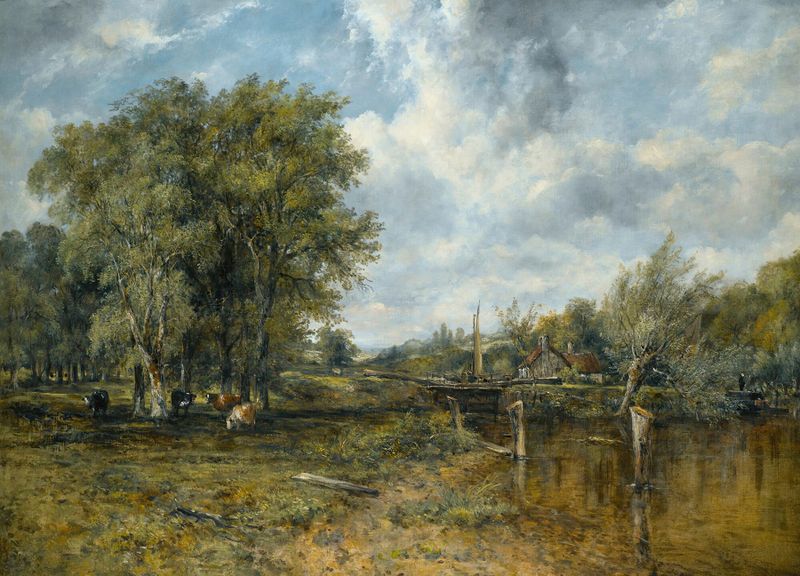
A Wooded Landscape With Cattle And A Cottage Beyond
Frederick Waters Watts





