
A View near Canterbury — History & Facts
Could a single brushstroke hold eternity? In A View near Canterbury, the longing for connection and the essence of desire resonate through the tranquil landscape. To begin your exploration, look to the foreground, where a gentle river meanders, its surface shimmering with hints of sunlight. Notice how the soft greens and blues blend seamlessly in a harmonious palette, inviting the viewer into a serene moment. The meticulous brushwork reveals the artist’s intimate relationship with nature, creating a sense of depth and texture that pulls you into the scene.
The distant trees stand like sentinels, their silhouettes softened by the haze of the setting sun, while wispy clouds float lazily in the vast sky above. Yet, beneath this idyllic exterior lies a subtle tension. The tranquil landscape hints at an unfulfilled yearning—perhaps the desire for a life lived in full embrace of beauty and peace. The river’s winding path suggests a journey, evoking the feeling of searching for something just out of reach.
This interplay of tranquility and longing invites introspection, prompting viewers to reflect on their own desires and the landscapes of their lives. Frederick Waters Watts painted this work during his career as a prominent member of the British landscape tradition in the mid-19th century. While the exact date remains unclear, it aligns with a period when artists sought to capture the essence of nature and evoke emotional responses. Amidst a backdrop of industrial change, Watts turned to pastoral scenes, celebrating the beauty of the English countryside and echoing the Romantic ideal of finding solace in nature.
More Artworks by Frederick Waters Watts
Browse all →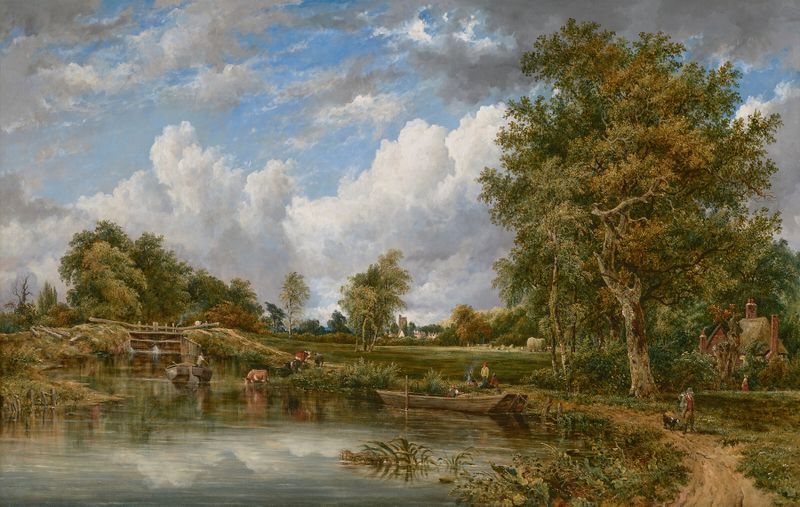
Dedham Lock on the River Stour
Frederick Waters Watts

A View in Suffolk
Frederick Waters Watts

Landscape with Cottages
Frederick Waters Watts
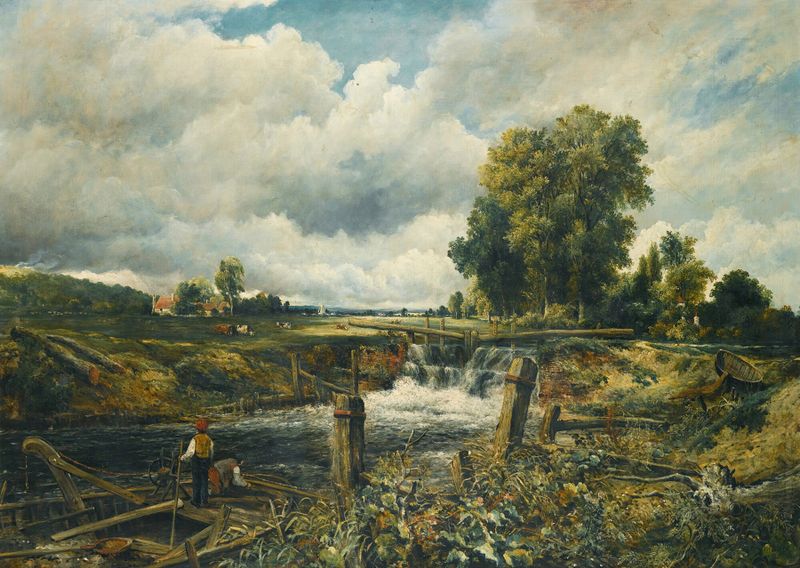
A River Landscape With Figures In A Boat By A Lock
Frederick Waters Watts

Haymakers Resting
Frederick Waters Watts

A wooded landscape with a cattle and cottage beyond
Frederick Waters Watts
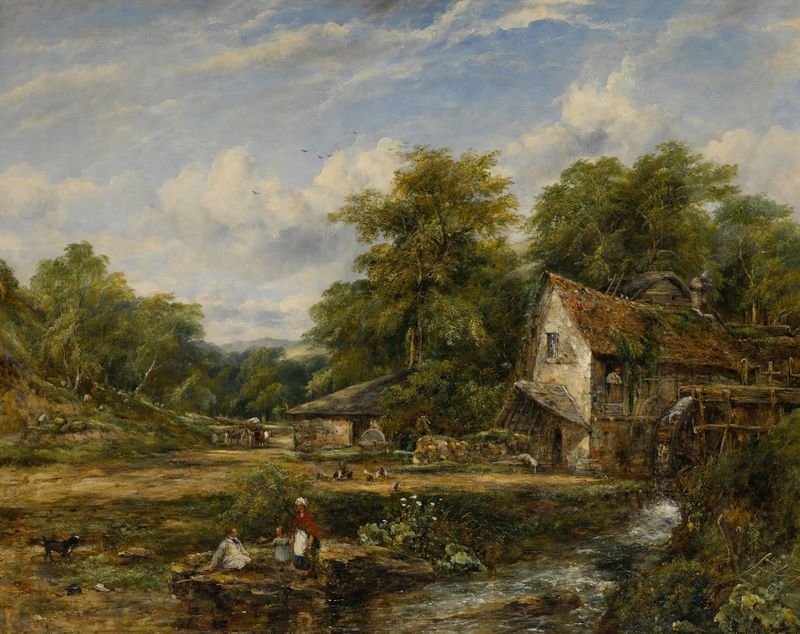
The Watermill
Frederick Waters Watts

An Old Bridge at Hendon, Middlesex
Frederick Waters Watts

Rocky Hillside
Frederick Waters Watts
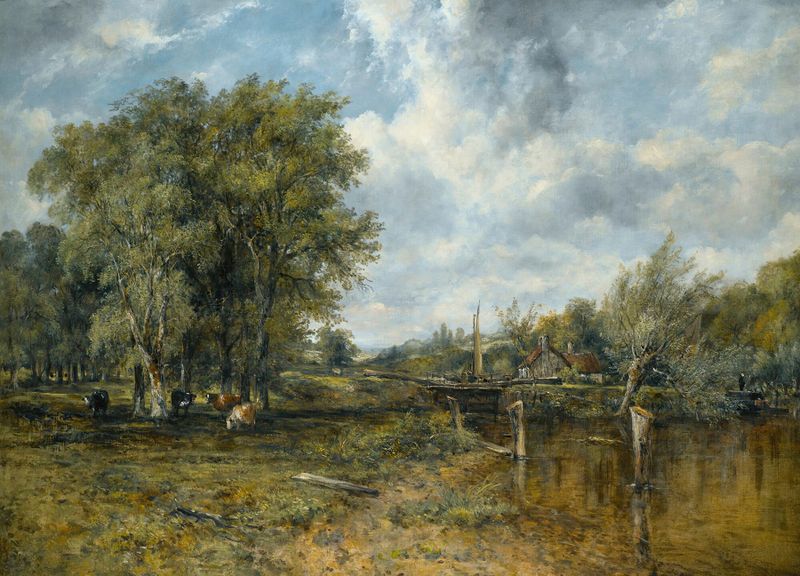
A Wooded Landscape With Cattle And A Cottage Beyond
Frederick Waters Watts





