
The Watermill — History & Facts
Can paint confess what words never could? In The Watermill, the stillness of the flowing water whispers the secrets of passing time, inviting contemplation on the fragility of existence. Look to the left at the sturdy structure of the watermill, its weathered wood bathed in soft sunlight, juxtaposing the vibrant greens of the surrounding foliage. The gentle fall of water cascades in rhythmic serenity, drawing your gaze toward the reflections shimmering on the surface below. Notice how the painter expertly employs a palette of earth tones, with delicate touches of blue and white, creating a tranquil harmony that envelops the scene and speaks to the cycles of life and decay. Yet, it’s the subtle contrast between the vibrant life surrounding the mill and the inevitable stillness of the water that ignites deeper reflection.
The water, both a symbol of life and a harbinger of change, evokes the passage of time—a reminder that nothing remains untouched by its current. Every brushstroke pulsates with the tension between nature's vitality and the quiet acceptance of mortality, as the viewer is compelled to ponder their own transience in this serene yet poignant landscape. Frederick Waters Watts created The Watermill during a period of personal introspection in the late 19th century. Living in England, he was part of the Victorian movement that sought to blend naturalism with romanticism.
This work reflects the era’s fascination with nature, industry, and the deeper philosophical questions about life and death, mirroring both Watts's individual struggles and the wider cultural dialogues of his time.
More Artworks by Frederick Waters Watts
Browse all →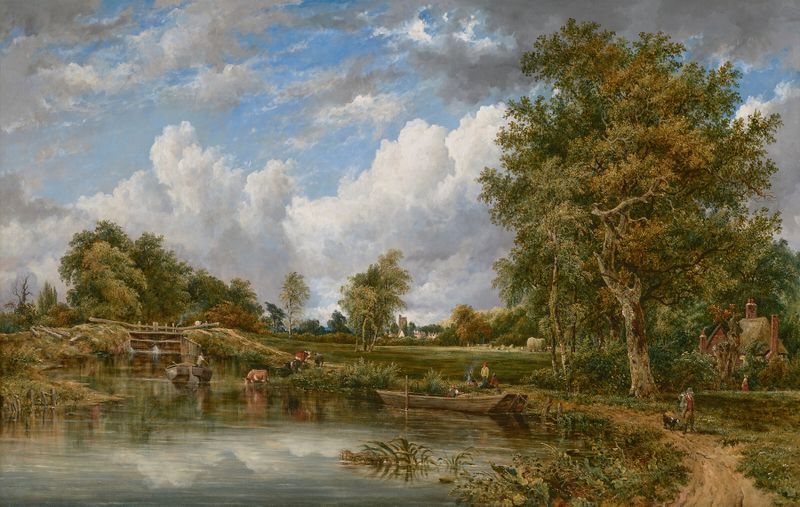
Dedham Lock on the River Stour
Frederick Waters Watts

A View in Suffolk
Frederick Waters Watts

Landscape with Cottages
Frederick Waters Watts
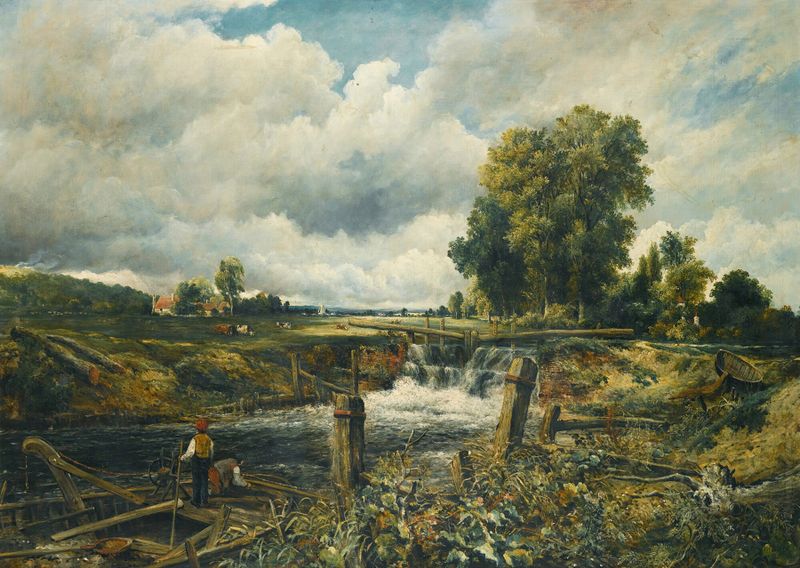
A River Landscape With Figures In A Boat By A Lock
Frederick Waters Watts

Haymakers Resting
Frederick Waters Watts

A wooded landscape with a cattle and cottage beyond
Frederick Waters Watts

A View near Canterbury
Frederick Waters Watts

An Old Bridge at Hendon, Middlesex
Frederick Waters Watts

Rocky Hillside
Frederick Waters Watts
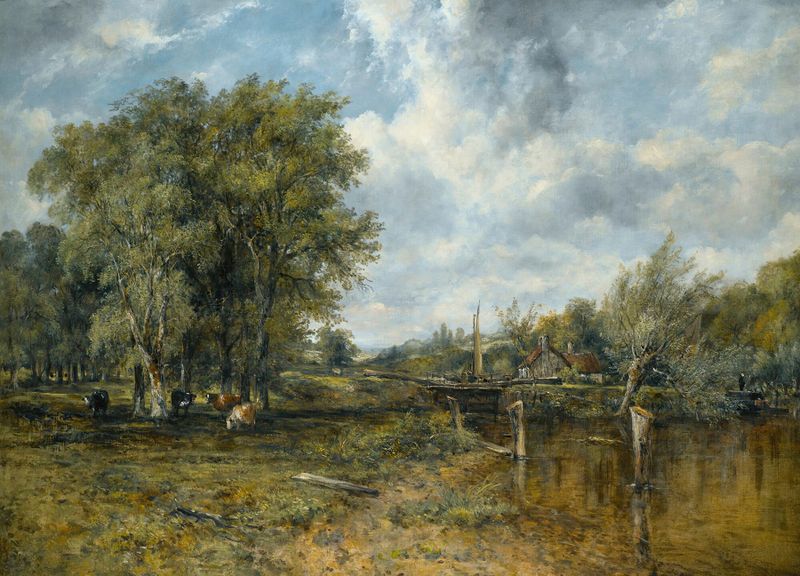
A Wooded Landscape With Cattle And A Cottage Beyond
Frederick Waters Watts





