
A Scene in Ancient Rome: A Setting for Titus Andronicus, I, ii — History & Facts
Can paint confess what words never could? In A Scene in Ancient Rome: A Setting for Titus Andronicus, I, ii, desire reverberates through time, casting shadows across a stage draped in history and emotion. Focus on the vibrant hues that bring the scene to life: the rich reds and deep blues depict the opulence of ancient Rome, inviting the viewer to explore the intricacies of the landscape. Notice how the light falls upon the statues and architecture, illuminating their details while shrouding others in mystery. The composition elegantly guides your gaze toward the central figures, hinting at the tension that breathes between them. Beneath the surface of this bustling setting lies a profound contrast between grandeur and vulnerability.
The looming architecture symbolizes power, yet the expressions of the figures reveal an undercurrent of longing and despair. Small gestures—a turned head, a clenched fist—speak volumes about the desires that propel the narrative forward, suggesting that even in the heart of civilization, the human spirit remains ensnared in its own complexities. Joseph Michael Gandy painted this work in 1830 during a time when Romanticism was reawakening a fascination with the classical world. Living in England, he was inspired by the theatricality of ancient texts and the grandeur of past civilizations.
This piece exemplifies his interest in capturing not just a moment in history, but the emotional weight that accompanies it, positioning him as a pivotal figure in the dialogue between art and literature during this transformative period.
More Artworks by Joseph Michael Gandy
Browse all →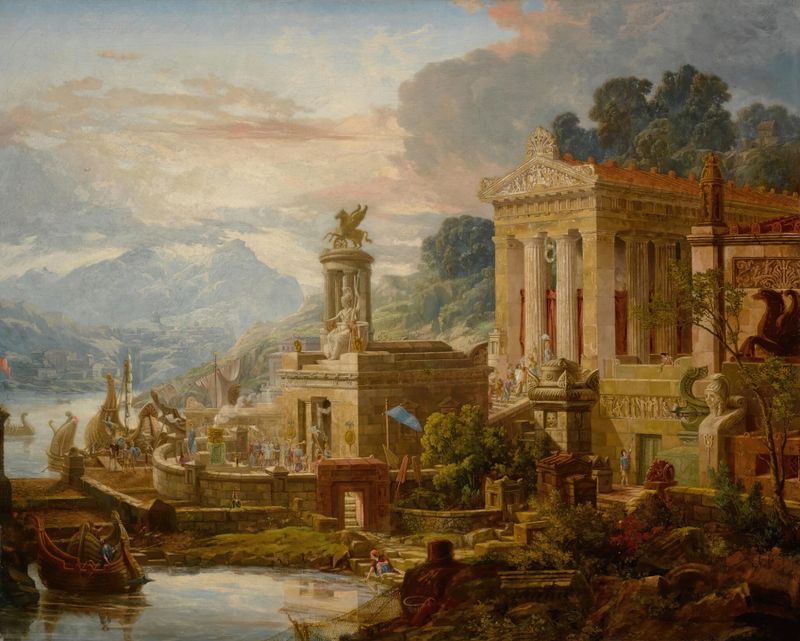
More Historical Art
Browse all →
The Night Watch Militia Company of District II under the Command of Captain Frans Banninck Cocq
Rembrandt van Rijn

Lincoln Memorial
Henry Bacon

The Third of May 1808
Francisco de Goya

Isaac and Rebecca, Known as ‘The Jewish Bride’
Rembrandt van Rijn

The Charge of the Mamelukes (1814)
Francisco de Goya

De vier ruiters van de apocalyps
Albrecht Dürer