
A scene in South Australia — History & Facts
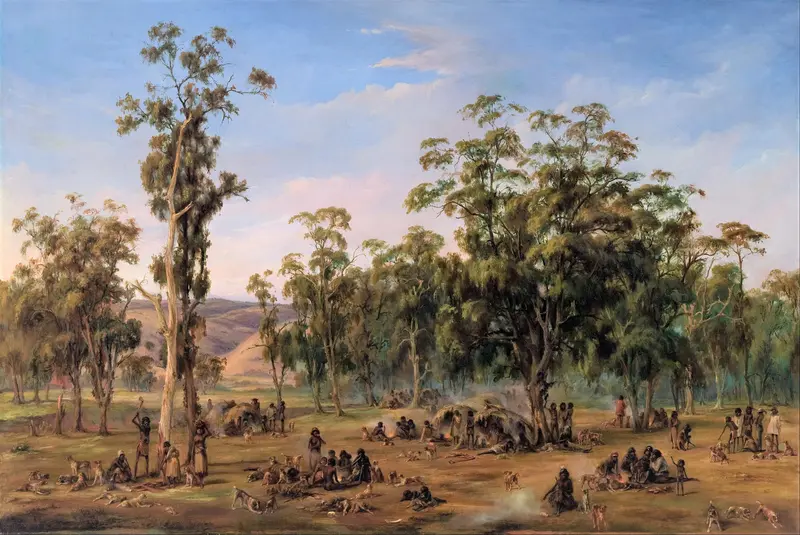
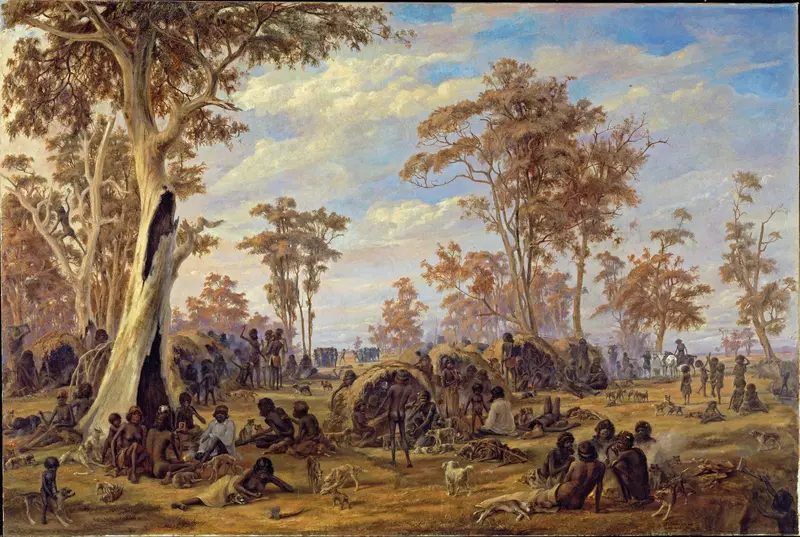
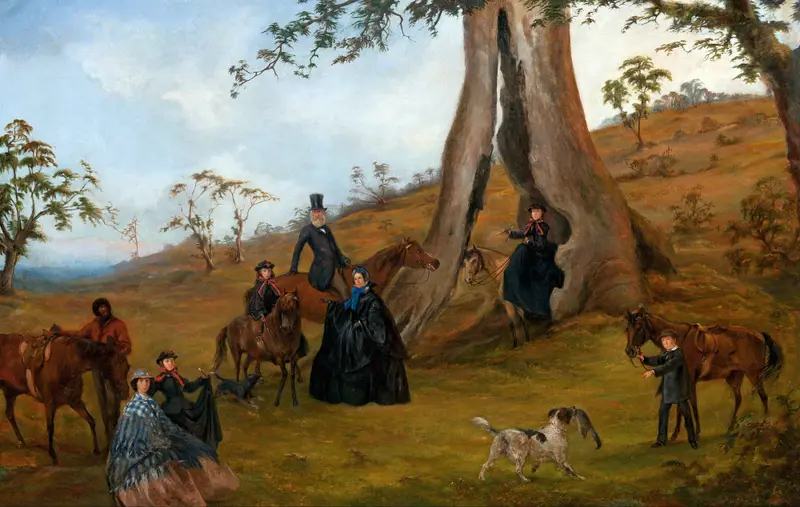
What first catches the eye in A scene in South Australia is its sense of encounter: two worlds, one colonial and one Indigenous, pressed together in a single, sunlit moment outside a thatched cottage. The artist, Alexander Schramm, draws us into a web of glances and gestures—some curious, some wary, some almost tender. The light falls cleanly on the white-walled house and the bright dresses of the settlers, but lingers just as carefully on the faces and furs of the Aboriginal figures, who form a gathering that is neither quite inside nor outside this new domestic space.
Dogs nose between the groups, a fire smolders in the foreground, and the whole scene is framed by the lush, untamed bush beyond the fence. Every detail seems chosen to heighten the sense of negotiation, of daily life lived on a threshold. Painted around 1850, this work belongs to a period when European artists in Australia were grappling with the realities and consequences of colonization. Such images were often created for settler audiences, recording or imagining moments of contact, and sometimes serving as tools of reassurance or curiosity about the colonial project.
Alexander Schramm was one of several artists who turned their attention to the changing landscapes and peoples of South Australia, though history has kept few traces of his career or intentions. The painting’s presence today—documented in a digital collection—invites us to look again at what is shown and what is left unsaid, to read the silent negotiations in every posture and shadow.
More Artworks by Alexander Schramm
More Genre Scene Art

Banquet of the Officers of the St George Civic Guard
Frans Hals

Rembrandt and Saskia in the Scene of the Prodigal Son
Rembrandt van Rijn

Bal du moulin de la Galette
Pierre-Auguste Renoir

Quadrille at the Moulin Rouge
Henri de Toulouse-Lautrec

A Burial at Ornans
Gustave Courbet

When Will You Marry?
Paul Gauguin