A Scene in the Salzkammergut — History & Facts
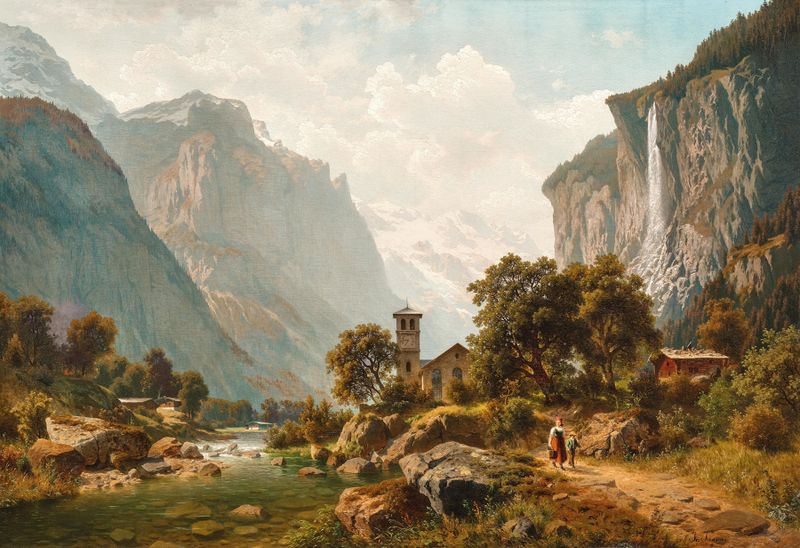
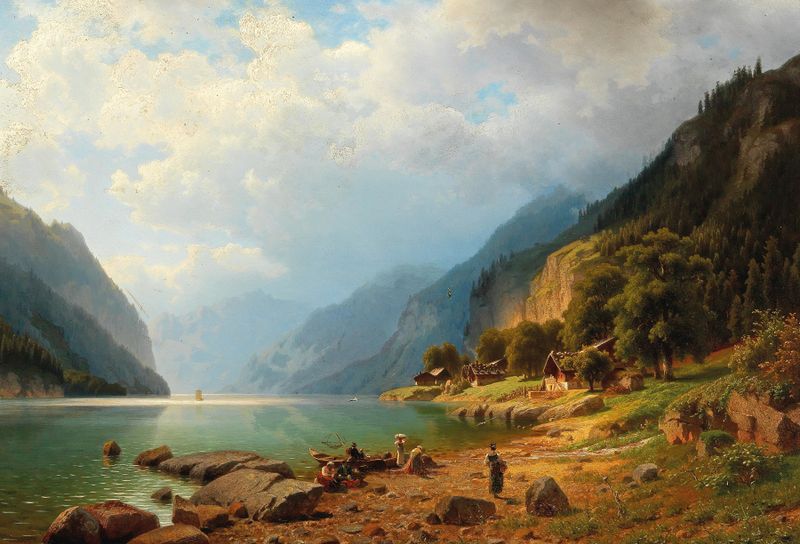
When did color learn to lie? The hues and shades we perceive often weave stories, blurring the lines between reality and imagination, much like the memories that haunt us. Look to the center of the canvas, where a tranquil lake reflects a cascade of mountains. The soft blues and greens blend seamlessly, creating an almost dreamlike quality. Notice how the brushstrokes dance across the surface, infusing life into the water's surface, while the delicate white clouds drift lazily overhead.
The interplay of light and shadow highlights the surrounding trees, inviting the viewer to step closer into this idyllic moment, yet they remain at a distance, forever separated from the serene scene. Hidden amidst the beauty are the subtle tensions of nostalgia and longing. The vibrant yet slightly muted palette evokes a sense of yearning, as if the landscape itself remembers past joys and sorrows. The calmness of the scene is deceptive; it hints at deeper stories left untold.
Each ripple in the water carries echoes of laughter, whispers of love, and the weight of solitude, creating a complex emotional landscape that invites contemplation. Jansen painted this work during an undefined period, likely influenced by the Romantic movement's obsession with nature and emotional expression. The Salzkammergut region, known for its breathtaking scenery, provided a backdrop that resonated deeply with artists seeking to capture the sublime. As he grappled with his own memories and experiences, the artwork reflects a broader artistic struggle to reconcile the beauty of the external world with the inner complexities of human emotion.