A Scene on Lake Starnberg, in the Background Starnberg Castle and Rose Island — History & Facts
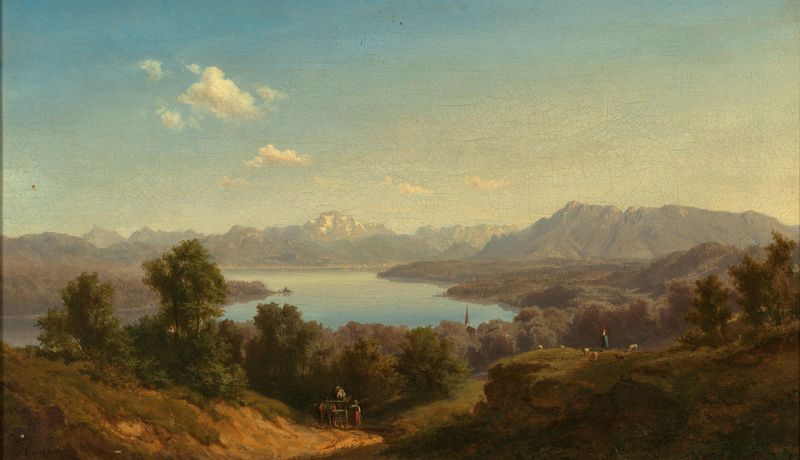
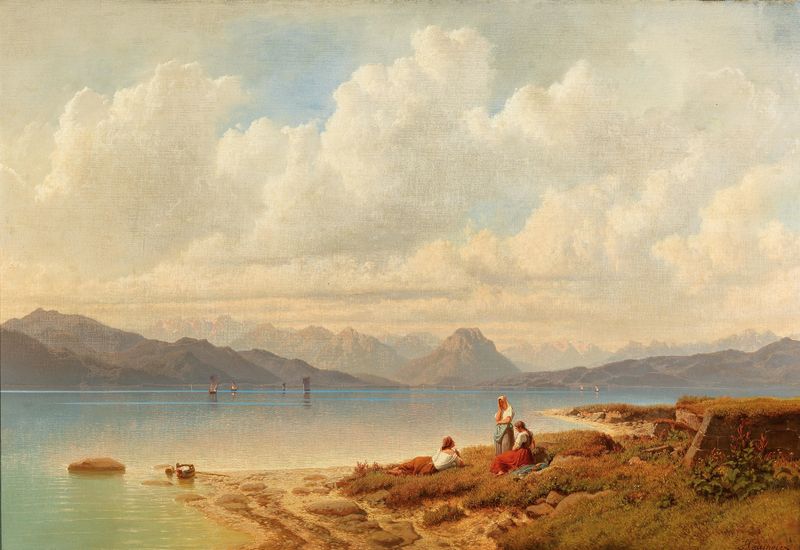
Did the painter know this moment would outlive them? As the tranquil waters of Lake Starnberg stretch towards the horizon, a haunting emptiness permeates the scene, inviting contemplation on existence and the passage of time. Look to the foreground where delicate ripples disturb the lake’s mirror-like surface, guiding your gaze toward the distant silhouette of Starnberg Castle. The soft pastels of the sky blend seamlessly into the water, creating an ethereal harmony that reflects the tranquility of the landscape. Notice how the light bathes the scene in a golden hue, accentuating the lush greenery of Rose Island, which emerges like a forgotten jewel from the depths of the lake.
The careful brushstrokes evoke both serenity and solitude, compelling the viewer to pause and absorb the stillness. Beneath the idyllic facade, there is a palpable tension between nature and the human absence that looms large. The castle stands sentinel, a reminder of history and the lives once lived there, while the quiet water evokes a sense of longing, perhaps for connection or understanding. The gentle lull of the landscape hints at the passage of time, an unyielding force that leaves both beauty and emptiness in its wake.
Each element plays a role in this silent narrative, urging the viewer to confront their own feelings of isolation and reflection. Maximilian Haushofer painted this work in 1840 while living in Germany, during a period marked by romanticism and a growing appreciation for natural landscapes. It was a time when artists sought to capture the essence of fleeting moments, often in pursuit of deeper emotional truths. Influenced by his surroundings, Haushofer explored the interplay of light and shadow, imbuing his paintings with a sense of nostalgia that resonates even today.