A View of Lake Waginger See — History & Facts
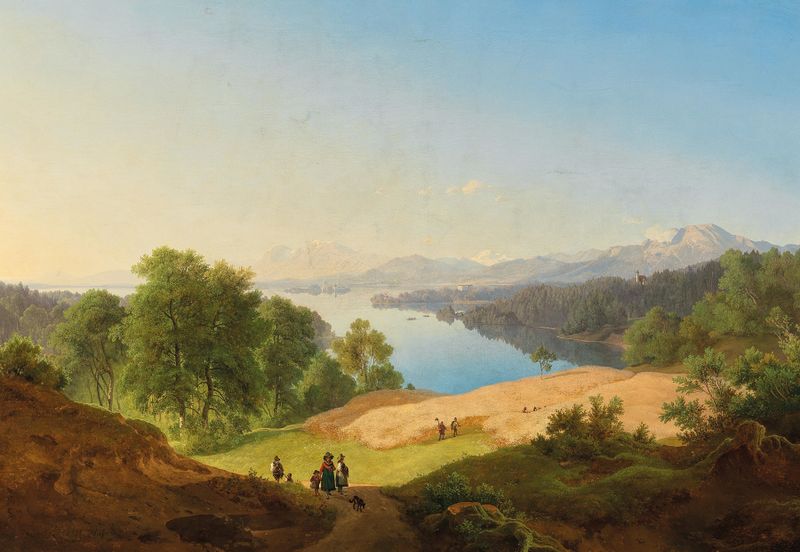
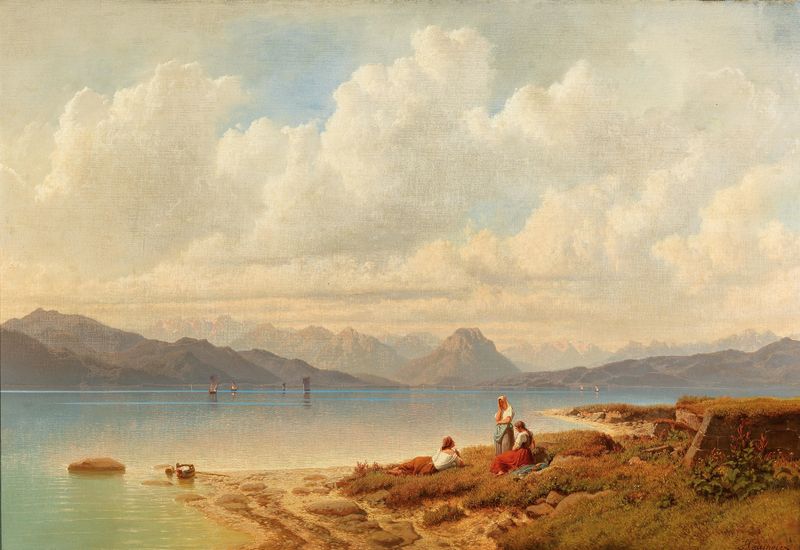
Is this a mirror — or a memory? The stillness of A View of Lake Waginger See beckons the viewer into a realm where nature and reflection harmoniously intertwine, suggesting a divine connection to something greater. Look closely at the vast expanse of the lake, where the water mirrors the sky in hues of azure and soft pastels. Notice how the gentle ripples distort the reflections of surrounding trees, drawing our gaze to the horizon where land meets sky. The serene composition is punctuated by brushstrokes that evoke a sense of tranquility, while the delicate color palette cultivates an ethereal atmosphere that feels almost sacred. The interplay of light and shadow speaks volumes here; it suggests the fleeting nature of moments, reflecting the transient beauty of life itself.
The dappled sunlight filtering through the trees hints at a divine presence, as if the scene is a sacred space where earthly concerns dissolve into serenity. This tension between the tangible world and the mystical invites introspection, urging viewers to contemplate their own relationship with nature and memory. Created during an epoch where Romanticism was giving way to new artistic explorations, the artist worked on this piece in an era marked by a growing fascination with landscapes and nature. Although the exact date remains unknown, Haushofer was known to capture the sublime beauty of the natural world, influenced by his surroundings and the spiritual reflections they inspired.
In this work, he conveys not just a geographical location but an emotional landscape that invites the viewer to seek divine solace within.