
A small church and a shed in Johnsbach Gesäuse mountains — History & Facts
Did the painter know this moment would outlive them? A tranquil church stands resolute against a backdrop of jagged mountains, whispering secrets of peace amidst a world poised for turmoil. Look to the left at the small church, its steeple reaching toward the heavens, casting long shadows over the vibrant green grass below. The modest shed nearby, weathered yet sturdy, draws the eye with its earthy tones that harmonize with the surrounding landscape. The artist’s brushwork captures the subtle interplay of light and shadow, highlighting the contrast between the warmth of the scene and the looming threat of the turbulent times that lay ahead in Europe. Beneath the surface of this pastoral setting lies a tension that speaks to the growing unrest of the early 20th century.
The serene beauty of the church and shed juxtaposes the violence brewing in the world, as if they are caught in a moment of stillness before a storm. Each detail, from the delicate foliage to the stark mountains, hints at a fragile existence that could be shattered, reflecting the artist’s own struggles in a rapidly changing society. Fritz Lach painted this scene in 1914, amidst the burgeoning chaos of World War I and the broader shifts in the art world. Working in central Europe, he sought to capture the enduring beauty of his homeland while grappling with the realities of a world on the brink of destruction.
This work stands as a poignant reminder of the moments of calm that can exist even as history unfolds with inevitable violence.
More Artworks by Fritz Lach
Browse all →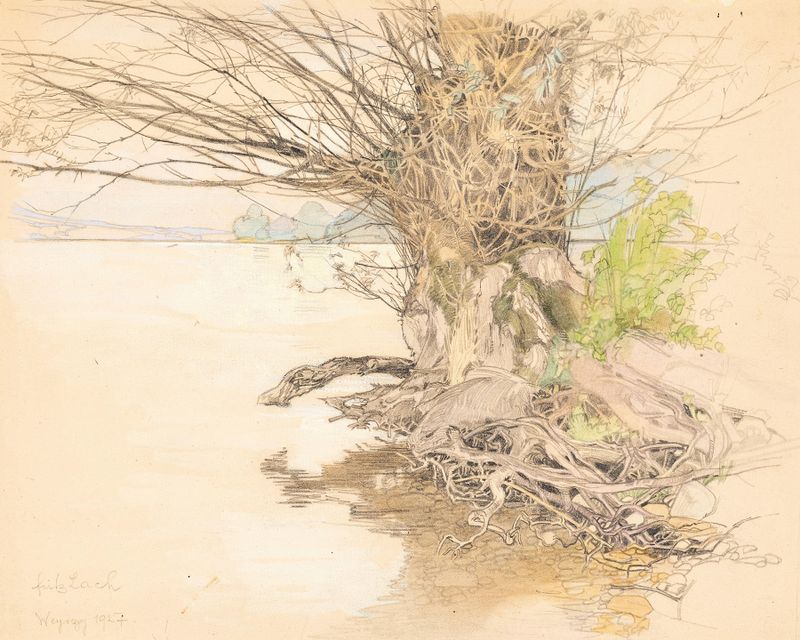
A willow tree at the lake shore
Fritz Lach
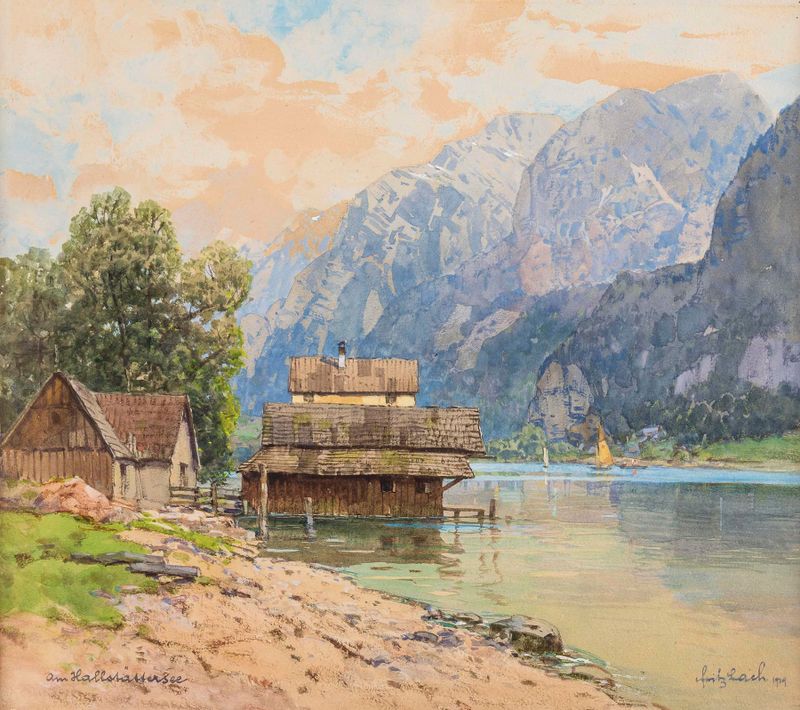
Bootshäuser am Hallstätter See
Fritz Lach
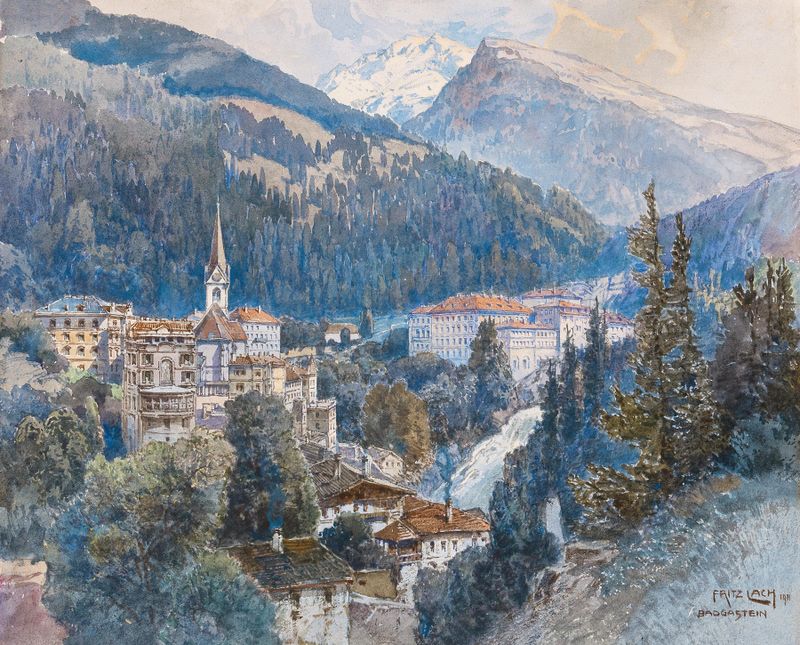
A view of Bad Gastein and the waterfall
Fritz Lach
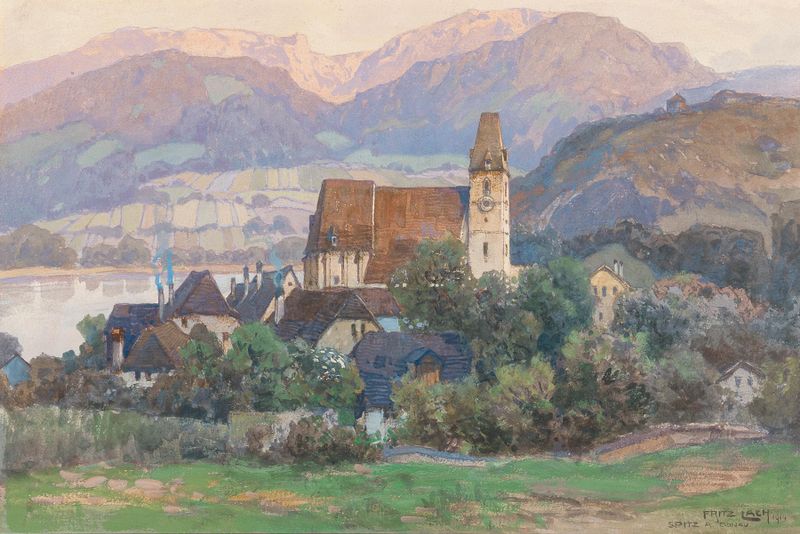
A view of Spitz in the Wachau valley
Fritz Lach
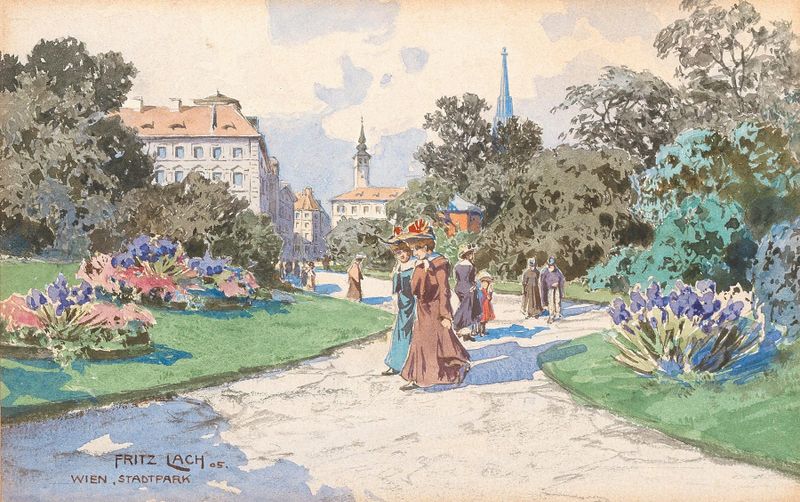
A walk in Vienna’s Stadtpark
Fritz Lach
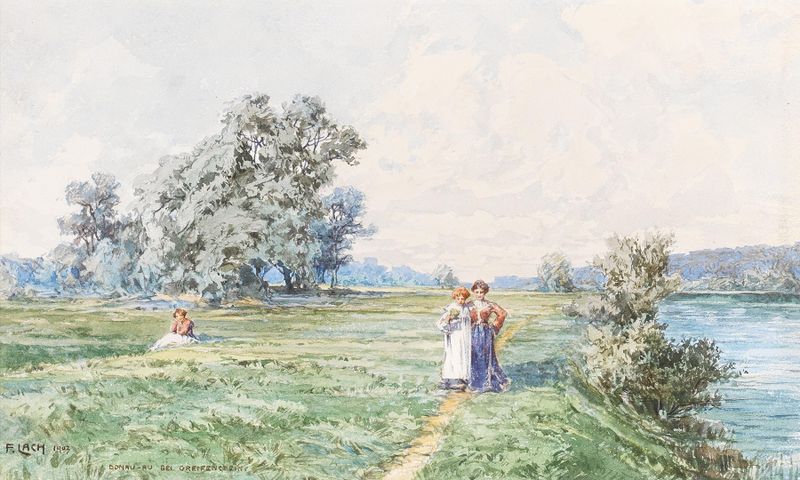
At the Danube near Greifenstein
Fritz Lach
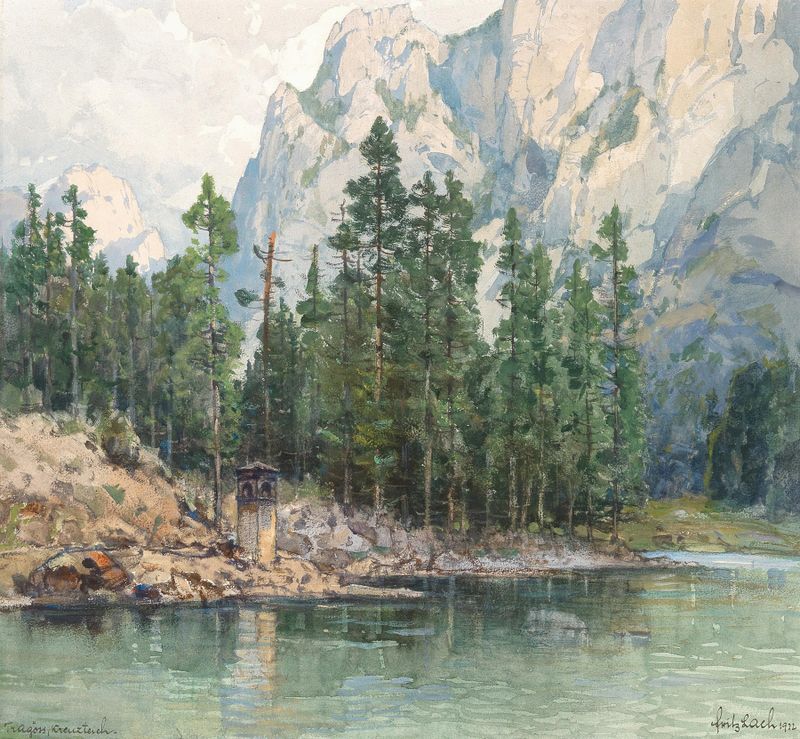
Kreuzteich near Tragöss
Fritz Lach
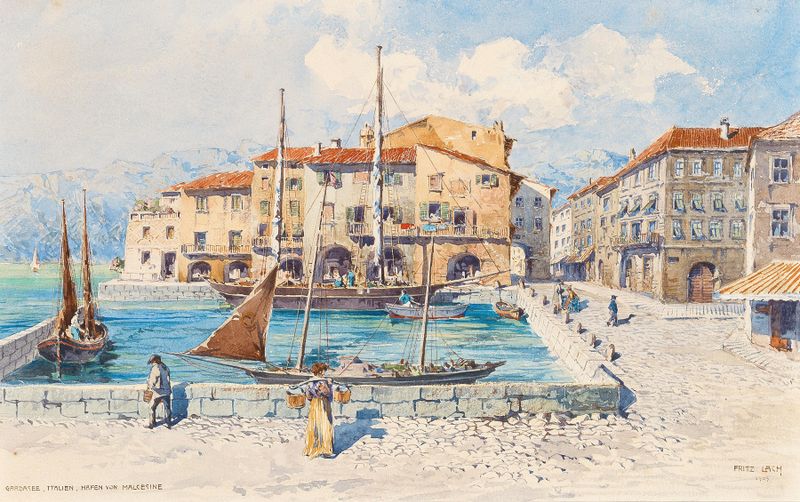
Malcesine near Gardasee
Fritz Lach
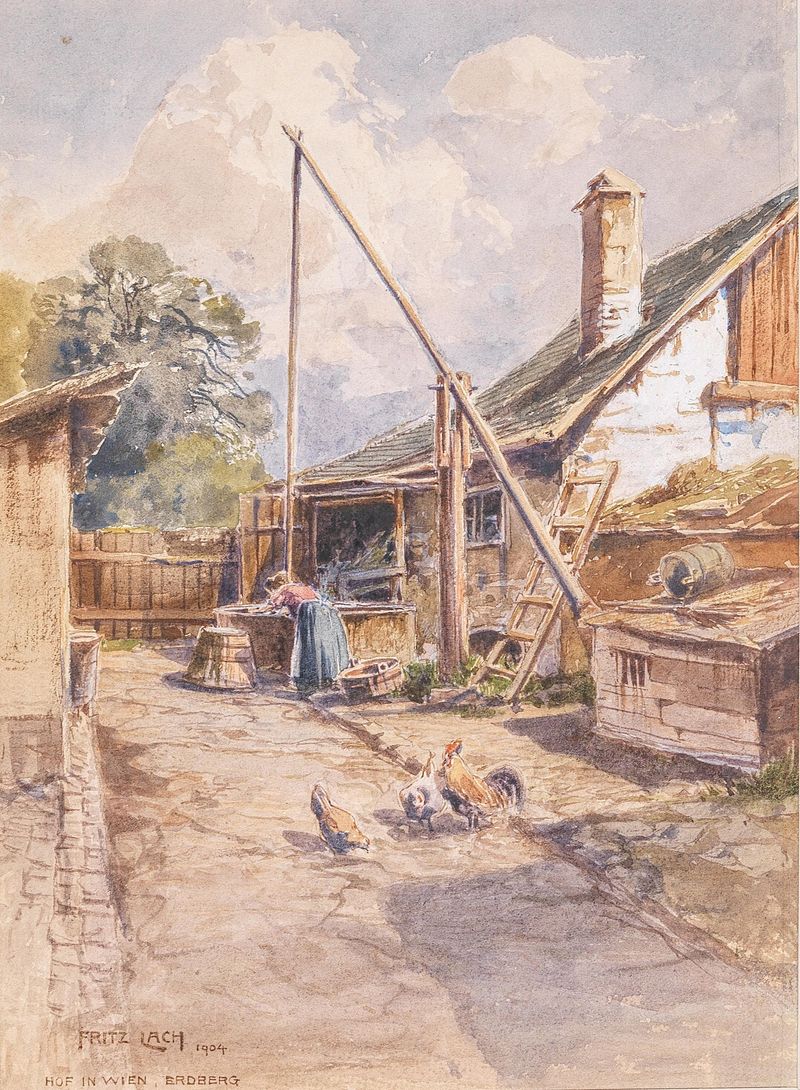
Hof in Wien Erdberg
Fritz Lach
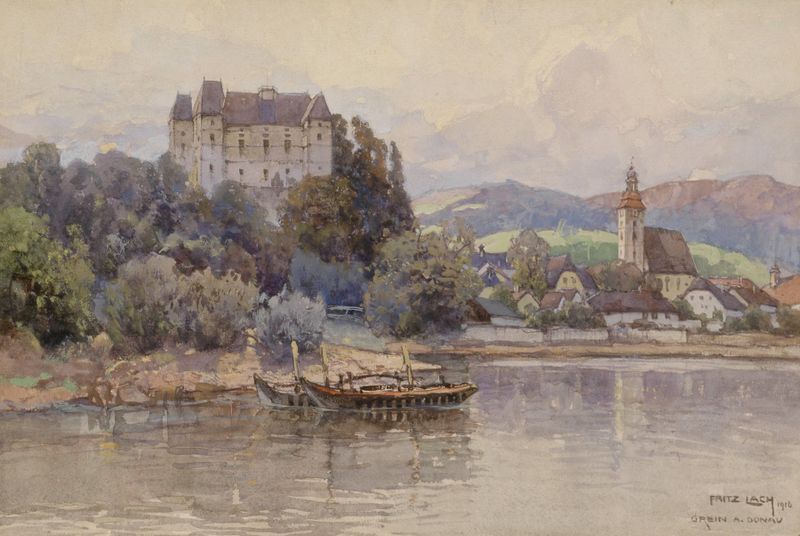
Blick auf Grein an der Donau
Fritz Lach





