A Stagecoach and Four Dashing Through a Village on the Bath-London Road — History & Facts
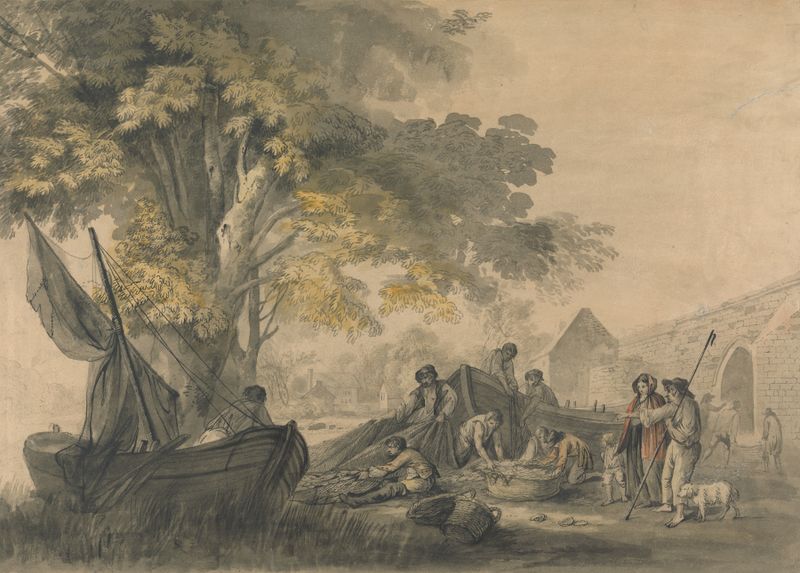
What secret hides in the quiet of the canvas? In the world of art, movement can evoke both excitement and restraint, suggesting a story woven into the stillness. Look closely at the left side of the composition, where the stagecoach bursts forward, its horses straining against the reins. Notice the vibrant greens of the trees lining the road, expertly juxtaposed with the warm hues of the village buildings. The artist’s delicate brushwork captures not just the physical motion of the galloping horses, but also the anticipation of journey—each detail meticulously placed to draw the viewer into the scene. As your gaze travels through the bustling village, observe the townsfolk frozen in their daily routines, some glancing up in surprise at the oncoming spectacle.
This contrast between the rapid pace of the stagecoach and the stillness of the villagers encapsulates a moment of transition—between past and future, excitement and calm. The way light dances off the coach's wheels hints at the power of change, while the muted colors of the village suggest a world on the brink of progress. In 1787, the artist was painting during a time of rapid change in Britain, as the Enlightenment and Industrial Revolution began to reshape society and the landscape. Robertson was influenced by the Neoclassical and Romantic movements, capturing the spirit of his era while reflecting on the connectivity that burgeoning transportation brought to isolated communities.
This piece stands as a historical commentary, revealing how art encapsulates the heartbeat of its time.