
A Stone Cottage — History & Facts
Where does light end, and longing begin? In the tender embrace of nature, beauty intertwines with a sense of nostalgia, evoking yearning for a serene past. Look to the left where the weathered stone walls rise gently from the lush greenery, their rugged texture contrasting with the delicate softness of leaves. Notice how the golden light filters through the branches, casting dappled shadows that dance across the cottage’s façade. The warm hues of earth and foliage envelop the scene, creating a haven that invites contemplation and peace. Delve deeper into the composition, where the juxtaposition of man-made structure and natural elements tells a story of harmony and solitude.
The soft blues of the sky peek through, offering a glimpse of infinity beyond the cottage, while the winding path leads us further into the embrace of the landscape. There’s an underlying tension between permanence and transience; the cottage, sturdy yet aging, symbolizes both a place of refuge and the inevitable passage of time. Each brushstroke breathes life into the quiet contemplation of existence. Hubert Robert painted this piece around 1774 during a period of significant transition in France and the world of art.
Living in Paris, he was influenced by the burgeoning Romantic movement, which celebrated nature and the emotive power of landscapes. The artist’s fascination with ruins and idyllic settings reflected a growing sentiment for the picturesque, marking a crucial moment in his career as he sought to capture both beauty and emotion in his work.
More Artworks by Hubert Robert
Browse all →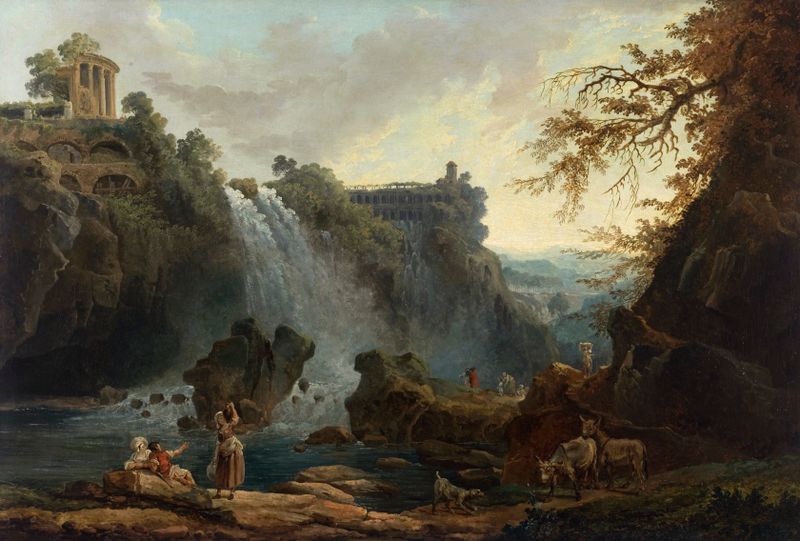
Les Cascatelles de Tivoli
Hubert Robert
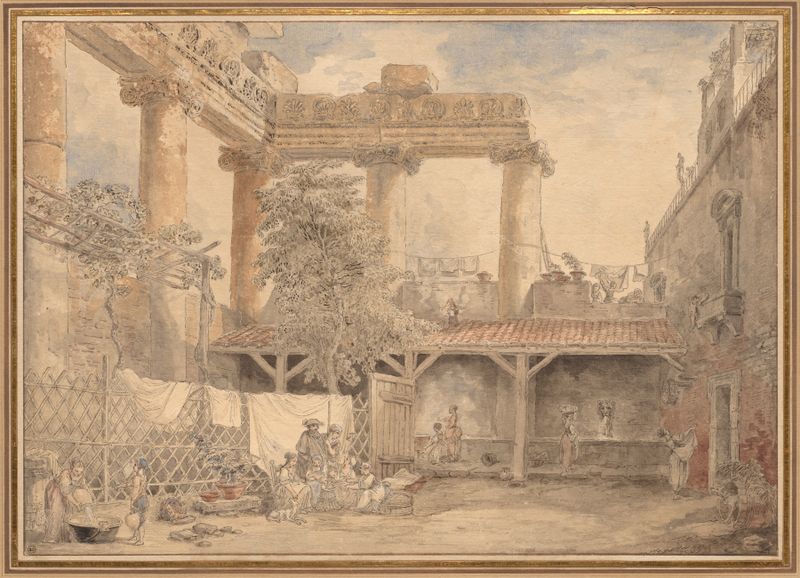
Roman Ruins, Villa Pamfili
Hubert Robert

The Rustic Bridge, Château de Méréville, France
Hubert Robert

The Portico of a Country Mansion
Hubert Robert

Architectural Capriccio
Hubert Robert

The Obelisk
Hubert Robert
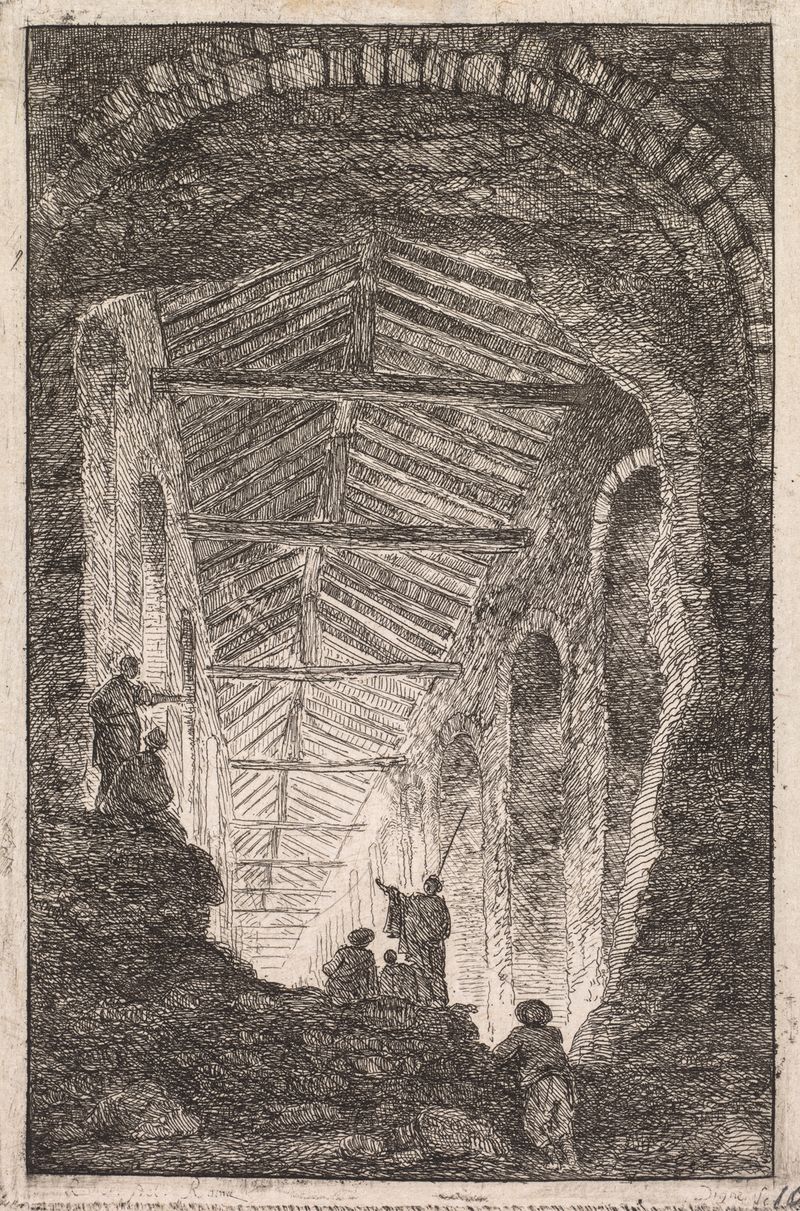
The Antique Gallery
Hubert Robert

L’incendie de l’Opéra, vu des jardins du Palais-Royal, le 8 juin 1781
Hubert Robert
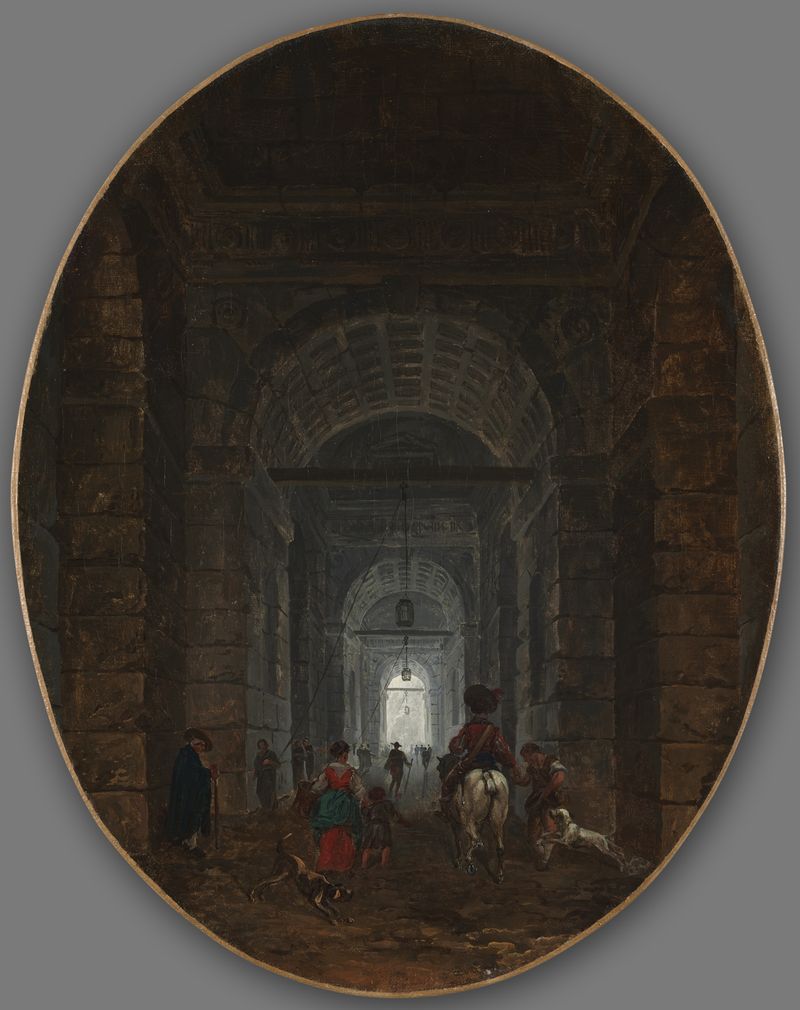
The Grotto of Posillipo
Hubert Robert

Architectural Capriccio with ruins of the Temple of Saturn and the Colosseum in the background
Hubert Robert





