
A storm on a rocky coast — History & Facts
The tumultuous clash of waves and the threatening clouds hints at a deeper narrative beneath the surface — one of betrayal and turmoil left unspoken. Look to the foreground, where the jagged rocks jut defiantly against the relentless sea, their dark surfaces a stark contrast to the frothy white of the crashing surf. Notice how the artist employs a muted palette of grays and blues, imbuing the scene with a sense of foreboding. The light, filtered through the storm clouds, casts a melancholic glow, revealing contours and textures that evoke both beauty and danger.
The subtle movement of the water, accentuated by delicate brushstrokes, draws the eye to the turbulent horizon, creating a sense of imminent chaos. In the intricate dance of light and shadow, the painting reveals an emotional landscape beneath the surface. The rocky coastline, resolute yet vulnerable, reflects the duality of strength and fragility – a metaphor for the human condition amidst betrayal. The stormy skies above seem to echo inner turmoil, suggesting that the silence of the sea conceals a myriad of untold stories.
Each crashing wave may symbolize the tumult of a heart deceived, while the distant light flickering in the sky hints at hope amidst despair. In the early 18th century, during a period of great transition in the art world, the artist created this work at a time when the Baroque style was giving way to new movements. Manglard, primarily known for his marine scenes, painted while exploring the coastal landscapes of France. This piece reflects both his command of the tumultuous sea and an emerging sensitivity to the emotional narratives embedded within nature.
More Artworks by Adrien Manglard
Browse all →
Rivage méditerranéen animé de marchands
Adrien Manglard

Seaport Scene
Adrien Manglard
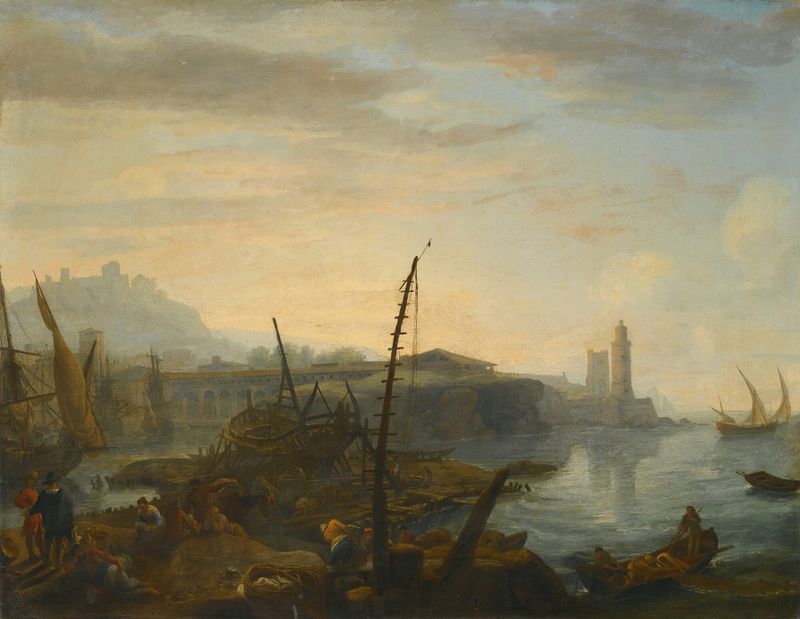
A Mediterranean Port With Figures Resting And Fishermen Drawing In Their Nets In The Foreground, A Tower Beyond
Adrien Manglard

Seaport Scene
Adrien Manglard

Vue du Castel dell’Ovo dans la baie de Naples
Adrien Manglard
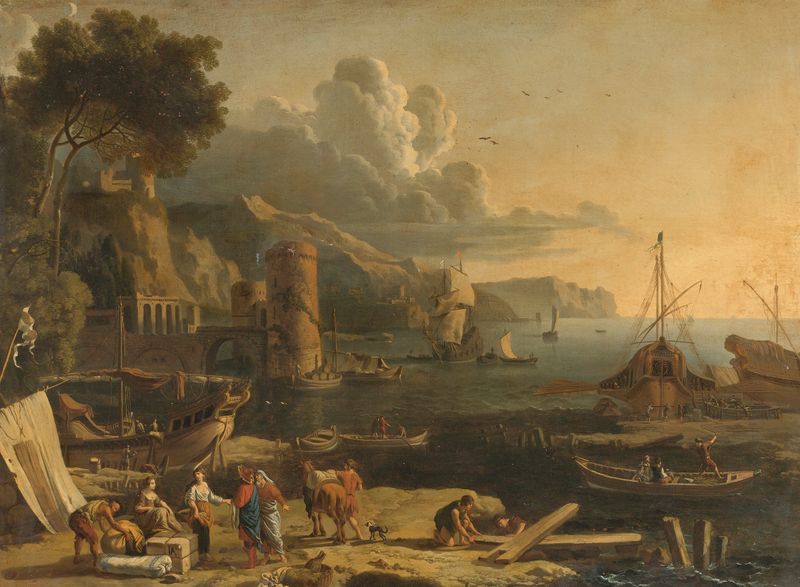
Mediterranean Port Scene
Adrien Manglard

Figures on an estuary with a ship careened in the background
Adrien Manglard





