
Mediterranean Harbour Scene — History & Facts
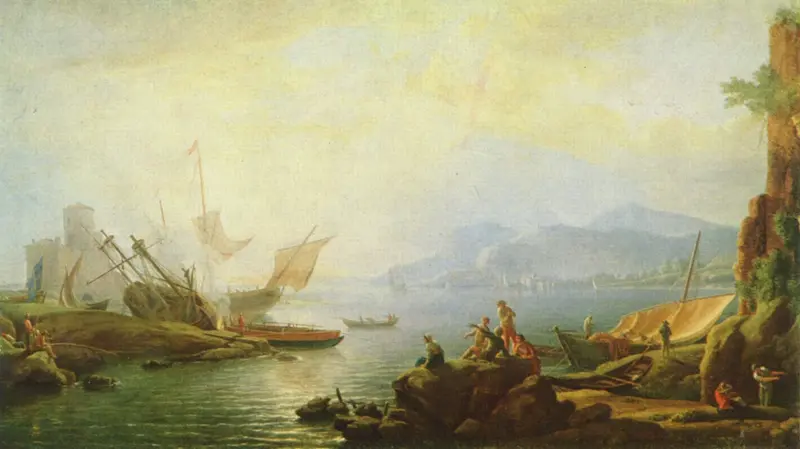
What first catches the eye in Mediterranean Harbour Scene is the sense of choreography between land and sea, as if every figure and vessel is part of a carefully staged play. The painter draws you in with a sweep of activity: merchants in vivid coats negotiate, women tend to nets and baskets, and a solitary camel stands among crates, signaling the far-flung origins of the goods. The low horizon lets the sky breathe, its pastel clouds echoing the gentle bustle below, while the fortress and its flag anchor the scene in a place both real and imagined.
Light glances off the water and sails, guiding your gaze from the shadowed rocks to the distant ships, each detail a clue to the rhythms of Mediterranean trade. Works like this, painted in the late 1750s, belonged to a world where the Mediterranean was not just a sea but a crossroads of empires, languages, and ambitions. Artists such as Adrien Manglard made their names by capturing these cosmopolitan harbors, scenes prized by collectors who sought both the promise of adventure and the comfort of order. This painting, once offered at auction in London and now known through records from ArtNet and Christie's, stands as a testament to the enduring fascination with the meeting of cultures and the daily business of exchange.
With every barrel, sail, and gesture, it invites you to imagine the stories that passed through this port, and to linger a little longer in the golden light of a world on the move.
More Artworks by Adrien Manglard

A Mediterranean Port With Figures Resting And Fishermen Drawing In Their Nets In The Foreground, A Tower Beyond
Adrien Manglard
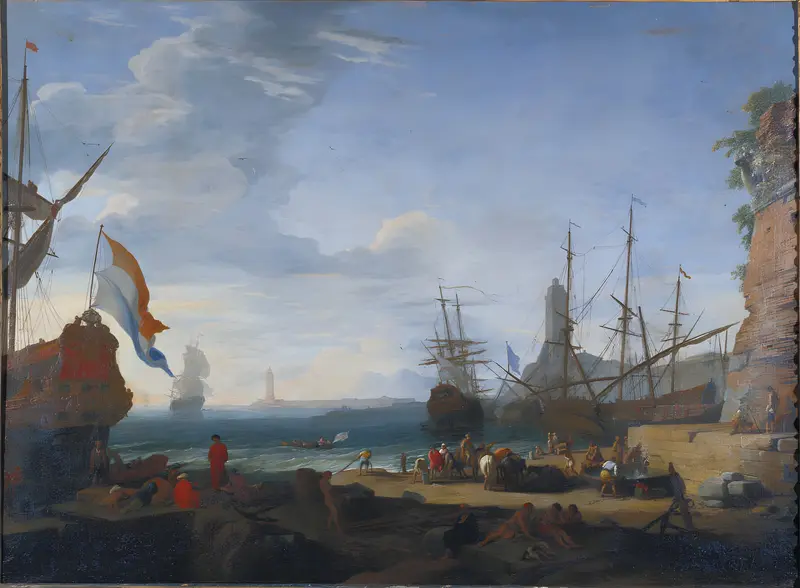
Seaport Scene
Adrien Manglard
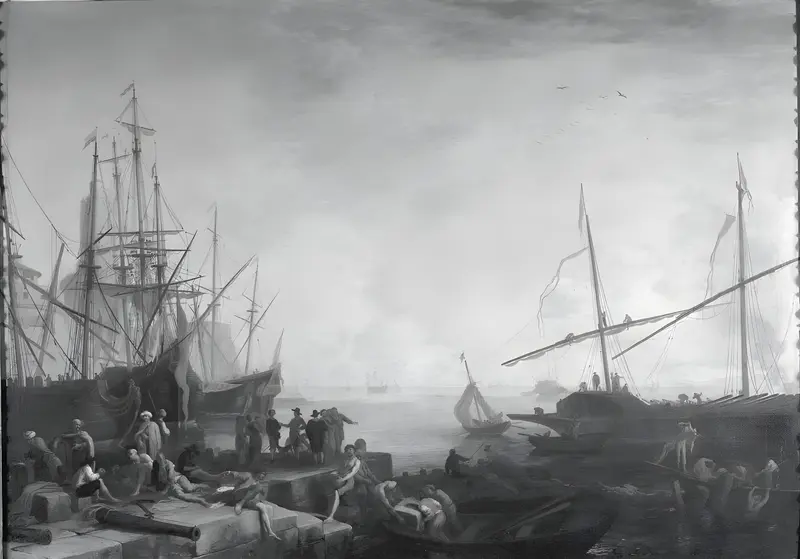
Seaport Scene
Adrien Manglard
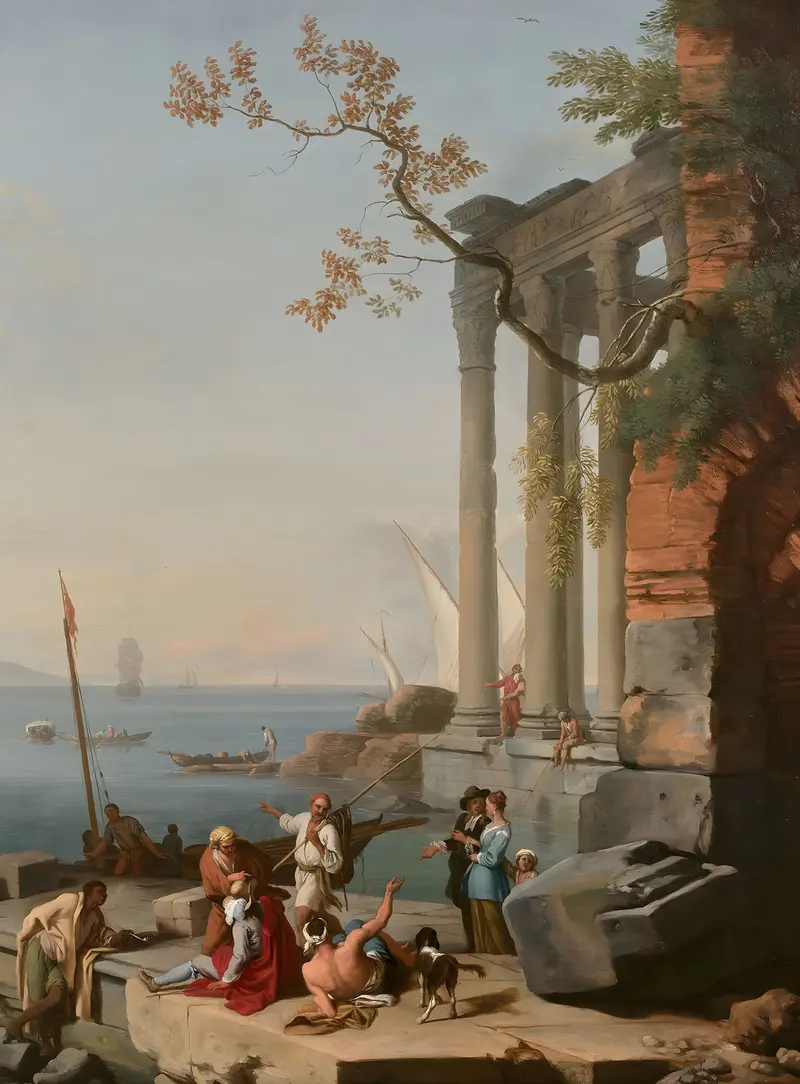
Rivage méditerranéen animé de marchands
Adrien Manglard
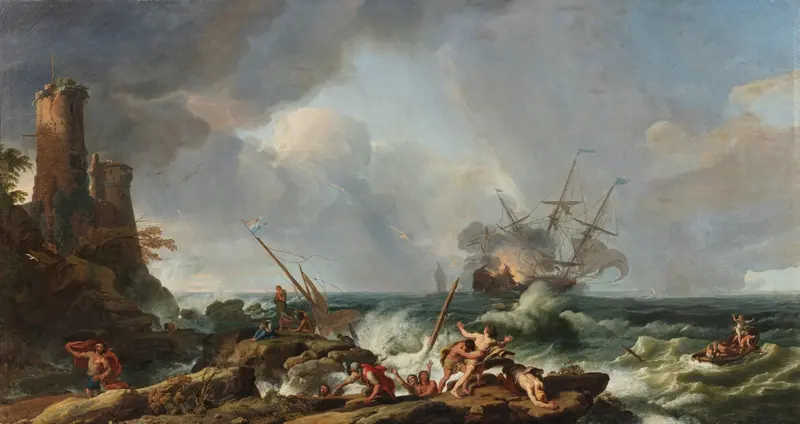
A storm on a rocky coast
Adrien Manglard
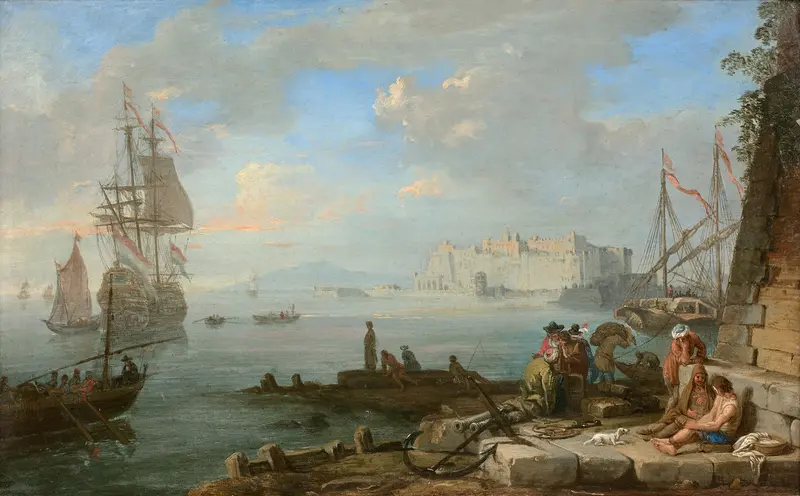
Vue du Castel dell’Ovo dans la baie de Naples
Adrien Manglard
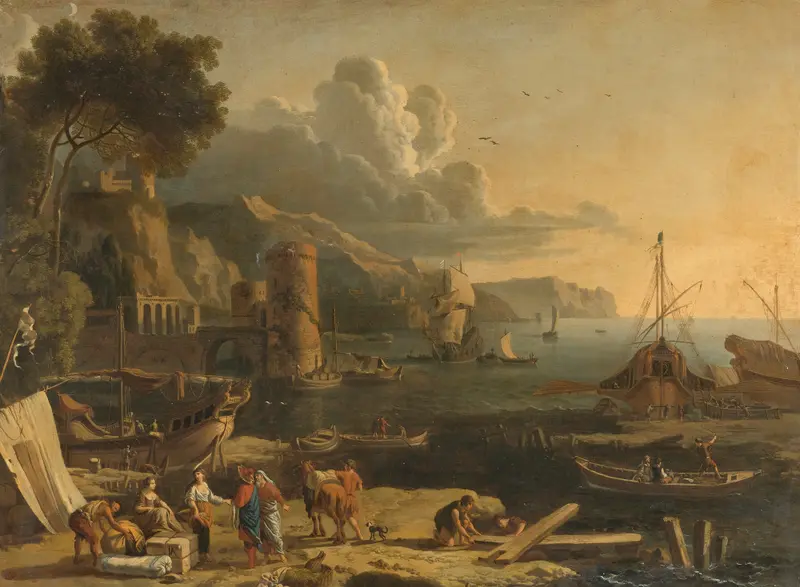
Mediterranean Port Scene
Adrien Manglard
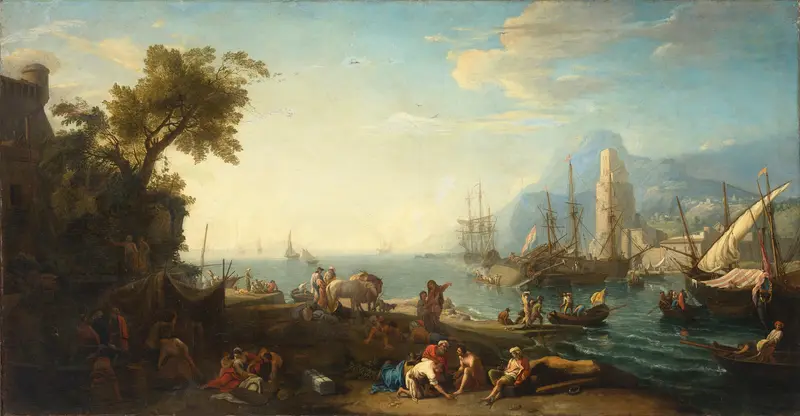
Figures on an estuary with a ship careened in the background
Adrien Manglard
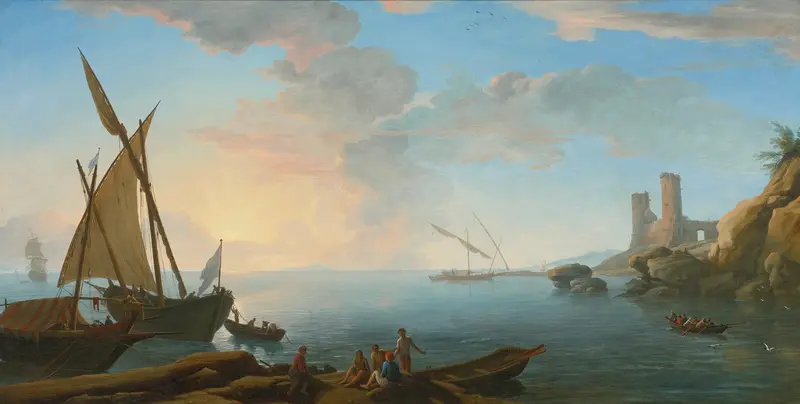
Southern Mediterranean Seascape with Boats and Figures at Sunset
Adrien Manglard
Estuary with Harbour
Adrien Manglard





