
A street in Ragusa — History & Facts
In a world where dreams and memories intertwine, the essence of a moment captured on canvas often reveals more than reality ever could. Begin by directing your gaze to the left side of the painting, where the narrow street beckons with a gentle curve. Notice how the sun filters through the soft foliage of trees, casting dappled light upon cobblestone ground that seems to shimmer with life. The warm palette of ochres and gentle blues pulls you deeper into the scene, creating a serene atmosphere as if time itself has paused, inviting you to linger in this peaceful embrace. As you explore the work further, subtle contrasts emerge; the vibrancy of flower pots against the muted hues of the architecture speaks to the life that thrives despite the passage of time.
The figures, small and almost dreamlike, seem lost in their daily routines, embodying a profound stillness that contrasts with the busy energy of urban life. Here, the space between people becomes just as significant as their actions, suggesting a longing for connection amid the solitude of existence. In 1887, during a period of artistic exploration in Vienna, the artist found himself immersed in a world rich with emerging Modernist ideas. A street in Ragusa was created during a time of personal and societal change, reflecting both his deep appreciation for the beauty of everyday life and the evolving artistic landscape around him.
The work captures the essence of a place that holds memories, fleeting yet immortalized through brushstrokes, a testament to the transient nature of experience.
More Artworks by Carl Moll
Browse all →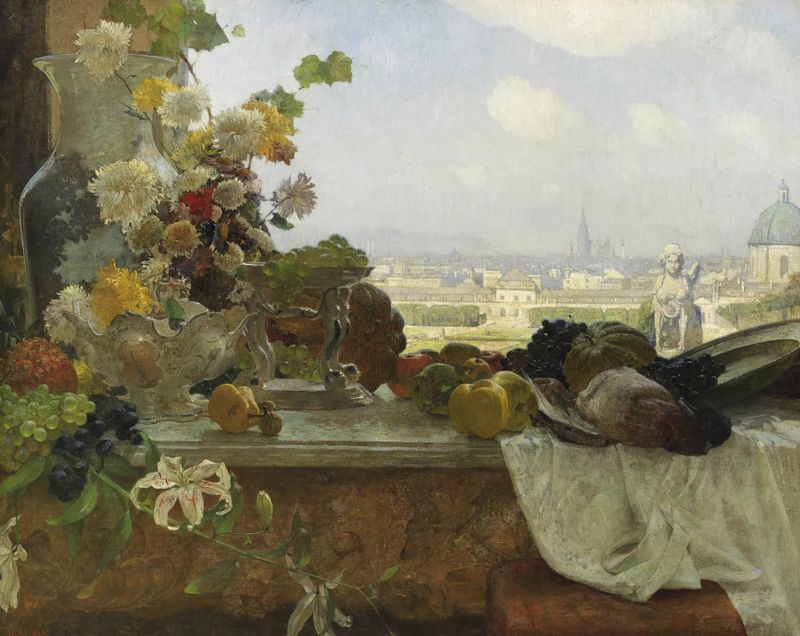
Blick vom Belvedere auf die Innere Stadt
Carl Moll

Garten in Döbling (Garden in Döbling, Vienna)
Carl Moll
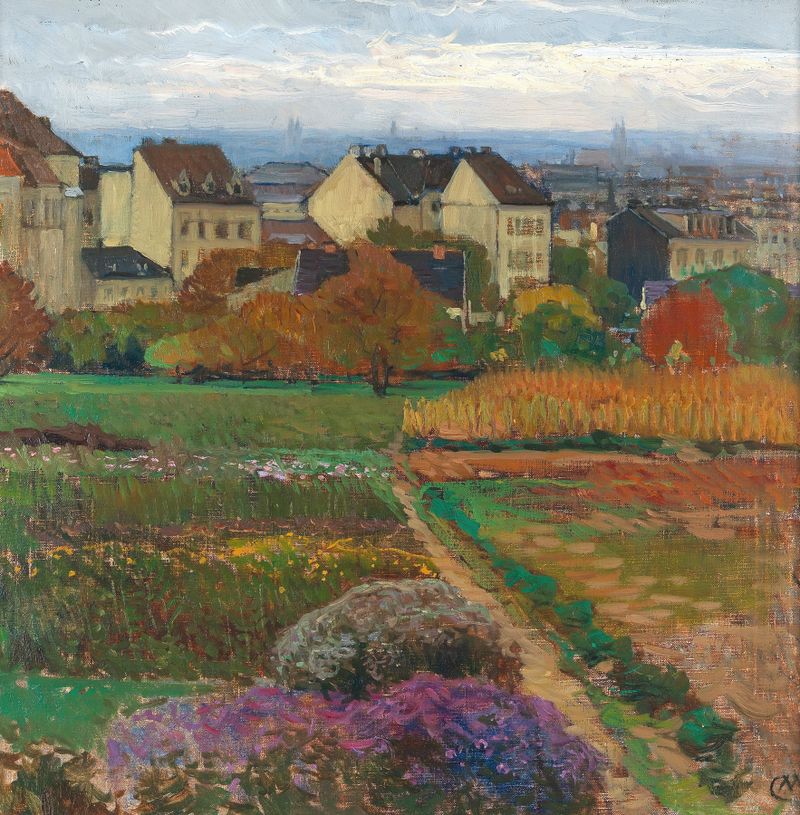
Döbling Wien
Carl Moll

Motiv aus dem Schloßpark in Jevisovice
Carl Moll
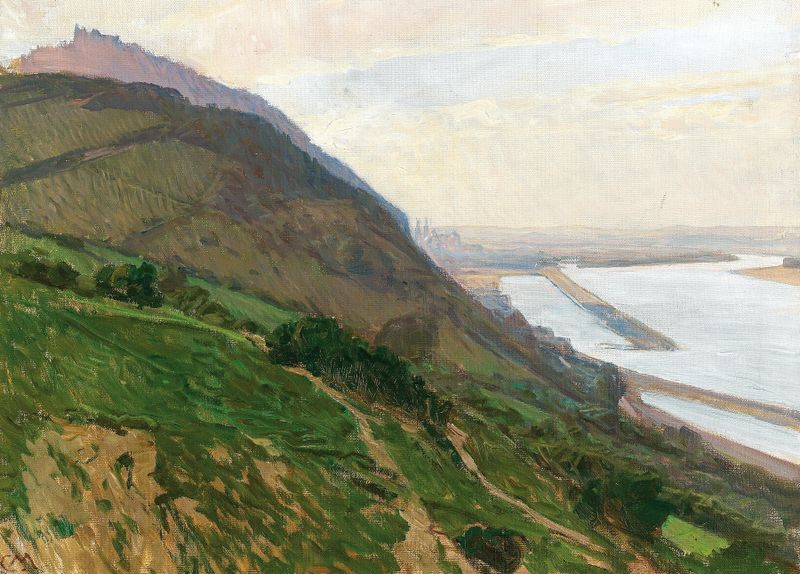
Donauansicht
Carl Moll
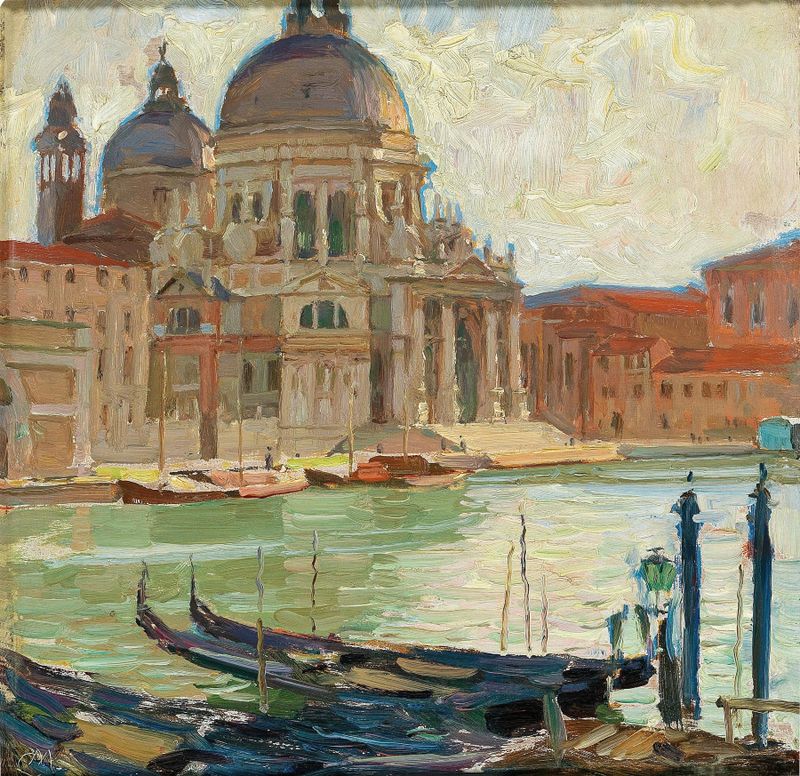
Kirche in Venedig
Carl Moll

Wassermühle in Goisern (nach Emil Jakob Schindler)
Carl Moll

Winter at Hohe Warte, Rothschild Gardens
Carl Moll

Römische Ruine in Schönbrunn
Carl Moll

Kirche St Michael in Heiligenstadt
Carl Moll





