
A Street, Tunis — History & Facts
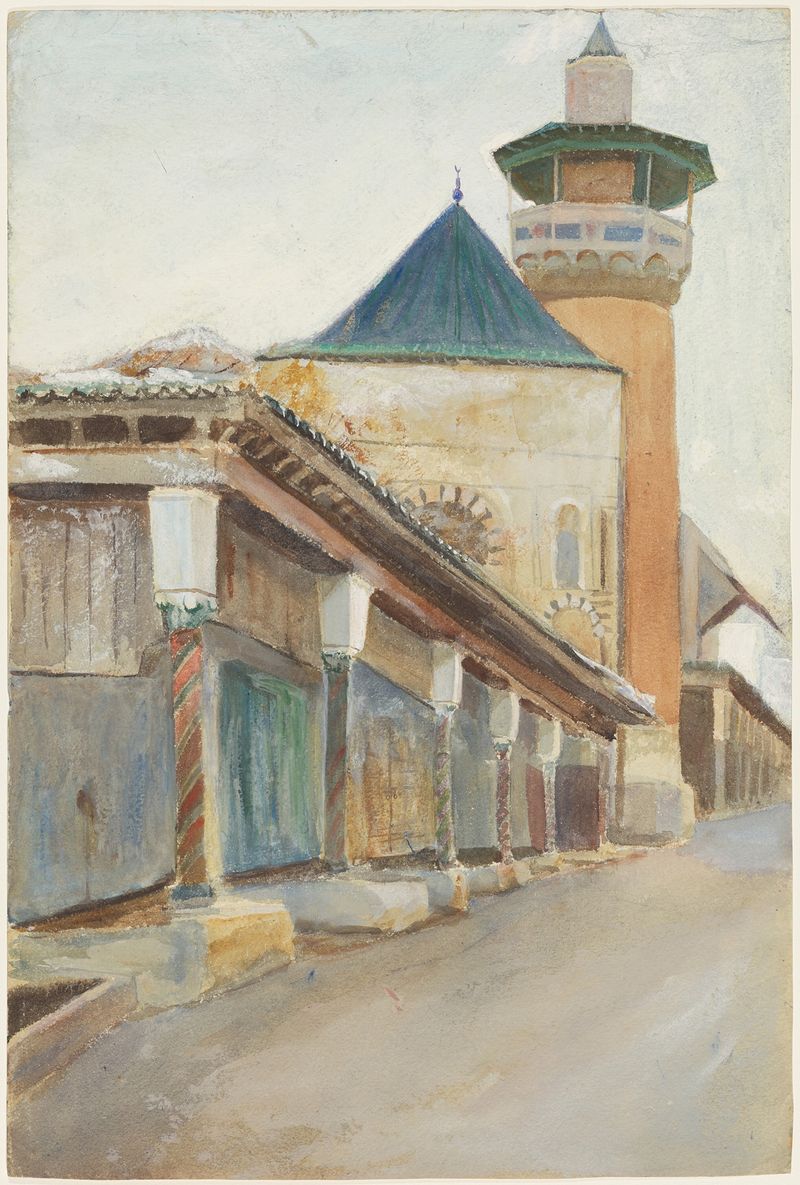
Could beauty survive in a century of chaos? Look to the left at the vibrant wash of ochre and peach that defines the sunlit buildings, their textured surfaces whispering the tales of time. The composition gently guides the eye down the street, where the cool shadows of archways create a striking contrast to the warmth of the façade, inviting you into a world caught between light and dark. The artist’s delicate brushwork and the interplay of color evoke the languid atmosphere of a Tunisian afternoon, where every stroke pulses with life. Yet, hidden within this picturesque scene lies an undercurrent of emotional tension.
The viewer may notice the solitary figures scattered throughout—each embedded in their own thoughts, hinting at isolation amid the vibrancy. The juxtaposition of warm hues against cool shadows suggests a world where beauty is tainted by betrayal, reflecting the complexities of human experience. The serene landscape envelops an unspoken narrative, where the charm of the street belies deeper stories of longing and disconnection. Emily Sargent painted this work during a period marked by her travels in North Africa, likely in the early 1900s.
At this time, the broader art world was in flux, with movements like Impressionism reshaping perceptions of light and color. Sargent was influenced by her brother, John Singer Sargent, yet sought to carve her own path, exploring the nuances of everyday life in foreign lands while grappling with her identity as a female artist in a male-dominated sphere.
More Artworks by Emily Sargent
Browse all →

More Architecture Art
Browse all →
The statue of Liberty
Frédéric Auguste Bartholdi

View of Houses in Delft, Known as ‘The Little Street’
Johannes Vermeer

View of Houses in Delft, Known as ‘The Little Street’
Johannes Vermeer

The Cathedral in Rouen. The portal, Grey Weather
Claude Monet

The yellow house
Vincent van Gogh

The Church in Auvers-sur-Oise, View from the Chevet
Vincent van Gogh