A Summer’s Day — History & Facts
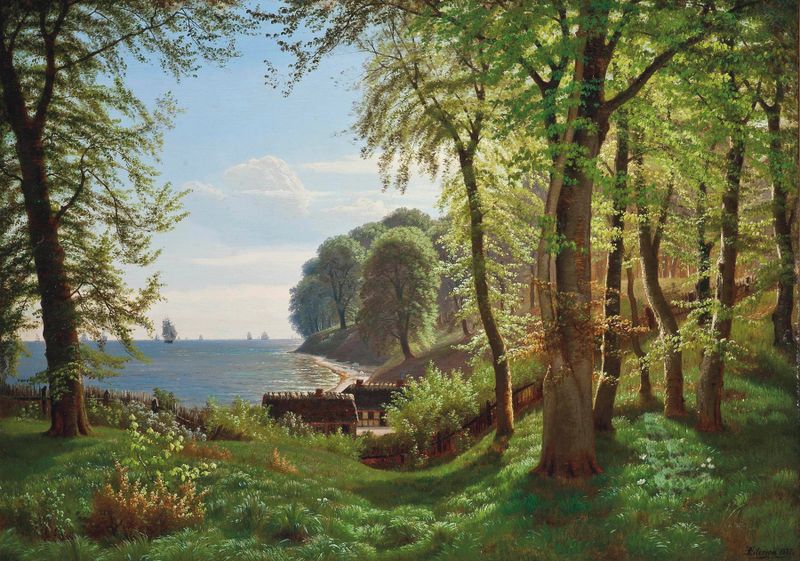
In the gentle embrace of sunlight, moments of clarity reveal deeper truths hidden in shadow and light. Look to the center, where a sun-drenched meadow unfolds under a vast blue sky. The vibrant greens of grass mingle with the soft golds of wildflowers, and the textured brushstrokes breathe life into each bloom. Notice how the light cascades from the upper left, illuminating the scene with an ethereal quality, creating a stark contrast with the cool shadows under the trees that frame the edges.
It invites the viewer to step into this serene landscape, urging a sense of peace and contentment. Yet, beneath this idyllic surface lies a tension of longing and nostalgia. The figures in the painting, seemingly lost in their day, carry an emotional weight, hinting at stories untold. The interplay between light and shadow not only offers warmth but also suggests the fleeting nature of time and joy—every ray whispering to the viewer that such moments are but temporary treasures.
The nuances of the environment, from the delicate sway of the flowers to the gentle rustling of leaves, evoke a profound connection to the ephemeral beauty of life. In 1878, Eiler Rasmussen Eilersen crafted this masterpiece during a period of artistic exploration and embrace of naturalism in Denmark. This was a time when painters sought to capture everyday moments with authenticity, reflecting the simplicity and charm of rural life. As the movement flourished, Eilersen's work resonated with a broader cultural shift towards celebrating the beauty found in nature and the human experience, solidifying his place in the rich tapestry of 19th-century art.