
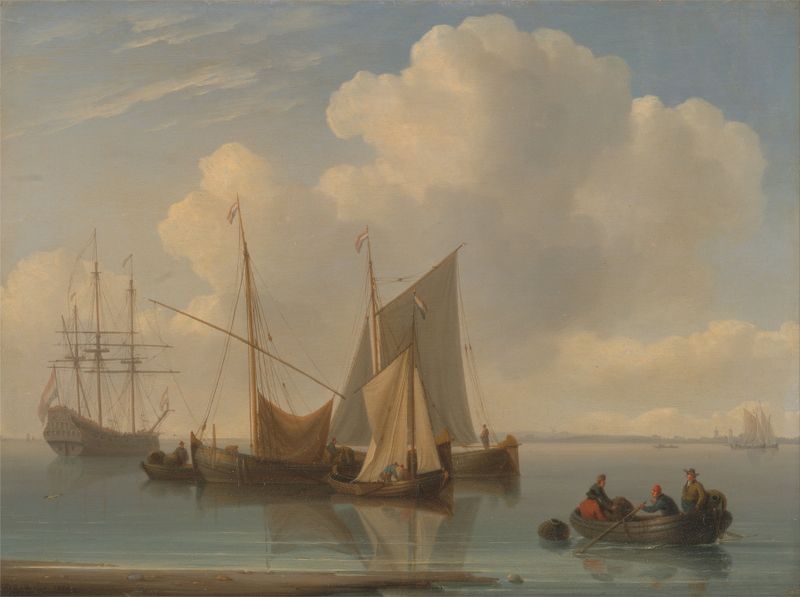
A Two-Decker Running up the Estuary with Figures on the Beach in the Foreground — History & Facts
When did color learn to lie? The hues of twilight whisper secrets as they dance across the canvas, while the vibrant palette captures both the ephemeral and the eternal, leaving viewers to ponder the legacies of light and shadow. Look to the left at the mighty two-decker ship, its sails taut with wind, cutting gracefully through the estuary's waters. The crisp, cool blue contrasts sharply with the sandy browns of the beach, where figures are engaged in their own lives. Notice the warmth of the sunbeams illuminating their faces, contrasting with the darkening sky, as if the light is both a guide and a trickster, revealing layers of human experience while masking deeper emotions beneath the surface. This tableau is rife with contrasts—the bustling ship against the stillness of the shoreline, men laboring at sea while others find solace in sand.
The figures, small yet significant, symbolize the delicate balance between duty and leisure, ambition and tranquility. Each brushstroke carries a weight of legacy, hinting at the stories that have passed through these shores and inviting reflections on the transient nature of existence itself. William Anderson painted this scene in 1790, during a time of burgeoning maritime trade and exploration, as Britain was reshaping its identity through commerce and naval power. Immersed in the artistic milieu of the late 18th century, he navigated the evolving landscape of Romanticism, where nature and humanity intertwined in quest for meaning amidst progress.
The painting stands as a testament to his keen observations of life along the Thames, capturing a moment that resonates through time.
More Artworks by William Anderson
Browse all →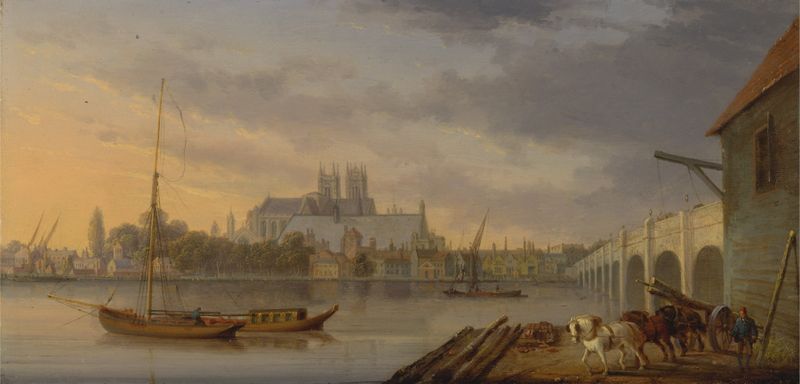
A View of Westminster Bridge and the Abbey from the South Side
William Anderson

London Bridge, with St. Paul’s Cathedral in the distance
William Anderson

Dutch Sailing Vessels
William Anderson

A Wherry Taking Passengers out to Two Anchored Packets
William Anderson
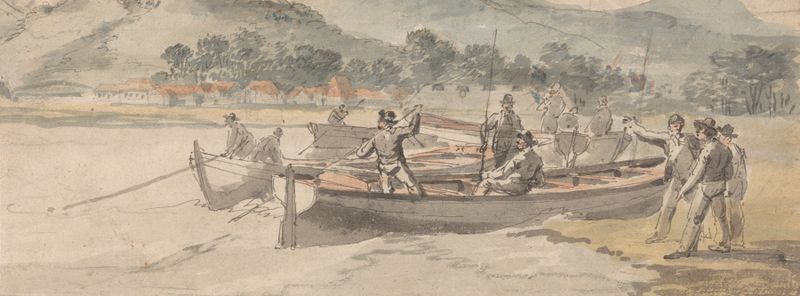
Boats and Men on Shore
William Anderson
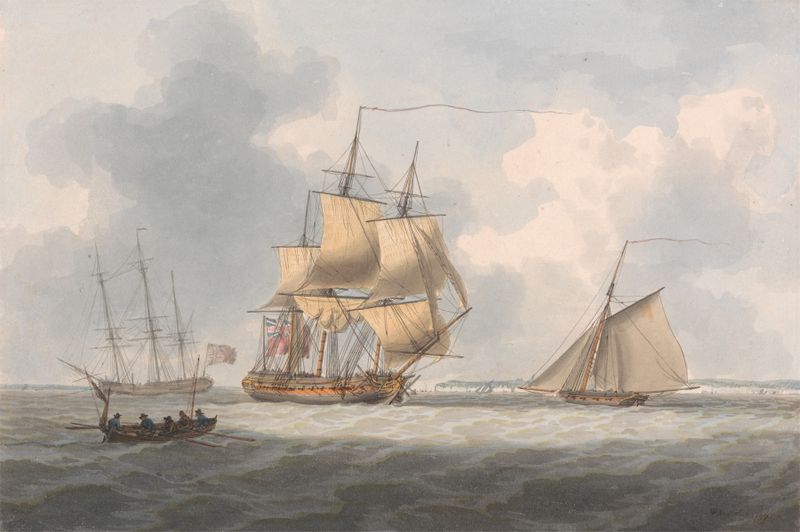
A Frigate Awaiting a Pilot
William Anderson
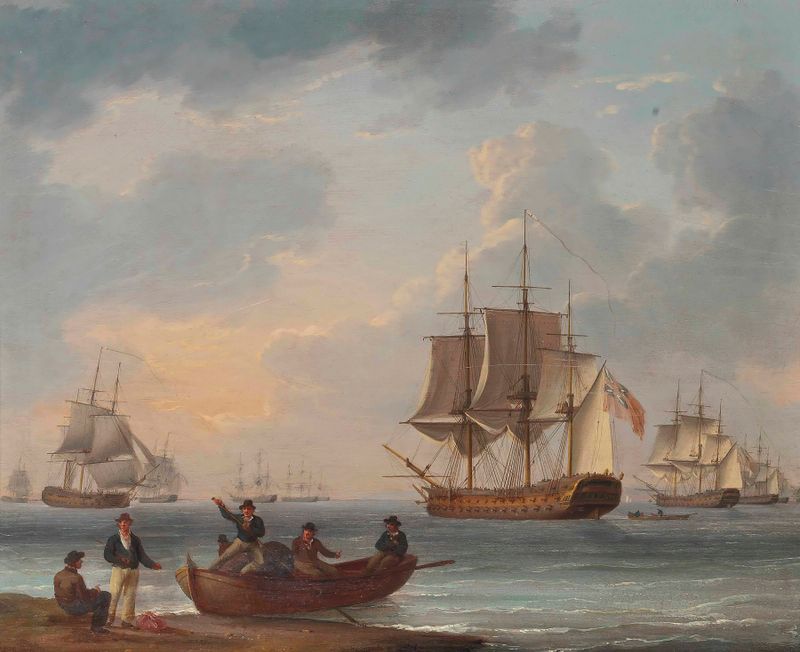
Sailors Pushing Off From Shore To Join The Fleet
William Anderson

Hussars Embarking at Deptford
William Anderson
Sailing Vessels
William Anderson

Man on Horseback and Other Figures
William Anderson





