
Dutch Sailing Vessels — History & Facts
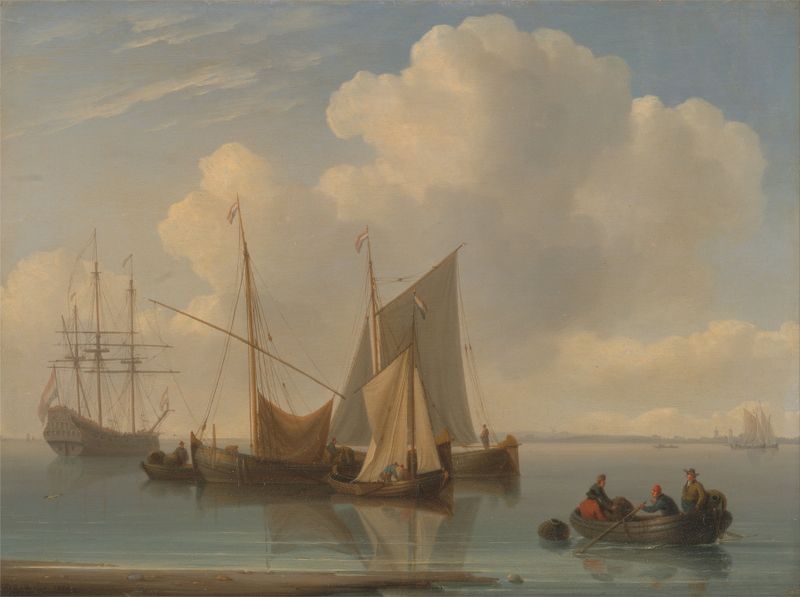
The beauty of the world often stands still, inviting us to explore deeper, to unravel layers that spark our imagination. Look to the left at the elegant curve of the sailing vessel's sail, billowing gracefully against the vast expanse of the water. The artist’s deft brushwork captures the interplay of light and shadow, showcasing the delicate ripples beneath the hull while emphasizing the cool blues and warm browns that evoke a sense of harmony. The composition expertly balances the vessels with the horizon, drawing the eye towards the infinite possibilities of the open sea. Beneath the serene surface lies a contrast between the industriousness of man and the boundless nature surrounding him.
The intricate details of the sails hint at the labor and craftsmanship behind these vessels, while the expansive sky suggests the freedom sought by sailors. This duality creates an emotional tension, where beauty exists in both the creations of humanity and the raw power of the natural world. In 1814, William Anderson painted Dutch Sailing Vessels during a period marked by maritime trade and exploration. Living in London, Anderson was an established marine artist who captured the spirit of the age — a time when the seas were bustling with commerce and adventure.
His work reflects not only the aesthetic values of the Romantic period but also the cultural significance of seafaring in shaping economies and societies.
More Artworks by William Anderson
Browse all →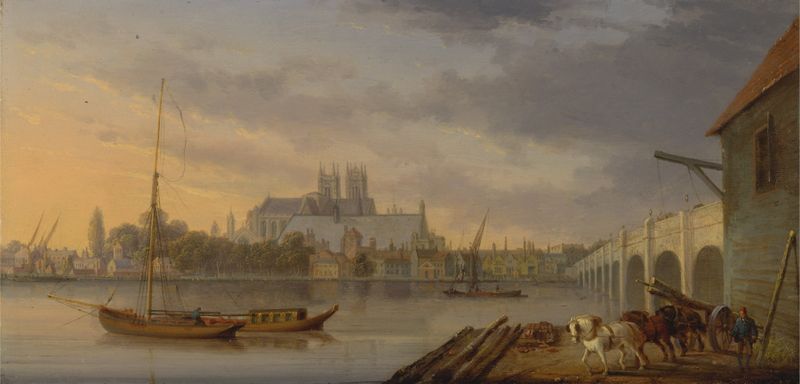
A View of Westminster Bridge and the Abbey from the South Side
William Anderson

London Bridge, with St. Paul’s Cathedral in the distance
William Anderson

A Wherry Taking Passengers out to Two Anchored Packets
William Anderson
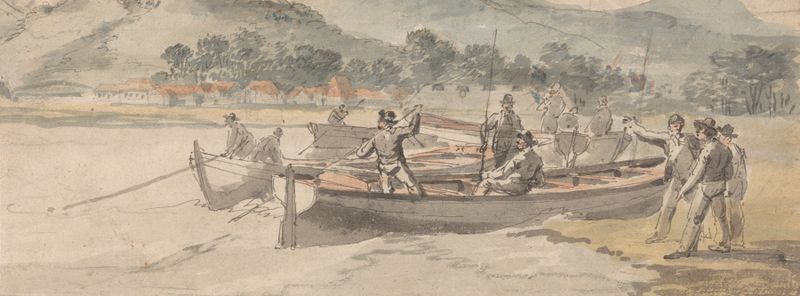
Boats and Men on Shore
William Anderson
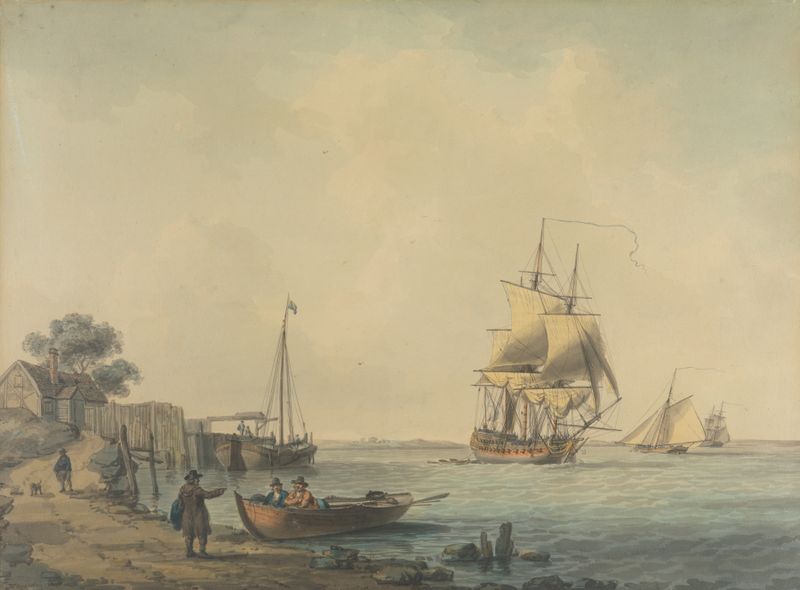
A Two-Decker Running up the Estuary with Figures on the Beach in the Foreground
William Anderson
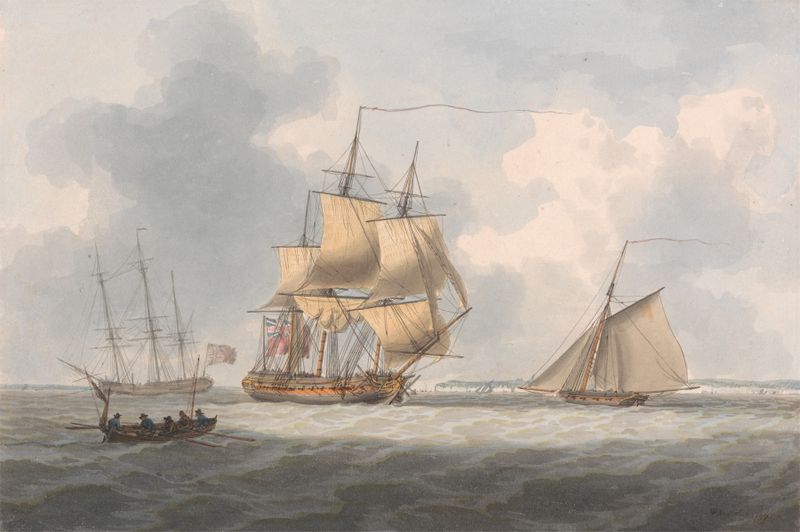
A Frigate Awaiting a Pilot
William Anderson
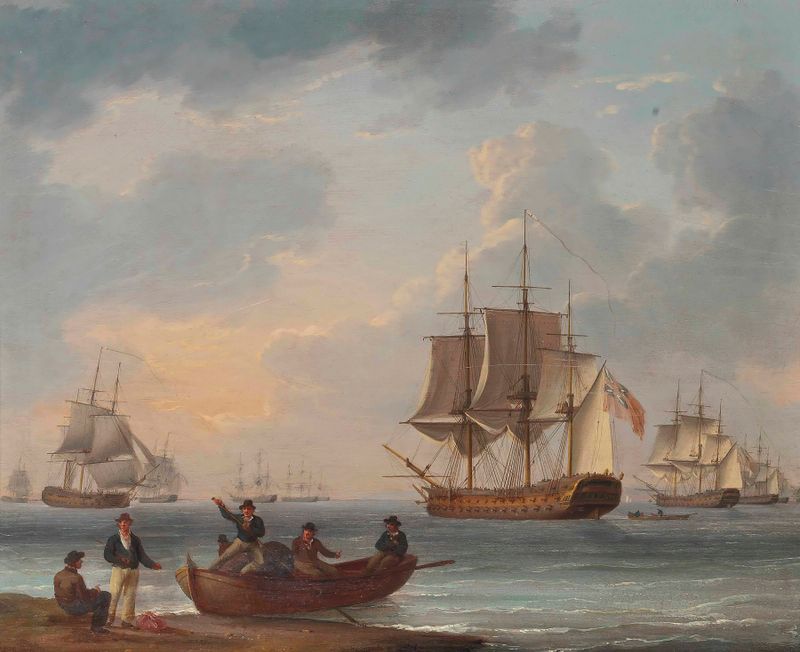
Sailors Pushing Off From Shore To Join The Fleet
William Anderson

Hussars Embarking at Deptford
William Anderson
Sailing Vessels
William Anderson

Man on Horseback and Other Figures
William Anderson





