A Venetian backwater — History & Facts
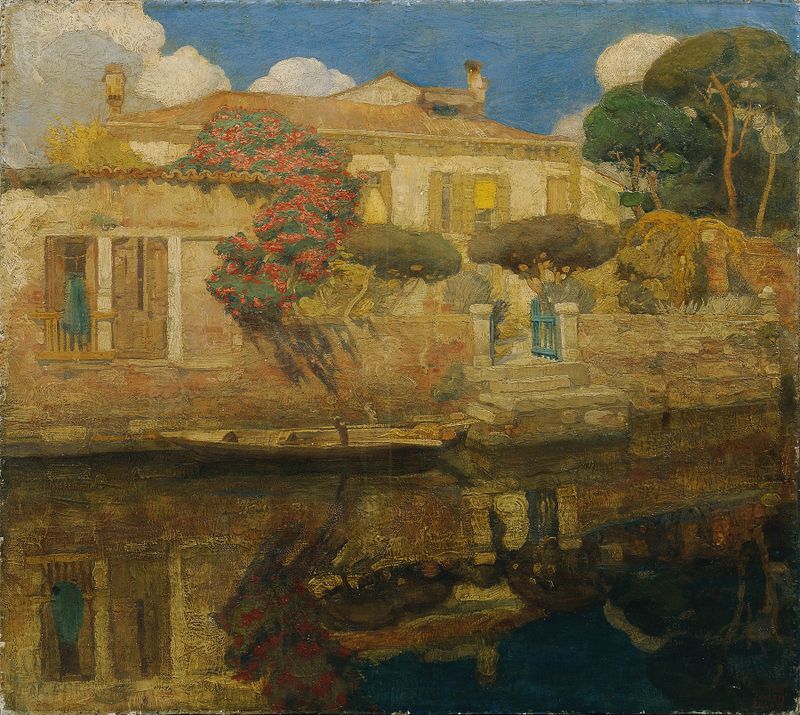
In the stillness of water, the weight of destiny unfolds, revealing a tapestry woven with time and solitude. Focus on the tranquil water that occupies the foreground, its surface a mirror reflecting the muted hues of the Venetian sky. Notice how the soft pastels of dawn blend seamlessly into the deep blues and greens of the canal, creating a sense of calm yet evoking a longing for stories untold. The gentle brushwork invites the eye to drift across the scene, capturing the essence of a moment suspended in time. Delve deeper into the subtle yet significant elements: the quiet architecture lining the water’s edge, which stands as a testament to both human ambition and the relentless passage of time.
Observe the shadows that play across the buildings, hinting at secrets held within their walls, and consider how the solitary gondola, poised on the brink of departure, symbolizes the choices that shape our fates. Each detail serves as a reminder of the fragility of existence in a world where paths intertwine and diverge. Created in 1892, this work emerged during a period of transition for both the artist and the art world. Vettore Zanetti-Zilla painted it while exploring the evolving identity of Venice amidst the encroaching modernity that threatened its serene traditions.
At this time, artistic movements were shifting toward Impressionism, and Zanetti-Zilla’s portrayal of the city reflects a deep connection to its spirit while capturing the essence of its impending transformations.