A View of a Lake in the Mountains — History & Facts
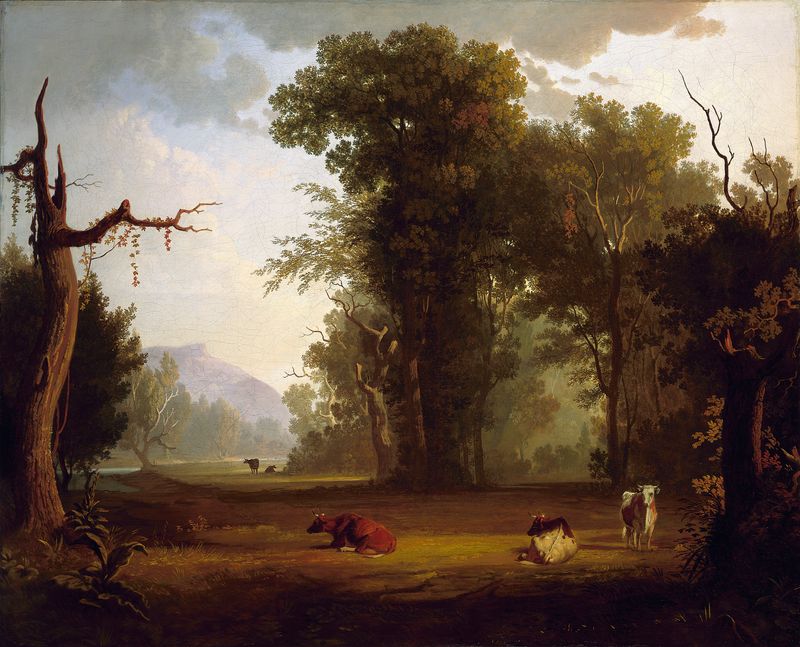
In a world where transformation thrives, the serene lake mirrors the profound metamorphosis of nature, inviting introspection and reverie. Look to the gentle curve of the shoreline, where soft brushstrokes delineate the meeting of water and land. The artist’s delicate palette of greens and blues creates a tranquil atmosphere, while the sunlight dances on the lake's surface, beckoning your gaze. Focus on the distant mountains, their majestic silhouettes framed against a sky that shifts from azure to moody gray, evoking a sense of both peace and foreboding. Hidden within the tranquil scene lies a contrast between the serene surface of the water and the looming mountains that signify challenges and change.
The lake, a symbol of reflection, invites viewers to confront their own transformations, while the mountains stand as silent guardians of the past. Notice the subtle brushwork that suggests the wind's gentle caress across the water, hinting at the unseen forces that shape both nature and human emotion. Created between 1856 and 1859, the artwork emerged during a time of personal and societal upheaval for the artist. As a prominent figure in American genre painting, he was grappling with his own identity and the impact of the Civil War on the nation.
This painting reflects the duality of tranquility and tension, representing not only the beauty of the American landscape but also the transformative journey within it.