Mississippi Fisherman — History & Facts
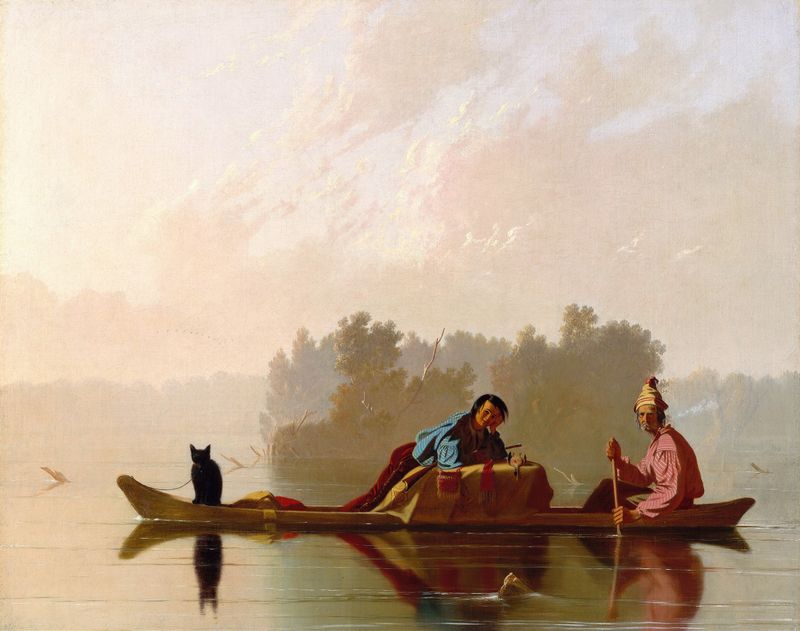
Did the painter know this moment would outlive them? A solitary fisherman glides along the murky water, his skiff gently bobbing amid a vast expanse of the Mississippi River. Shadows stretch across the tableau, where the setting sun casts a golden hue, hinting at a day well spent. This quiet, poignant scene captures not just a moment, but a longing for connection to the land, the water, and the timeless rhythm of life. Look to the left, where the fisherman’s weathered hands grasp the oars, embodying the labor and intimacy of his craft.
The textured brushstrokes convey the rippling water, mesmerizing with their fluidity, while the warm palette of ochres and blues evokes the tranquility of twilight. Notice the subtle details—the fisherman’s broad-brimmed hat that frames his face, the gentle swell of the river that cradles him, and the distant trees that echo the spirit of the American wilderness. Bingham’s painting reveals a deeper emotional resonance—the juxtaposition of solitude against the expansive landscape speaks to a fundamental yearning for belonging. The stillness of the water reflects not just the physical environment but resonates with the internal landscape of the fisherman, evoking themes of perseverance and nostalgia.
The viewer is invited to contemplate the balance between man and nature, and the ephemeral beauty of life’s simple moments. Around 1850, during a time marked by the expansion of the American frontier and the burgeoning spirit of Manifest Destiny, Bingham painted this work while living in Missouri. As an artist closely aligned with the realities of American life, he sought to capture the essence of everyday moments, depicting ordinary people engaging harmoniously with their surroundings. This painting serves as a testament to his dedication to portraying the American experience in a rapidly changing world.