
A View of Cuba — History & Facts
What if beauty was never meant to be finished? In Edmund Darch Lewis's A View of Cuba, we are invited to linger in a moment that feels both infinite and transient, capturing the essence of creation itself. Look to the center where the lush greenery melds with the vibrant blue of the sea, drawing your eye into the idyllic landscape. The artist's deft brushwork creates a rich tapestry of light and shadow, enhancing the depth of the rolling hills and the distant horizon. Notice how the soft, golden glow of sunlight bathes the scene, coaxing forth the colors of nature — from the verdant foliage to the crystalline waters that seem to stretch beyond the canvas. Delve deeper into the interplay of elements: the calm sea reflects not just the sky, but also the serenity of the moment.
The juxtaposition of light and dark embodies a profound stillness, suggesting the weight of history that rests on the land. The lively strokes of the foliage create a contrast with the tranquil backdrop, hinting at the vibrancy of life amidst the stillness. Perhaps, the painting speaks to the transient nature of beauty, forever captured yet never wholly complete in its essence. Lewis painted A View of Cuba in 1874 during a time when American artists were increasingly inspired by landscapes that embodied the country's expanding identity.
Living in Philadelphia, he had the opportunity to travel and study picturesque locales, and this work reflects an era of burgeoning appreciation for the beauty of the American scenery while also commenting on the changes brought about by modernization. The painting stands as both a celebration and a preservation of a world on the cusp of transformation.
More Artworks by Edmund Darch Lewis
Browse all →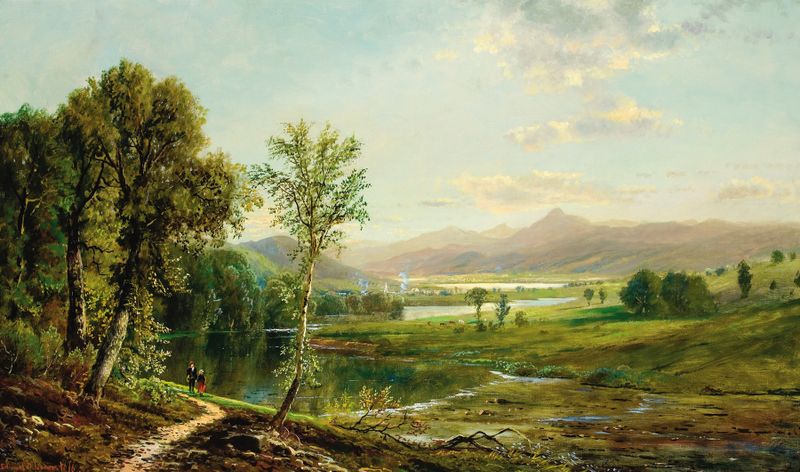
Figures Walking Along the River
Edmund Darch Lewis
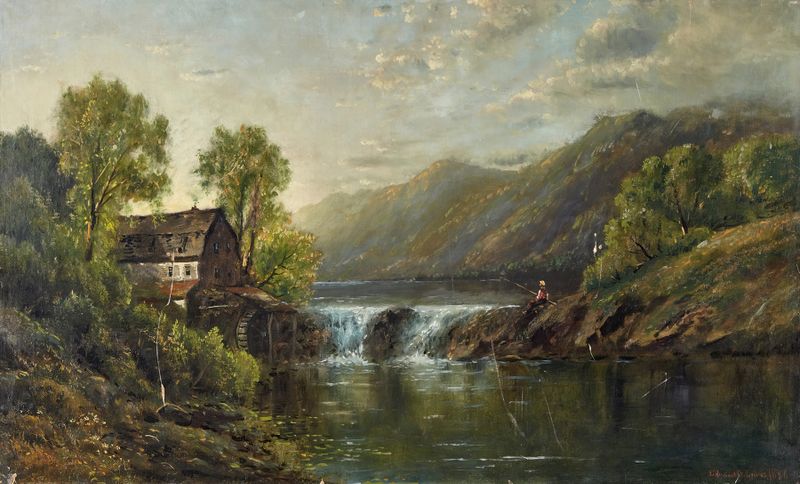
The Old Mill Stream
Edmund Darch Lewis
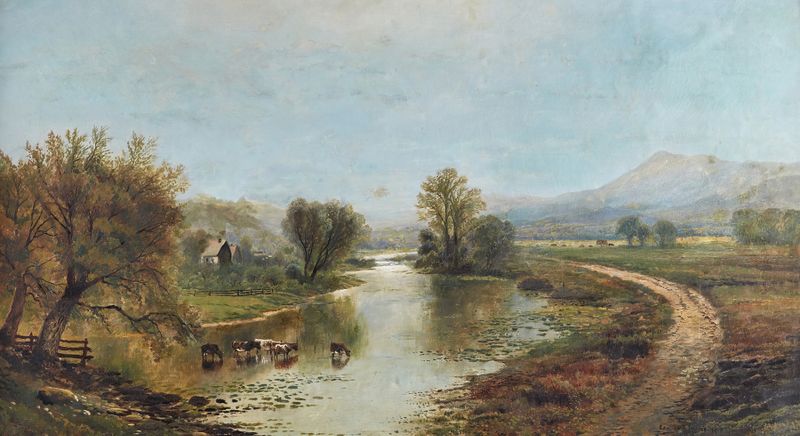
Panoramic Landscape with Farms, River, Cows and Mountains
Edmund Darch Lewis
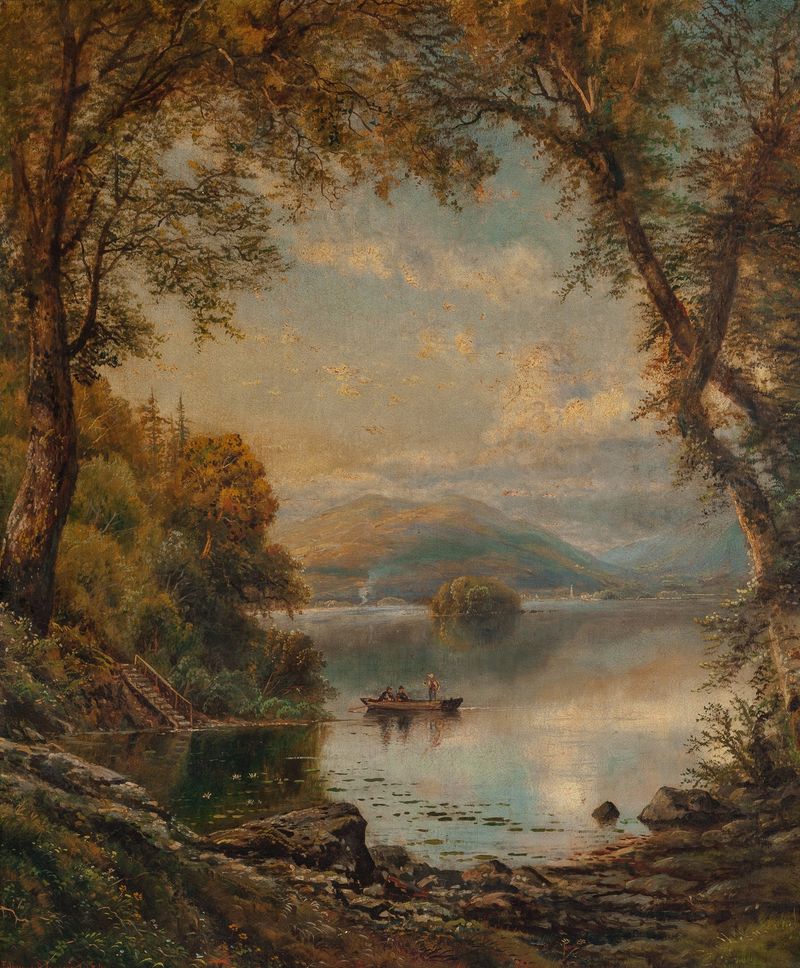
Lake Landscape with Fishermen
Edmund Darch Lewis
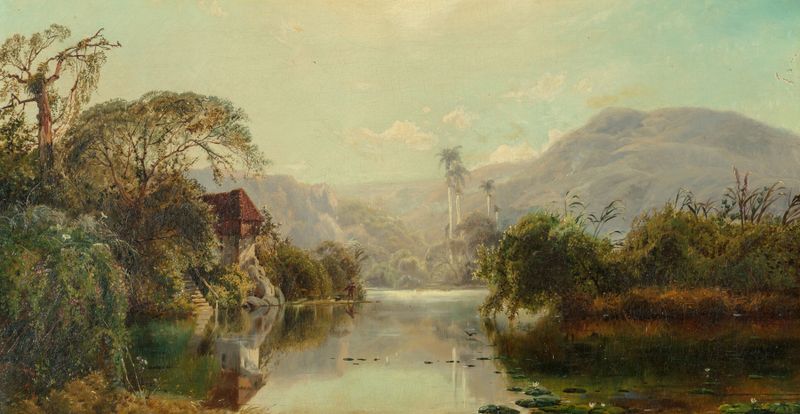
View of Cuba
Edmund Darch Lewis
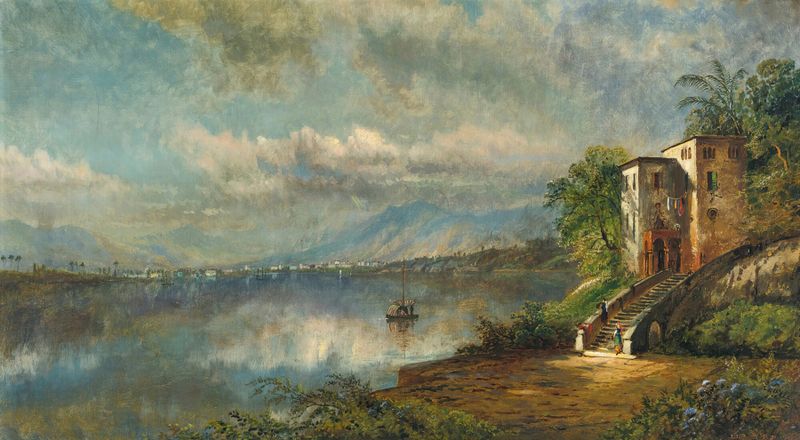
Santiago De Cuba
Edmund Darch Lewis
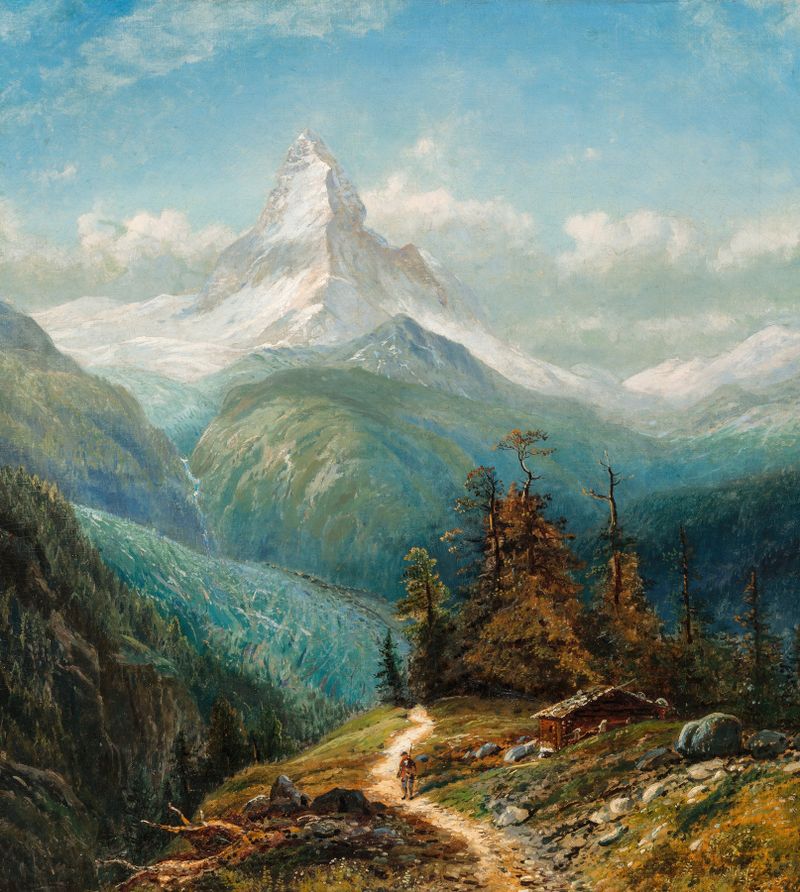
The Matterhorn
Edmund Darch Lewis

Ships at Sea on a Rocky Coast
Edmund Darch Lewis





