
A View Of Haarlem — History & Facts
It captures the essence of transformation, the delicate dance between beauty and decay, reminding us of the fragility of time and existence. Look to the horizon where the gilded light spills over the rooftops of Haarlem, illuminating the decay of the weathered structures below. The painter's deft brush strokes create a tapestry of textures—crumbling facades juxtaposed against the vibrancy of life, and the delicate interplay of greens and browns brings depth to the scene. Notice the way the clouds loom above, their soft, billowing forms echoing the tension of the surroundings, as if they hold secrets of both promise and loss. In this landscape, the autumn trees bordering the canal whisper of change, their leaves hinting at a fleeting beauty that will soon wither.
The still waters reflect the architecture's impermanence, mirroring the subtle decay set against an eternal sky. The absence of bustling people creates a haunting silence, inviting the viewer to ponder the stories left untold—each brick and beam a testament to the passage of time and the inevitability of nature's reclamation. Cornelis Springer painted this work in 1890 as the art world was transitioning toward modernism, with a growing interest in capturing real-world settings with an emphasis on light and atmosphere. At this time in his life, he was establishing his reputation as a prominent Dutch painter, known for his meticulous attention to architectural details.
This painting serves as a bridge between the traditional and the emerging, reflecting both personal and societal shifts during a period marked by change.
More Artworks by Cornelis Springer
Browse all →
The Royal Palace and the Nieuwe Kerk on the Dam, Amsterdam
Cornelis Springer
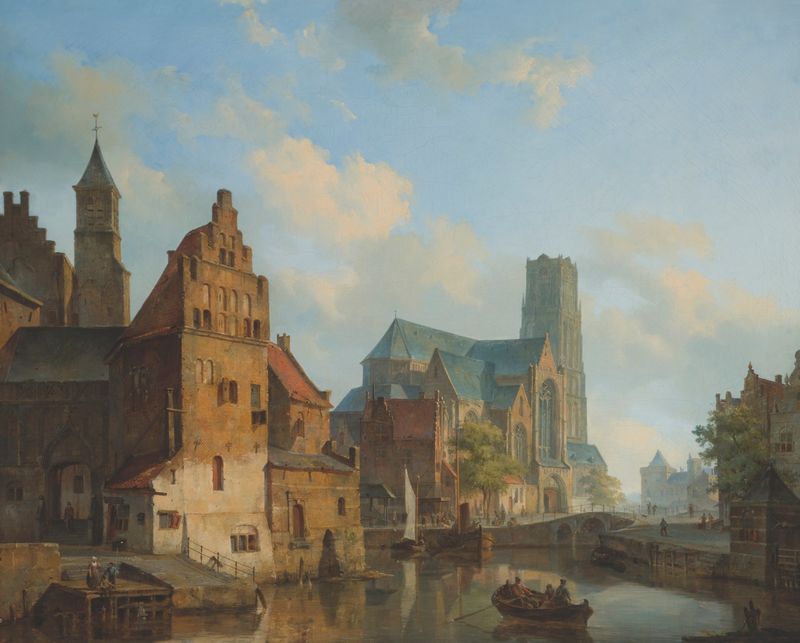
A View Of The Delftse Vaart And St Laurens Church, Rotterdam
Cornelis Springer

The Kerkgracht In Leiden
Cornelis Springer
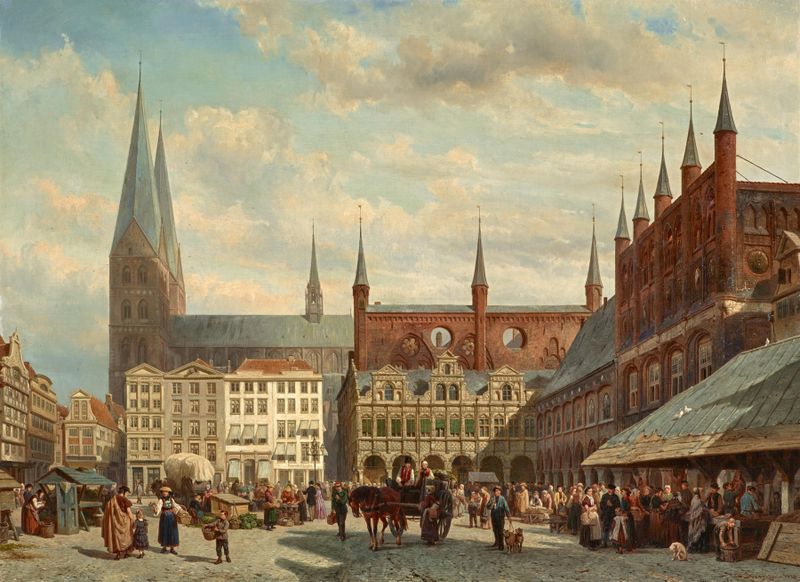
Ansicht des Lübecker Marktes
Cornelis Springer

View of The Hague
Cornelis Springer
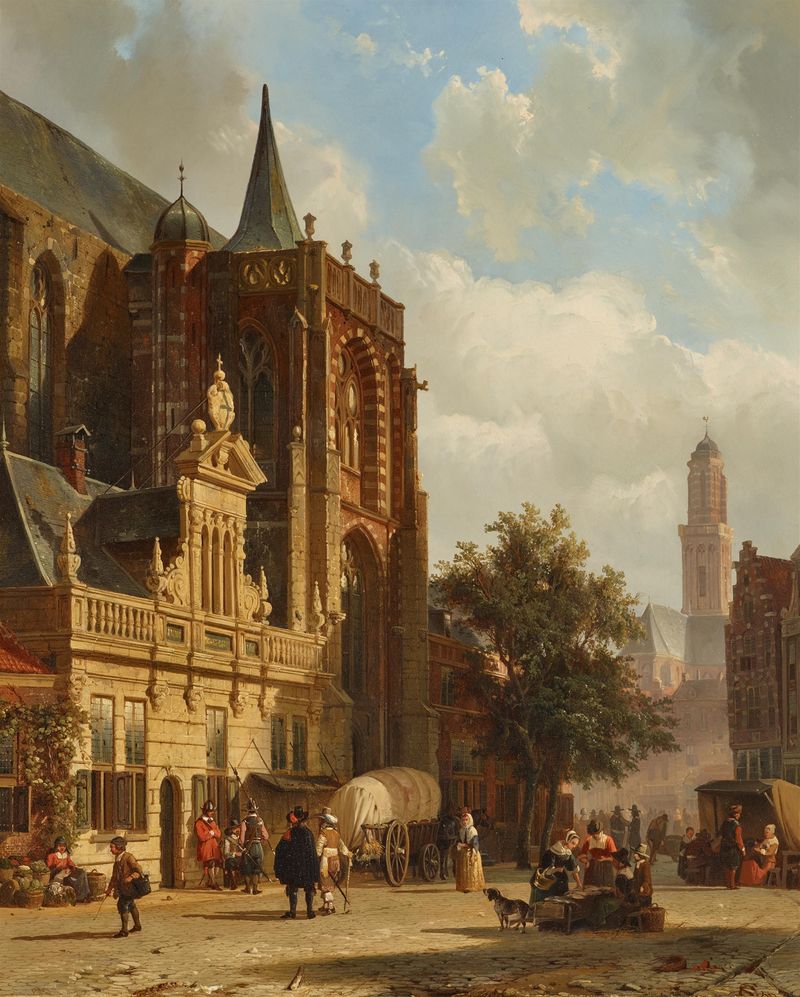
Der Grote Markt in Zwolle
Cornelis Springer
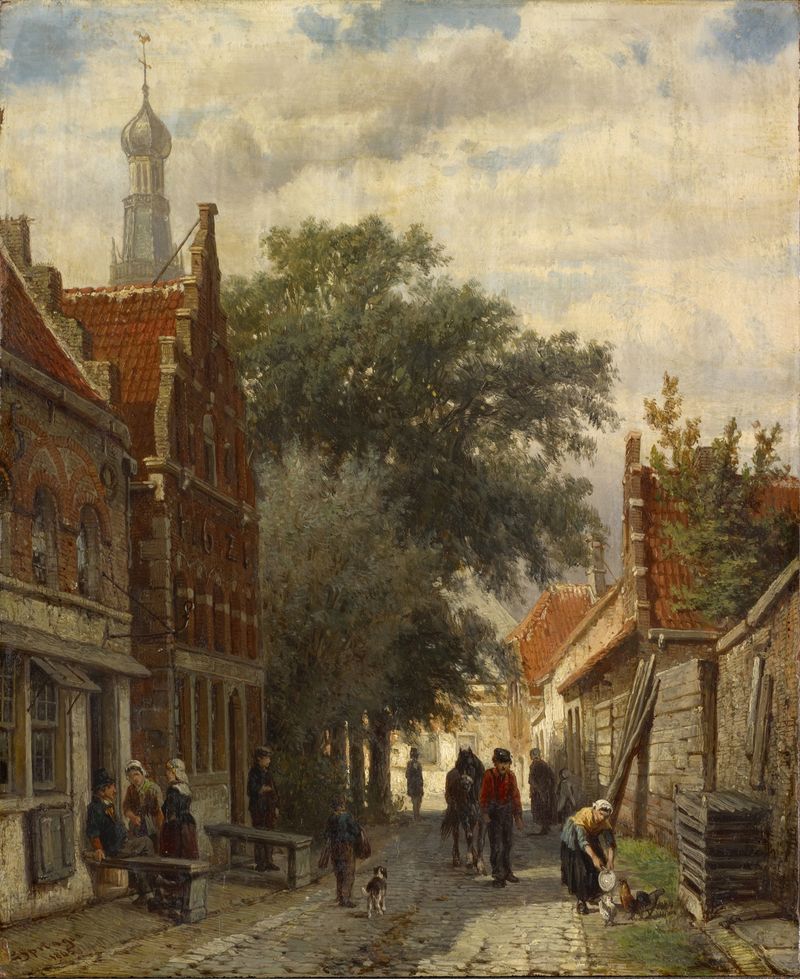
Street in Enkhuizen
Cornelis Springer

View of The Hague from the Delftse Vaart in the Seventeenth Century
Cornelis Springer
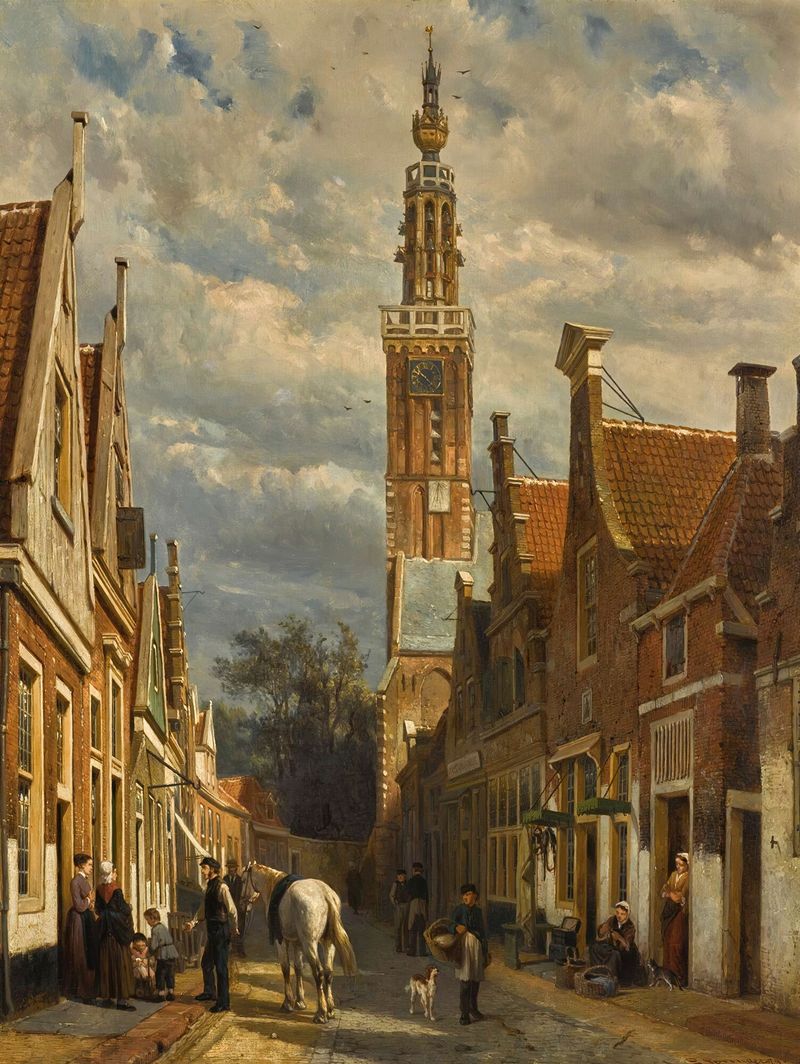
The carillon tower in Edam
Cornelis Springer
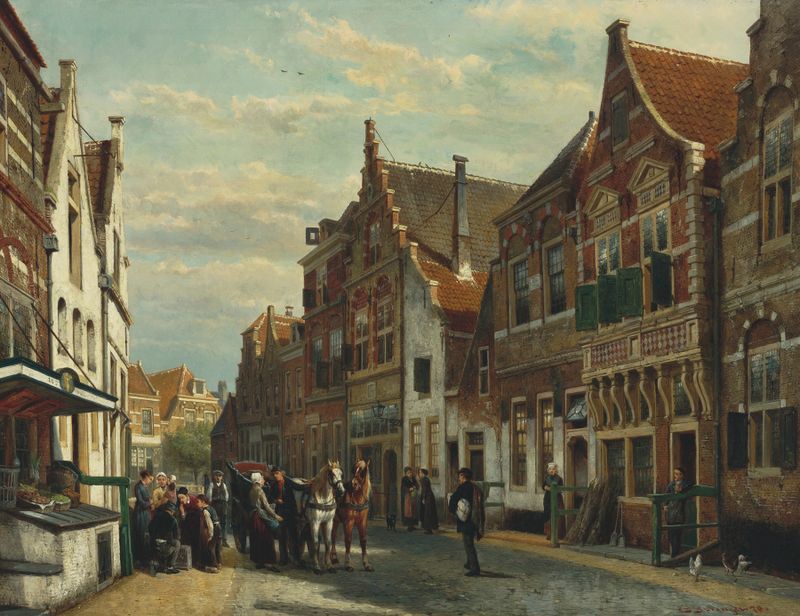
The Wijdstraat, Oudewater, in summer
Cornelis Springer





