
Ansicht des Lübecker Marktes — History & Facts
The quietude of an era poised on the brink of revolution, the stillness of a marketplace pregnant with the weight of change. Look to the center of the canvas, where the vibrant hues of bustling stalls draw your gaze. The detailed architecture of Lübeck rises majestically in the background, its brick facades rich with the patina of age. Notice how the sunlight dances upon the cobblestones, illuminating the figures engaged in commerce and conversation, their gestures a lively contrast to the static grandeur of their surroundings.
Here, every brushstroke tells a story, each color a whisper of life. Beneath this picturesque scene lies a tension between permanence and transience. The steadfast buildings represent tradition, while the animated crowd embodies the winds of change sweeping through society in the late 19th century. Small details like the expressions of the merchants suggest varying reactions to the burgeoning industrialization, a subtle commentary on the shifting economic landscape.
This marketplace is not just a physical space; it’s a microcosm of a society approaching a pivotal moment in history. Cornelis Springer painted this work in 1870 against a backdrop of rapid industrial growth and political upheaval in Europe. This period was marked by significant changes in urban life as cities transformed under the influence of modernization. As an artist celebrated for his depictions of Dutch architecture and urban scenes, Springer captured not only the beauty of Lübeck but also the palpable anticipation of a world on the verge of transformation.
More Artworks by Cornelis Springer
Browse all →
The Royal Palace and the Nieuwe Kerk on the Dam, Amsterdam
Cornelis Springer
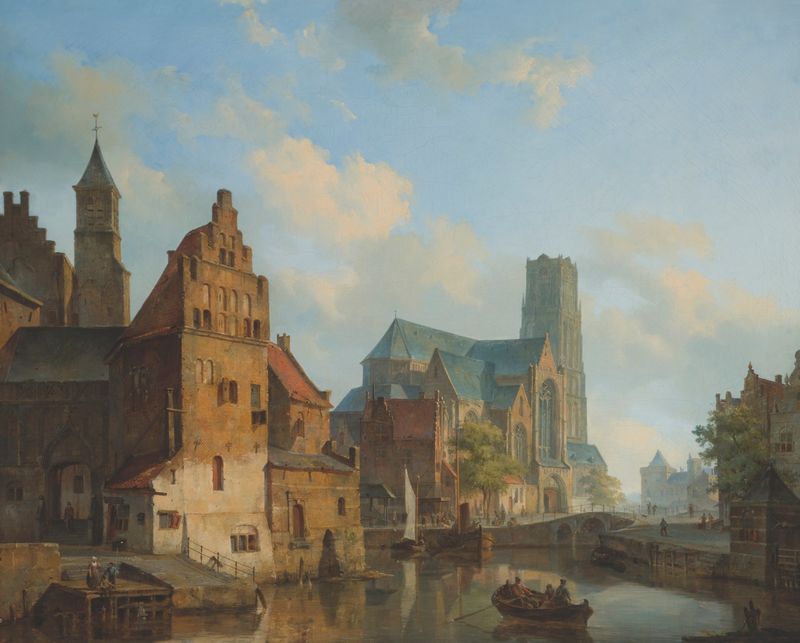
A View Of The Delftse Vaart And St Laurens Church, Rotterdam
Cornelis Springer

The Kerkgracht In Leiden
Cornelis Springer

View of The Hague
Cornelis Springer
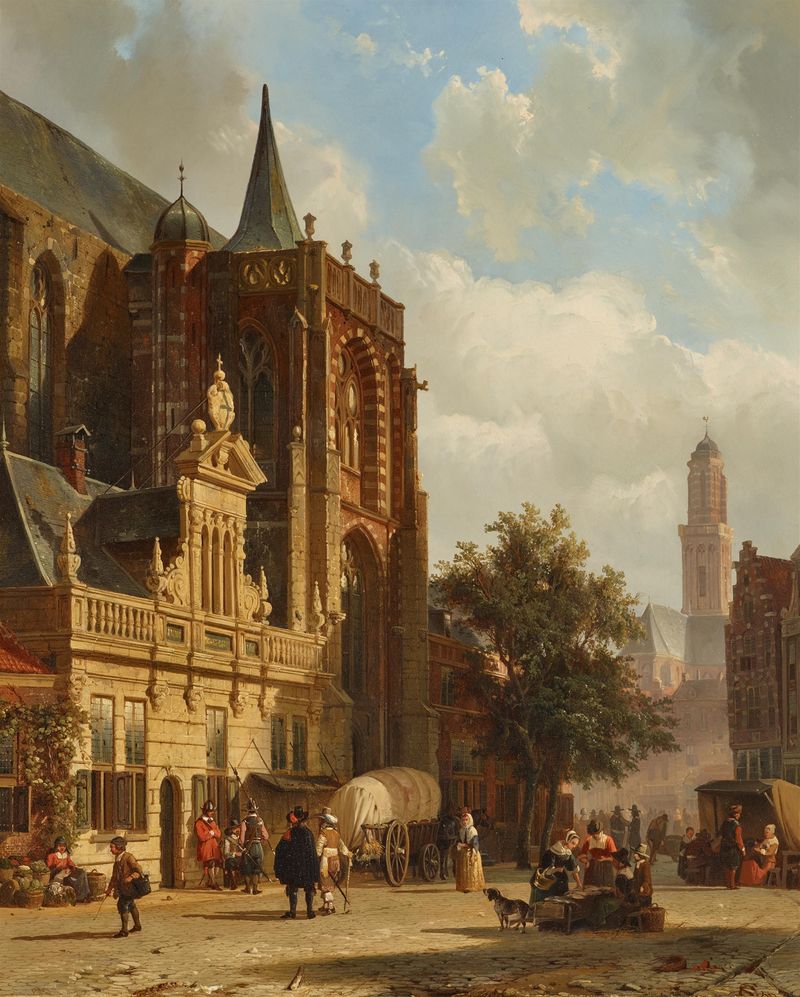
Der Grote Markt in Zwolle
Cornelis Springer
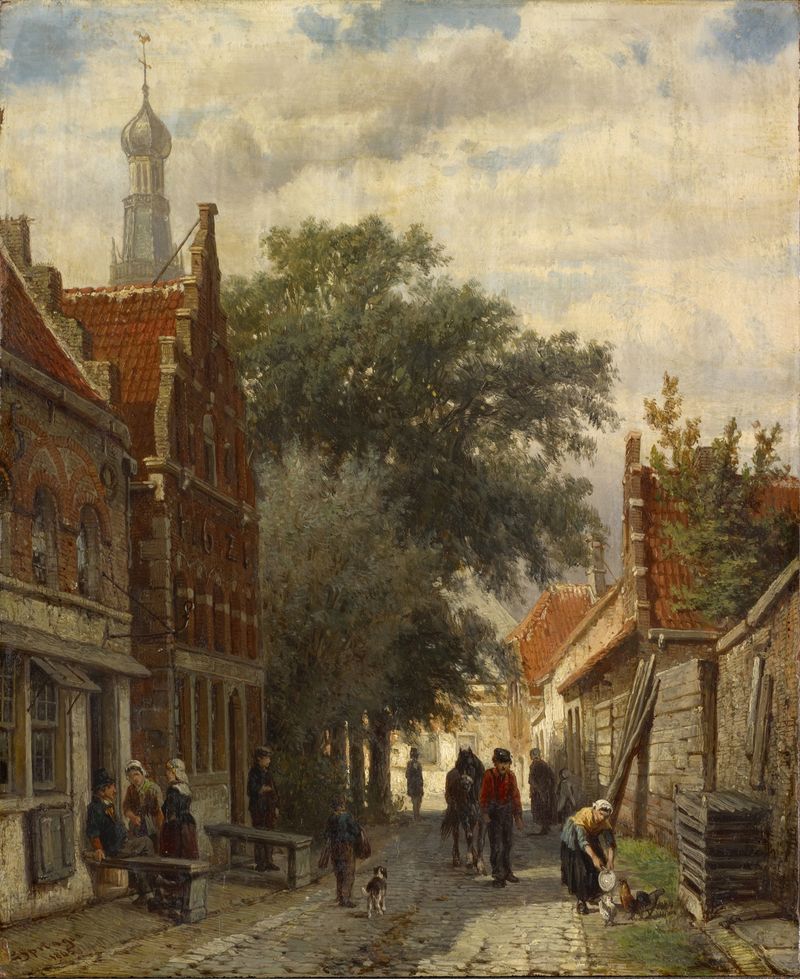
Street in Enkhuizen
Cornelis Springer

View of The Hague from the Delftse Vaart in the Seventeenth Century
Cornelis Springer
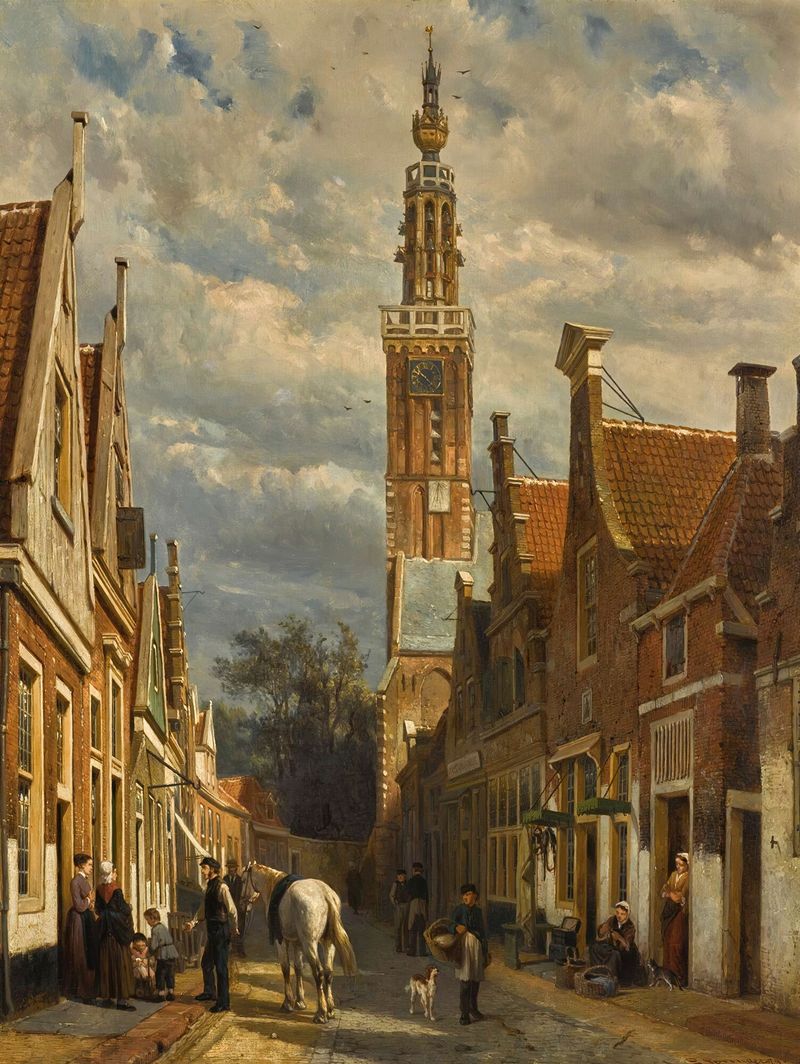
The carillon tower in Edam
Cornelis Springer
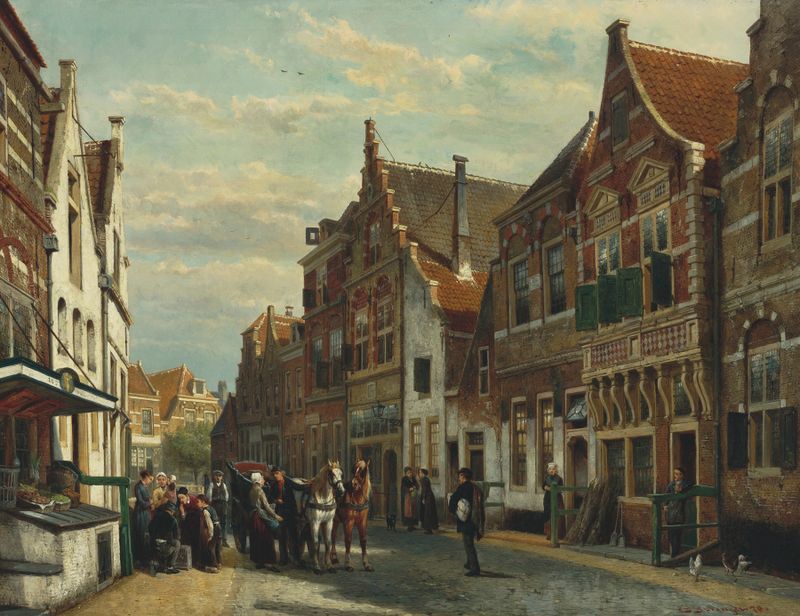
The Wijdstraat, Oudewater, in summer
Cornelis Springer
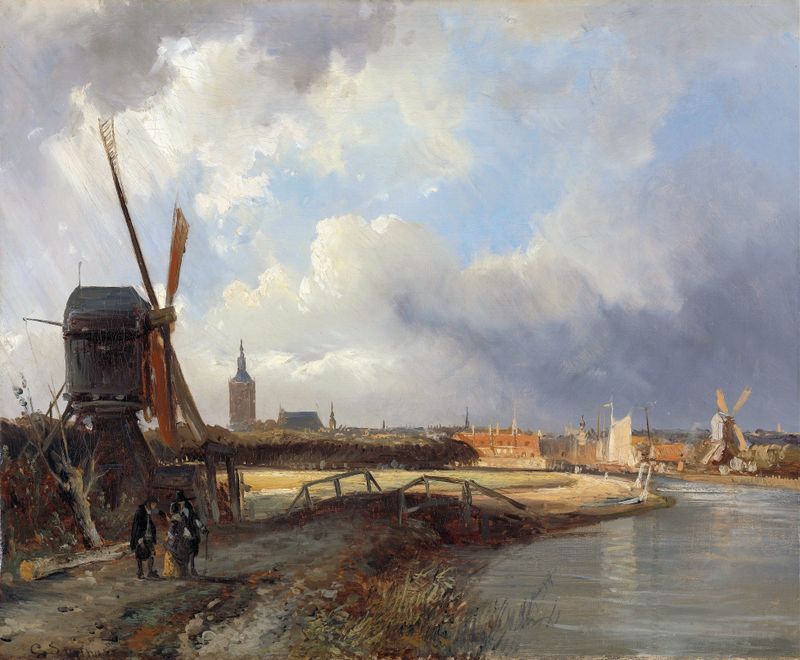
View of The Hague
Cornelis Springer
More Architecture Art
Browse all →
The statue of Liberty
Frédéric Auguste Bartholdi

View of Houses in Delft, Known as ‘The Little Street’
Johannes Vermeer

View of Houses in Delft, Known as ‘The Little Street’
Johannes Vermeer

The Cathedral in Rouen. The portal, Grey Weather
Claude Monet

The yellow house
Vincent van Gogh

The Church in Auvers-sur-Oise, View from the Chevet
Vincent van Gogh