
The Kerkgracht In Leiden — History & Facts
In the stillness of The Kerkgracht In Leiden, destinies intertwine, revealing how the past and present coalesce in quietude. Each brushstroke whispers of lives lived, decisions made, and the inevitable passage of time, prompting viewers to reflect on the legacies hidden in the folds of daily life. Look to the left at the impressive church facade, its towering spire reaching skyward, casting a shadow over the gentle ripples of the canal below. The composition invites your gaze toward the serene waters, where boats float lazily, their reflections dancing in the light.
Notice how the warm tones of ochre and soft blues harmonize, effortlessly balancing the bustling human activity with the stillness of nature, creating a tapestry that speaks to both movement and tranquility. Beneath the surface, there lies an exploration of contrasts: the vibrant life of the bustling marketplace, where figures engage in commerce and conversation, stands against the solemnity of the church, a silent witness to their endeavors. The interplay of light and shadow not only illuminates the physical landscape but also casts a metaphorical glow on the choices that lead individuals toward their fates—each face a story, each moment a pivot in their destiny. In 1857, Cornelis Springer painted this scene in Leiden, a city steeped in history and transition. During this period, the artist was refining his distinctive style, focusing on the interplay of architecture and landscape.
It was a time when the Netherlands was grappling with the effects of industrialization, yet still steeped in rich artistic tradition, allowing Springer to merge the old and new in his evocative portrayal of daily life.
More Artworks by Cornelis Springer
Browse all →
The Royal Palace and the Nieuwe Kerk on the Dam, Amsterdam
Cornelis Springer
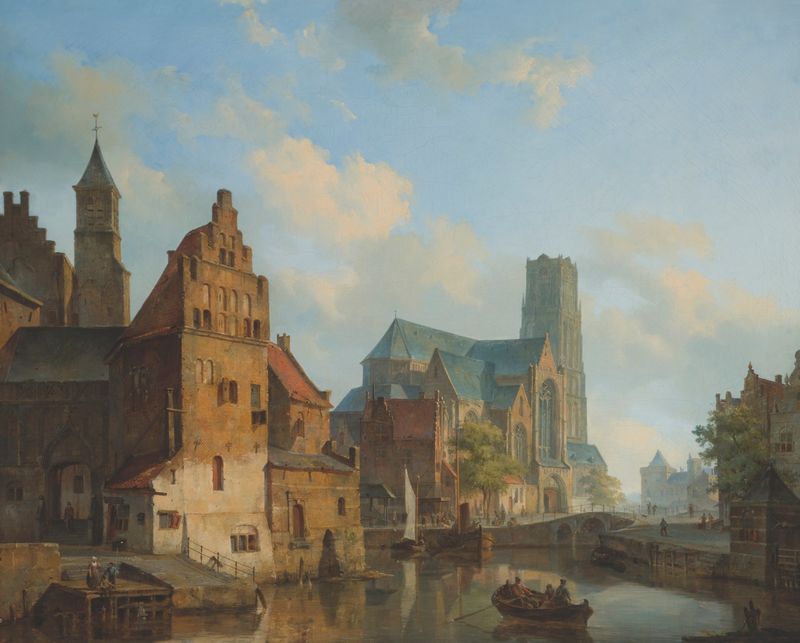
A View Of The Delftse Vaart And St Laurens Church, Rotterdam
Cornelis Springer
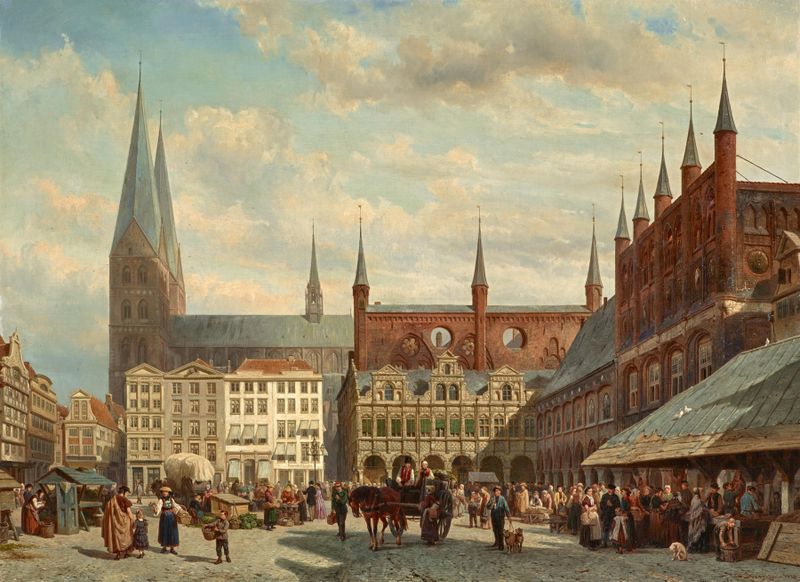
Ansicht des Lübecker Marktes
Cornelis Springer

View of The Hague
Cornelis Springer
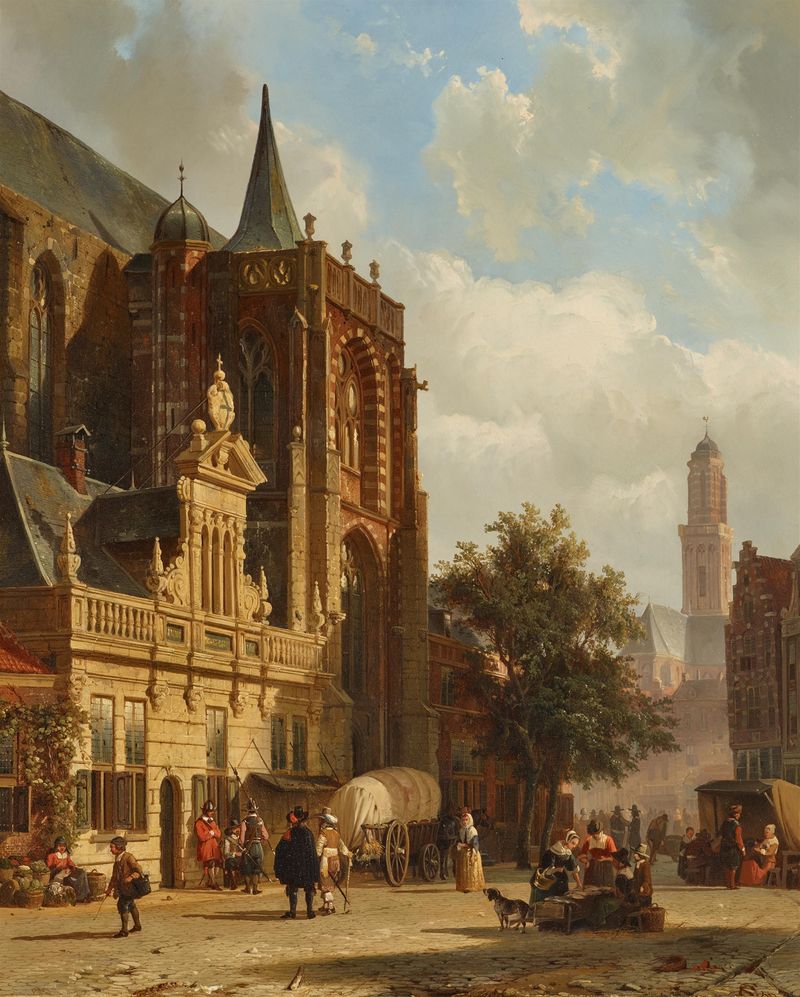
Der Grote Markt in Zwolle
Cornelis Springer
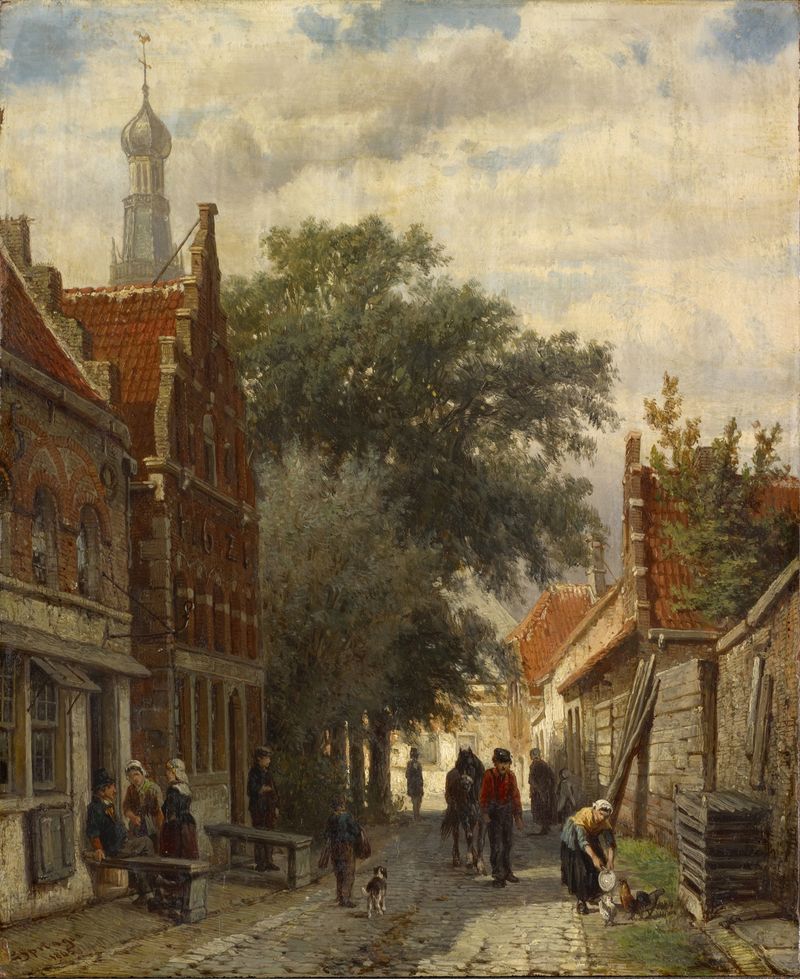
Street in Enkhuizen
Cornelis Springer

View of The Hague from the Delftse Vaart in the Seventeenth Century
Cornelis Springer
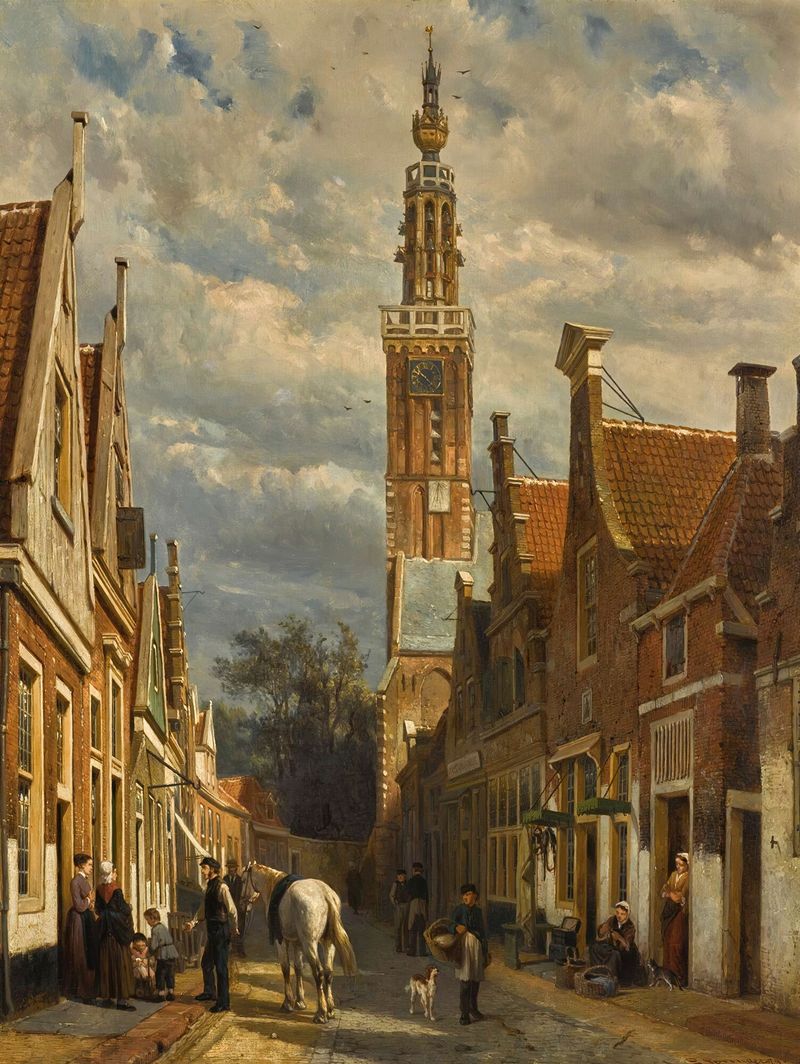
The carillon tower in Edam
Cornelis Springer
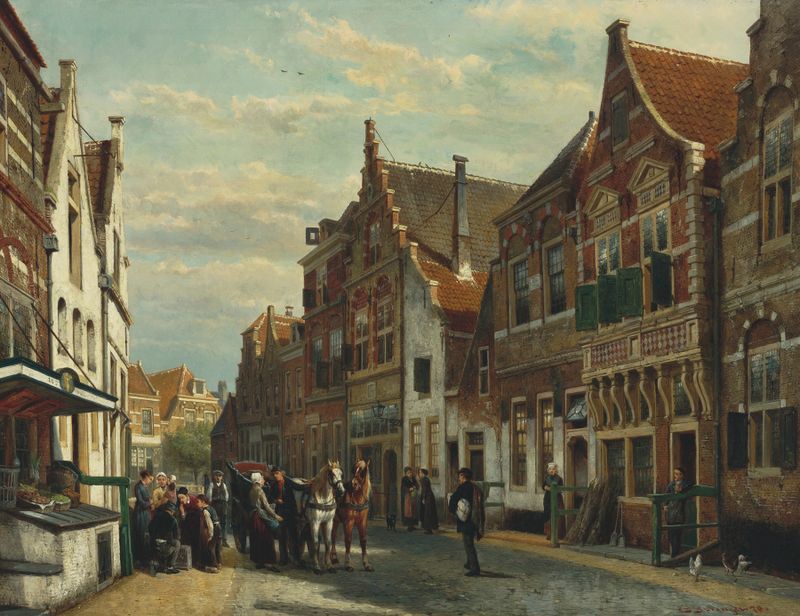
The Wijdstraat, Oudewater, in summer
Cornelis Springer
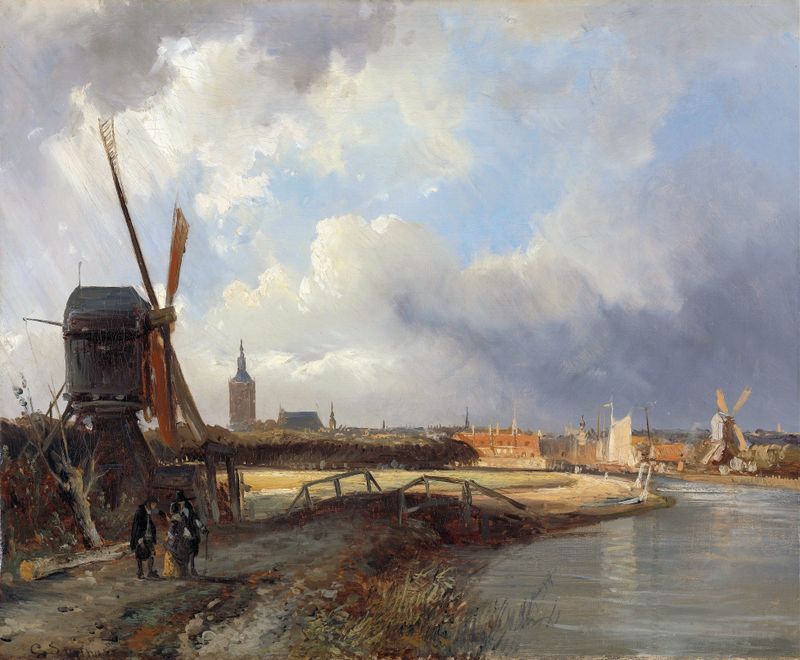
View of The Hague
Cornelis Springer
More Architecture Art
Browse all →
The statue of Liberty
Frédéric Auguste Bartholdi

View of Houses in Delft, Known as ‘The Little Street’
Johannes Vermeer

View of Houses in Delft, Known as ‘The Little Street’
Johannes Vermeer

The Cathedral in Rouen. The portal, Grey Weather
Claude Monet

The yellow house
Vincent van Gogh

The Church in Auvers-sur-Oise, View from the Chevet
Vincent van Gogh