
Street in Enkhuizen — History & Facts
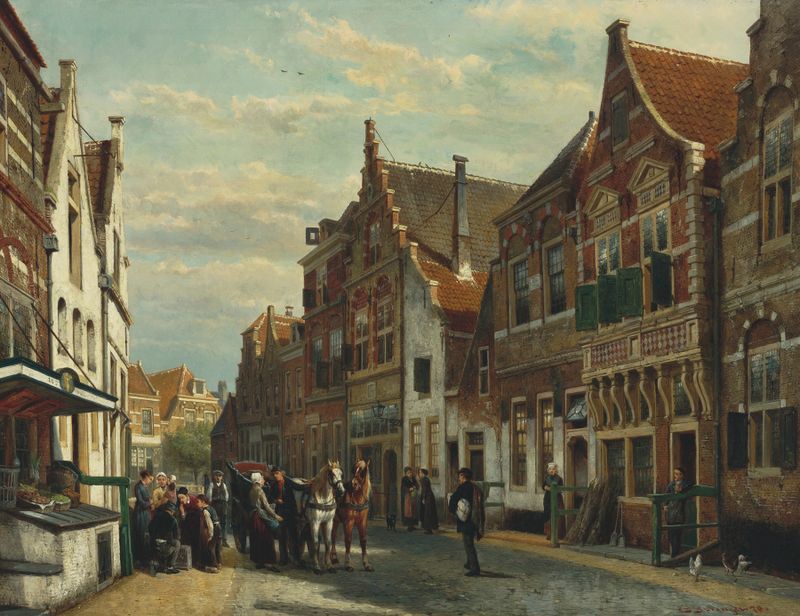
What secret hides in the quiet of the canvas? The stillness of Street in Enkhuizen holds a transformative power, inviting us to reflect on the stories etched into its cobblestone paths and the lives that once filled its air. Look to the left at the vibrant cluster of buildings, their façades dressed in shades of ochre and terracotta, each telling tales of history and resilience. Notice the play of light that dances across the cobblestones, illuminating small details like the cracked plaster and blooming window boxes, anchoring you in the present yet whispering echoes of the past. The careful brushstrokes create a tapestry of textures, while the gentle sky above casts a soft glow, inviting contemplation of both time and place. Yet, beneath the serene exterior lies a poignant contrast.
The stillness of the empty street hints at the passage of time, a reminder of the lives that once thrived in this bustling port town. The juxtaposition of vibrant colors against the muted shadows evokes a sense of nostalgia, suggesting a silent witness to transformation as the world outside shifts. The shadows deepen, revealing the uncertainties that dwell just beyond the frame, magnifying the emotional weight of this intimate scene. In 1865, Cornelis Springer was deeply engaged with capturing the essence of small-town life in the Netherlands.
Not long after the upheaval of revolutions across Europe, he sought solace in the idyllic charm of towns like Enkhuizen, a momentary refuge from the chaos of modernity. During this period, his work reflected both a longing for simplicity and a growing awareness of the complexities of change, as urbanization began to reshape landscapes and lives.
More Artworks by Cornelis Springer
Browse all →
The Royal Palace and the Nieuwe Kerk on the Dam, Amsterdam
Cornelis Springer
A View Of The Delftse Vaart And St Laurens Church, Rotterdam
Cornelis Springer

The Kerkgracht In Leiden
Cornelis Springer
Ansicht des Lübecker Marktes
Cornelis Springer

View of The Hague
Cornelis Springer
Der Grote Markt in Zwolle
Cornelis Springer

View of The Hague from the Delftse Vaart in the Seventeenth Century
Cornelis Springer
The carillon tower in Edam
Cornelis Springer
The Wijdstraat, Oudewater, in summer
Cornelis Springer
View of The Hague
Cornelis Springer





