
A view of the park at Ermenonville with the tomb of Jean-Jacques Rousseau and the Temple de la Philosophie — History & Facts
In this still moment, the echoes of thought linger, inviting contemplation and introspection. The serene landscape captures the essence of rebirth, revealing layers of philosophical depth embedded within nature’s tranquil embrace. Look to the left at the verdant slopes, where lush greenery cascades gently toward the horizon. Notice how the light filters through the trees, casting dappled shadows that dance playfully along the path.
The tomb of Jean-Jacques Rousseau stands sentinel at the center, its weathered stones contrasting with the vibrant colors of the surrounding foliage, suggesting a dialogue between the past and the living world. The Temple de la Philosophie, perched gracefully nearby, draws the eye upward, an architectural homage that signifies enlightenment amid nature's splendor. At first glance, the painting evokes a peaceful retreat, yet beneath its surface lies a profound tension between life and mortality. The juxtaposition of Rousseau’s tomb and the thriving landscape symbolizes the enduring impact of ideas even after physical presence fades.
Furthermore, the temple serves as a reminder of the pursuit of knowledge and understanding, suggesting that thought — like nature — is everlasting and ever-evolving, a rebirth of the mind amid the cycles of existence. In 1802, Hubert Robert painted this scene during a period marked by the Enlightenment's flourish and the Napoleonic era in France. Living in a time when philosophical discourse shaped society, Robert sought to celebrate the harmony between nature and human thought. This work reflects his commitment to blending elements of landscape and architecture, capturing both the aesthetic beauty of the scenery and the intellectual legacy of Enlightenment thinkers like Rousseau.
More Artworks by Hubert Robert
Browse all →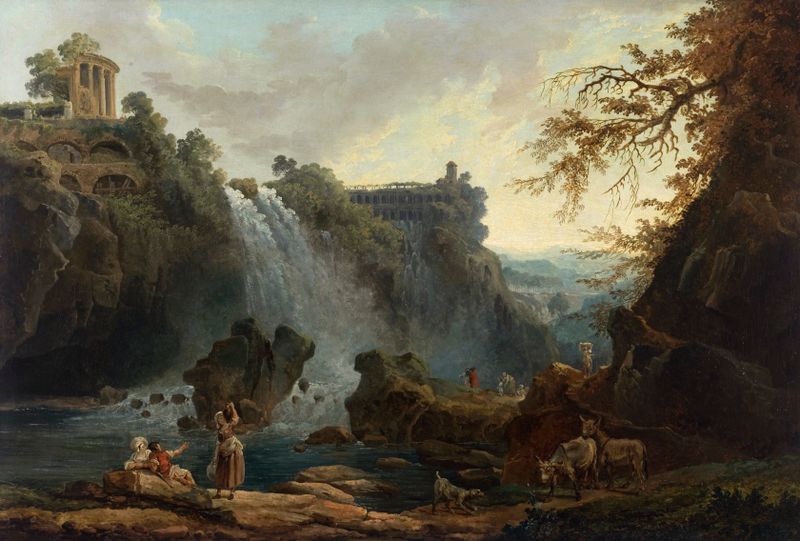
Les Cascatelles de Tivoli
Hubert Robert
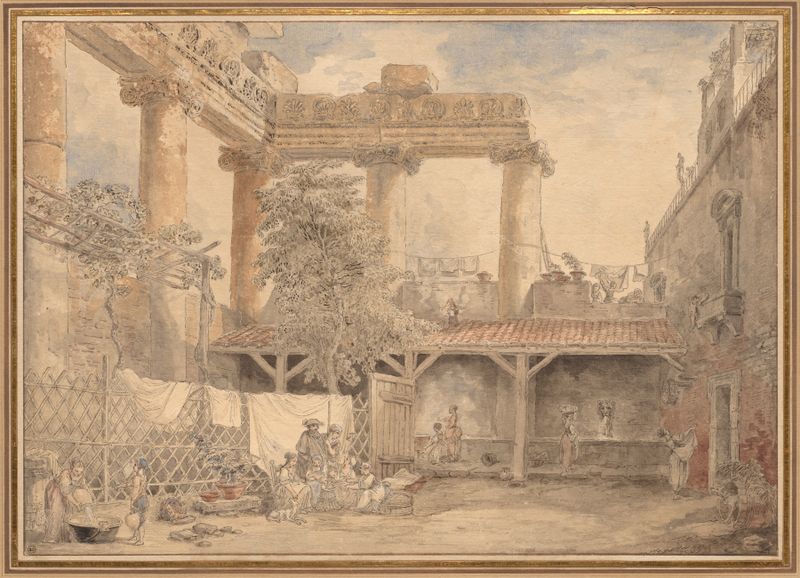
Roman Ruins, Villa Pamfili
Hubert Robert

The Rustic Bridge, Château de Méréville, France
Hubert Robert

The Portico of a Country Mansion
Hubert Robert

Architectural Capriccio
Hubert Robert

The Obelisk
Hubert Robert
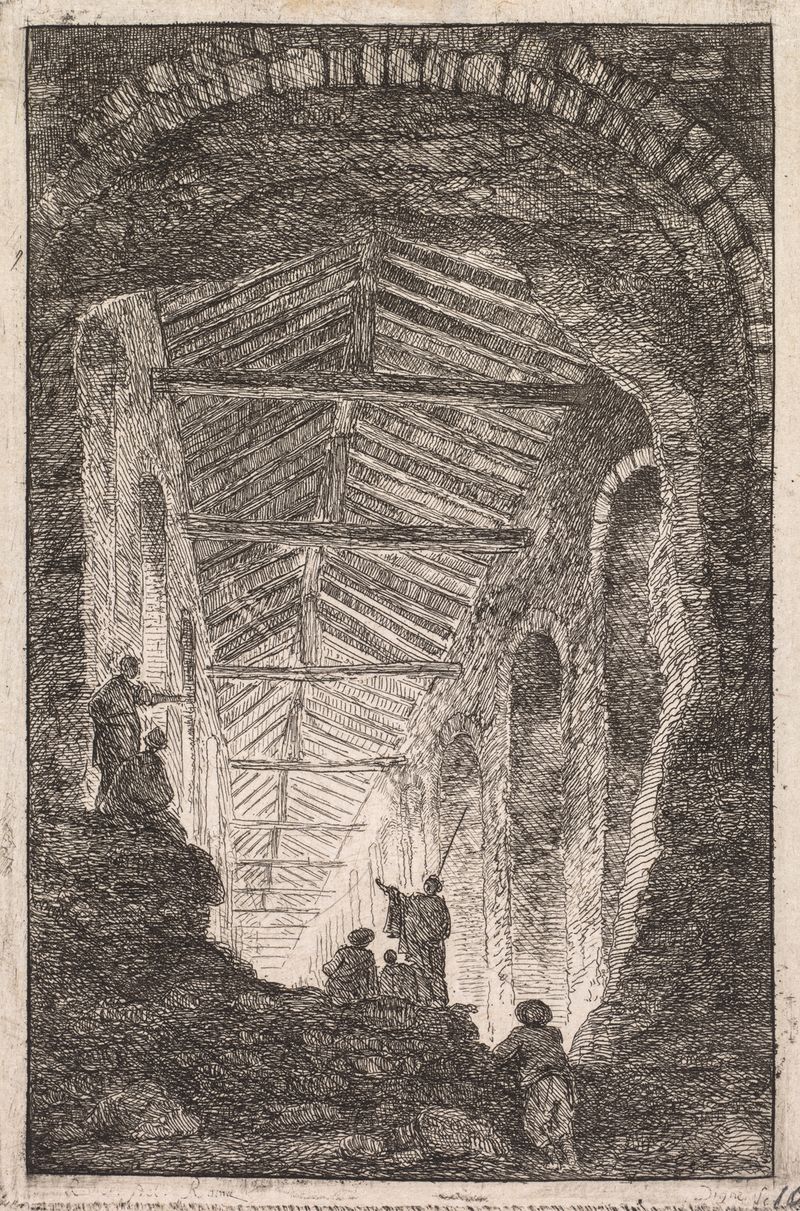
The Antique Gallery
Hubert Robert

L’incendie de l’Opéra, vu des jardins du Palais-Royal, le 8 juin 1781
Hubert Robert
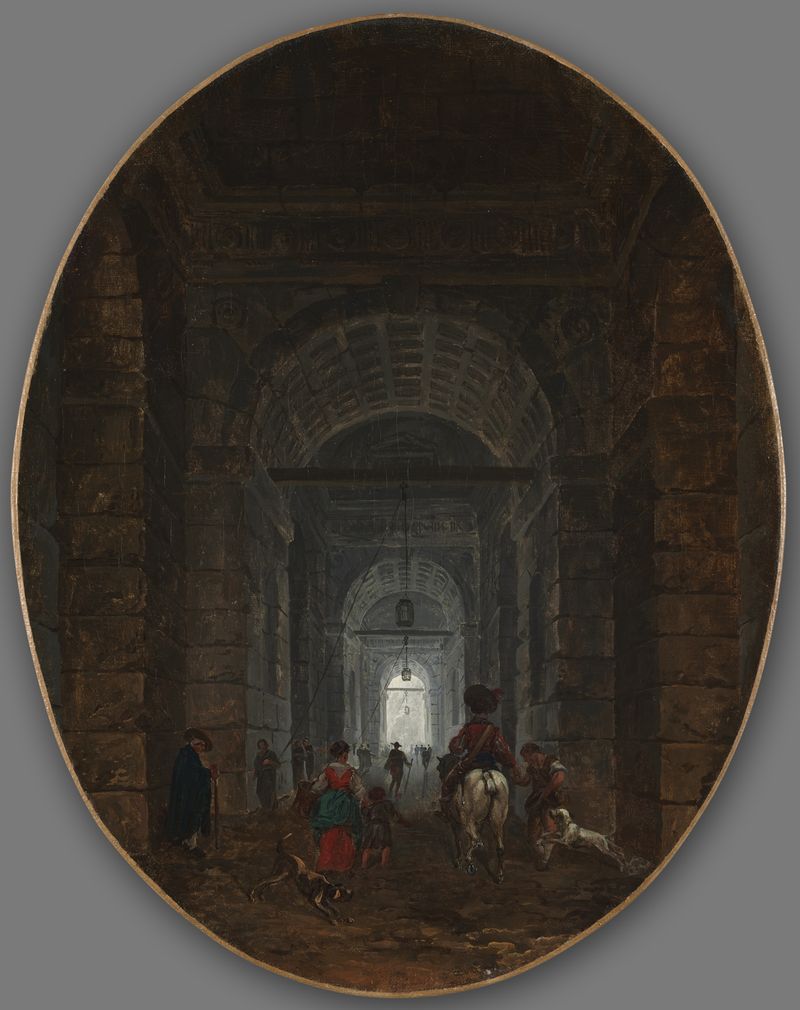
The Grotto of Posillipo
Hubert Robert

Architectural Capriccio with ruins of the Temple of Saturn and the Colosseum in the background
Hubert Robert





