
A View of the South Front of Bower House, Havering-atte-Bower — History & Facts
What draws the eye first is not the stately house itself, but the hush of green that envelops it—a careful orchestration of nature and architecture in quiet dialogue. The mansion, set back and almost dwarfed by the towering trees, seems to emerge from the landscape rather than dominate it. Light glances off the pale façade, drawing a soft boundary between cultivated order and the wildness of the surrounding parkland.
Cattle graze in the open, their presence a gentle reminder that this is a working estate as well as a place of leisure. The trees on the right, rendered with particular attention to their branching forms and dense foliage, act as a living curtain, guiding the viewer’s gaze from shadow into the sunlit clearing where the house stands. Painted in 1791, this view by Abraham Pether belongs to a moment when the English country house portrait was both a celebration of ownership and a statement of taste. These works, often commissioned by landowners, were intended to project stability, prosperity, and a harmonious relationship with the land—values that resonated deeply in the late eighteenth century.
The world that produced this painting was one of shifting boundaries: the rise of the picturesque, the enclosure of common lands, and the growing influence of landscape gardening. Little is recorded about the specific journey of this painting, now in the Art UK collection, but its quiet confidence speaks to an era when the English landscape was being remade both on the ground and on canvas. The longer you look, the more the painting invites you to imagine the life unfolding just out of sight, behind those sunlit windows and beneath those ancient trees.
More Artworks by Abraham Pether

Sunset over a rural landscape
Abraham Pether
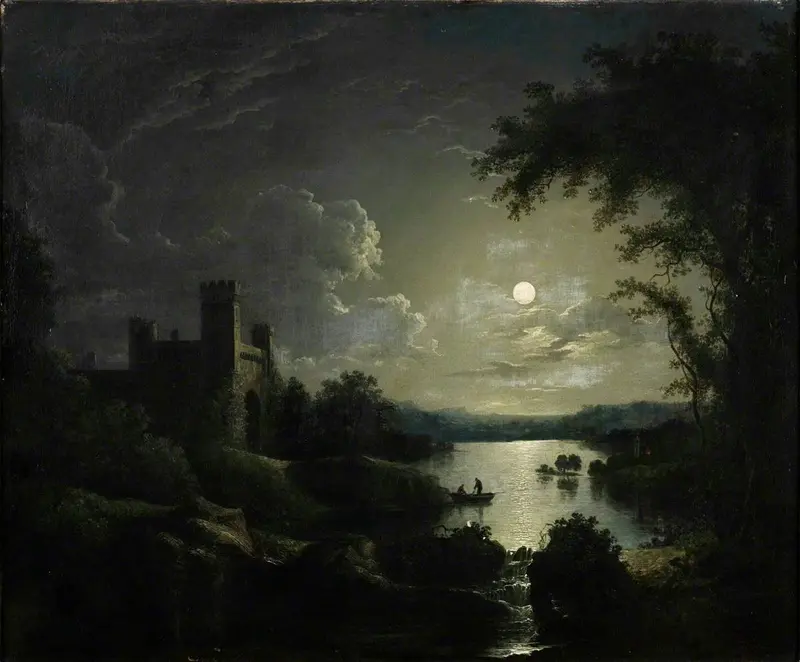
A Castle and Lake by Moonlight
Abraham Pether
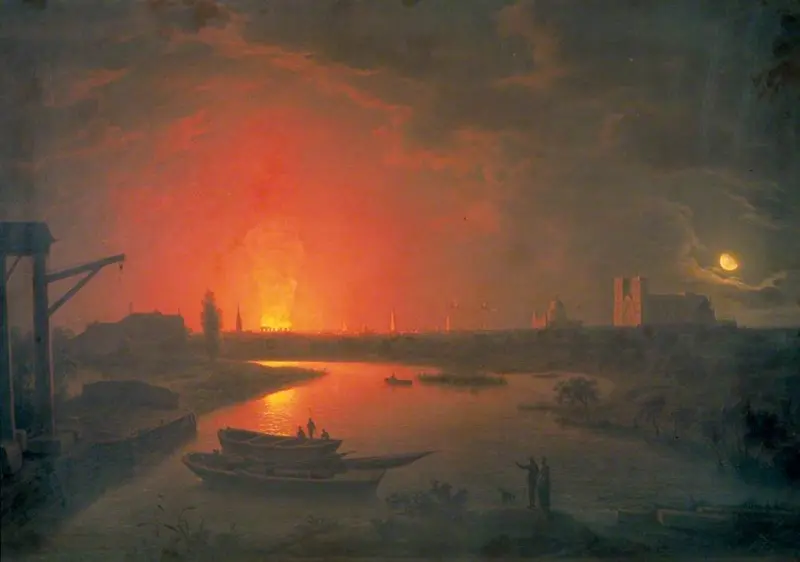
Old Drury Lane Theatre on Fire, London, 24 February
Abraham Pether
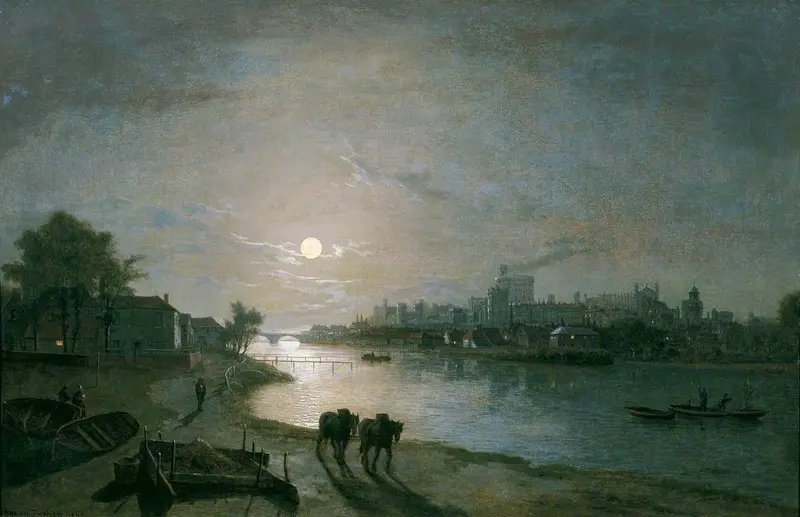
Windsor Castle by Moonlight
Abraham Pether
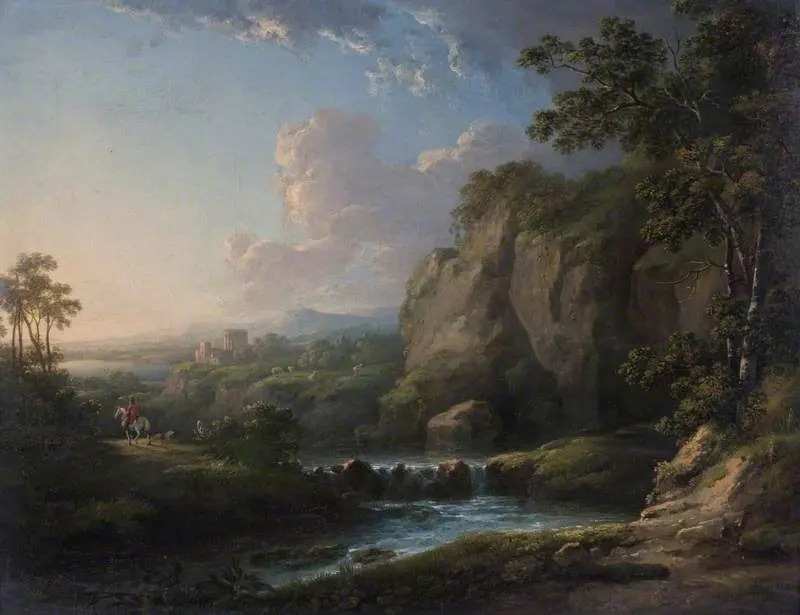
Wooded Landscape
Abraham Pether
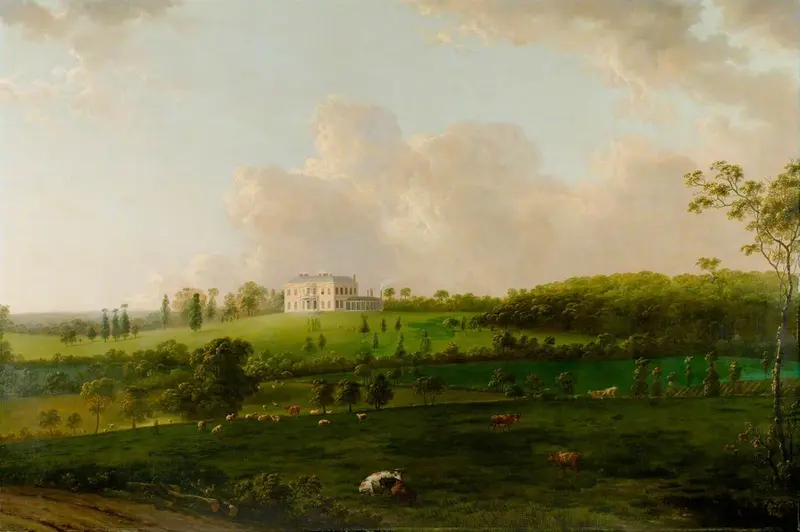
Claybury Hall, Essex
Abraham Pether
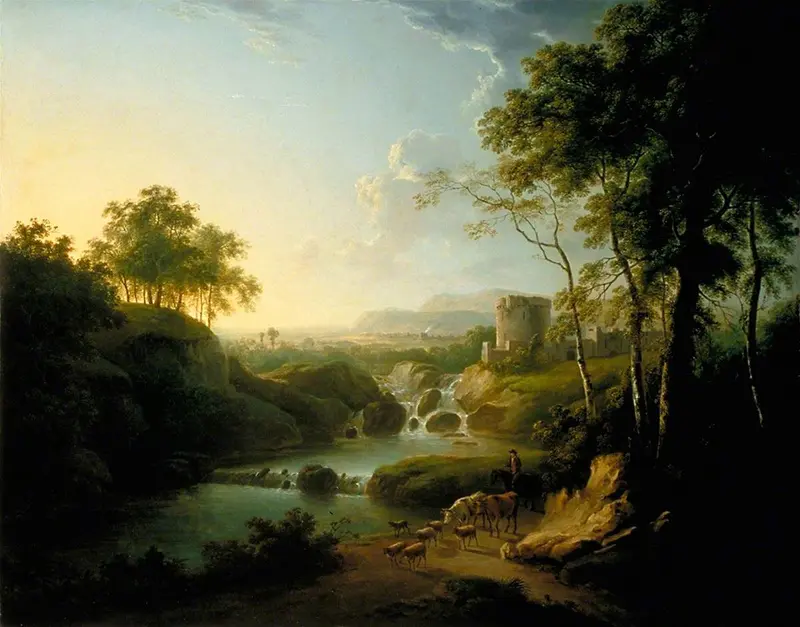
Landscape
Abraham Pether
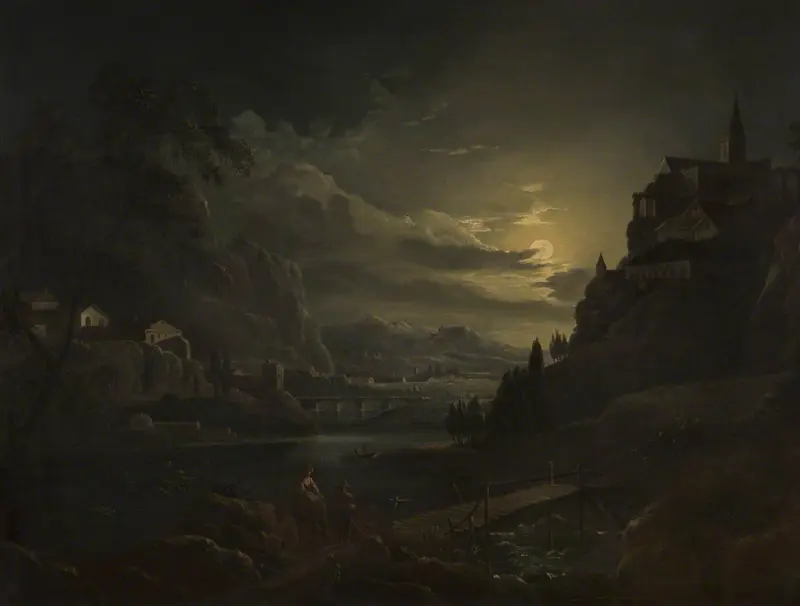
Classical Landscape by Moonlight
Abraham Pether
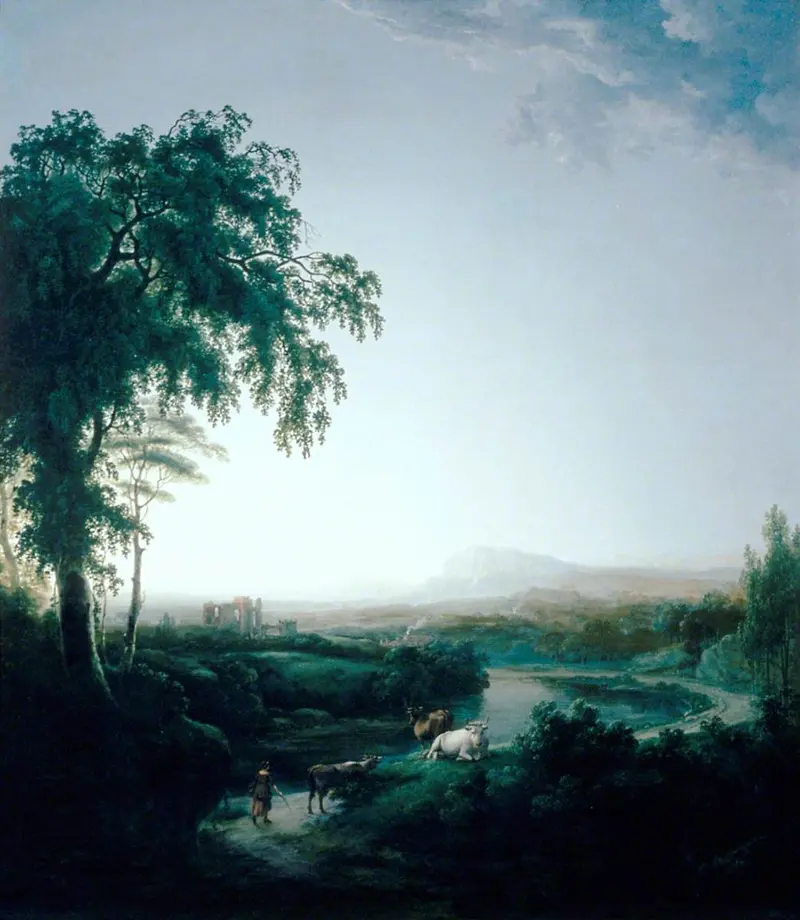
Landscape with River and Cows at Dusk
Abraham Pether
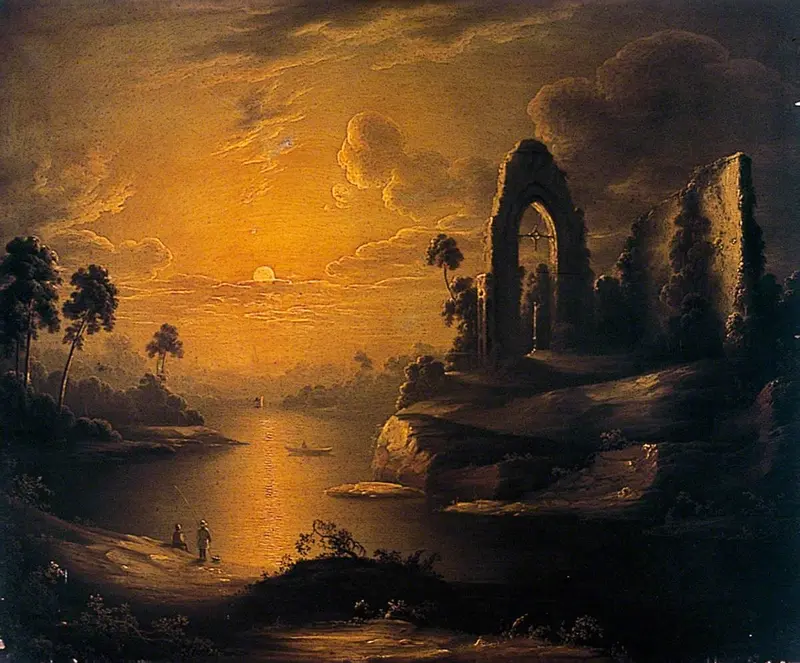
Moonlit Landscape with Lake and Ruined Abbey
Abraham Pether
More Landscape Art

The Starry Night
Vincent van Gogh

View of Delft
Johannes Vermeer

Water Lilies
Claude Monet

The Grand Canal, Venice, looking north-west from the Ca' Corner to the Ca' Contarini degli Scrigni, with the campanile of Santa Maria della Carità
Canaletto

Windsor Castle
Canaletto

The Grand Canal looking North-East from the Palazzo Dolfin-Manin to the Rialto Bridge
Canaletto