
A view of the Viennese suburb Lichtenthal with Schubert church — History & Facts
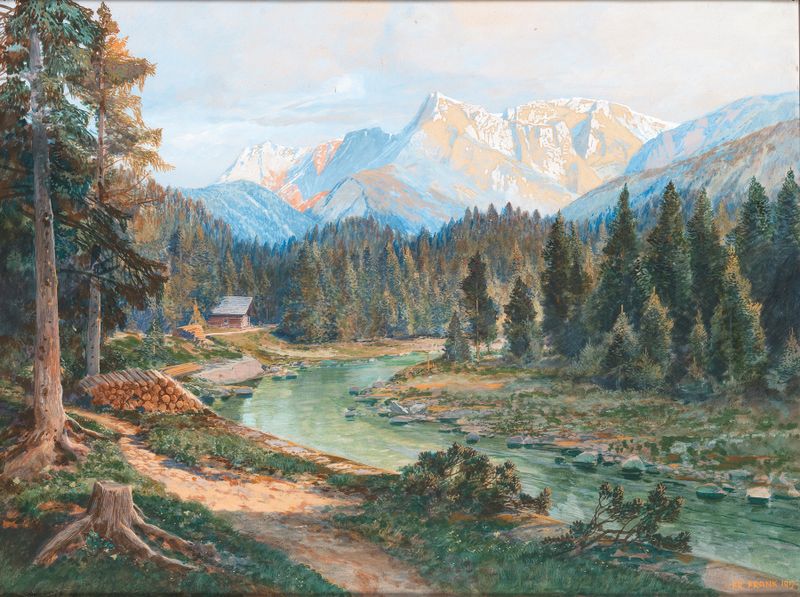
Could beauty survive in a century of chaos? This question echoes in the contemplative portrayal of an idyllic suburb, where tranquility seems to reign amid the ever-turning wheel of time. Look to the left at the delicate blending of greens and earth tones, where flourishing trees invite you into the serene landscape. Notice the soft strokes that delineate the outlines of the Schubert church, its steeple reaching skyward, crowned with a cloudless azure sky. The composition boasts a harmonious balance, drawing the eye gently across the canvas, while the warm light bathes the scene, illuminating details that evoke a sense of nostalgia. Yet, beneath this idyllic surface lies a tension between memory and modernity.
The church, a symbol of faith and continuity, stands in stark contrast to the encroaching shadows that hint at the uncertainties of an evolving world. The juxtaposition of lush nature against built structures serves as a reminder of what may be lost in the relentless march of progress. Each brushstroke feels like a whisper of the past, urging the viewer to linger in their own reflections. The work emerged during a significant period for its creator, who painted this scene in the late 19th century, a time when Vienna was grappling with rapid industrialization.
Amidst the cultural renaissance of the Austro-Hungarian Empire, the artist found solace in the quiet corners of suburban life, capturing the essence of a city straddling tradition and change.
More Artworks by Friedrich Frank
Browse all →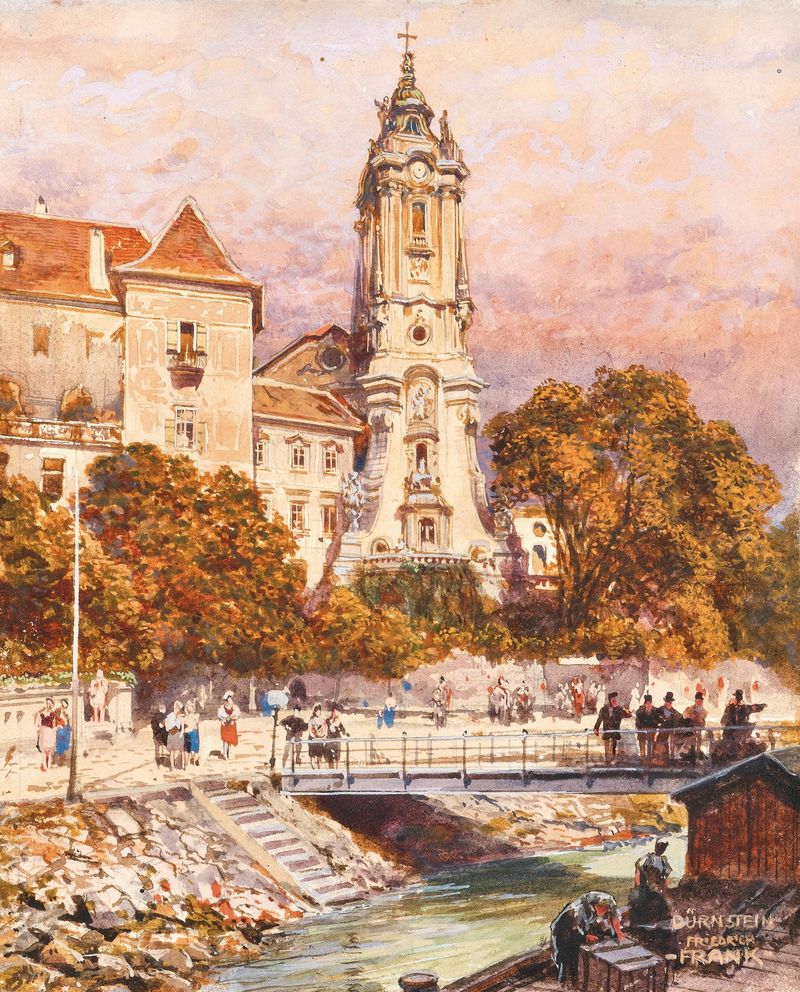
A view of Dürnstein monastery, the shipping pier in the foreground
Friedrich Frank
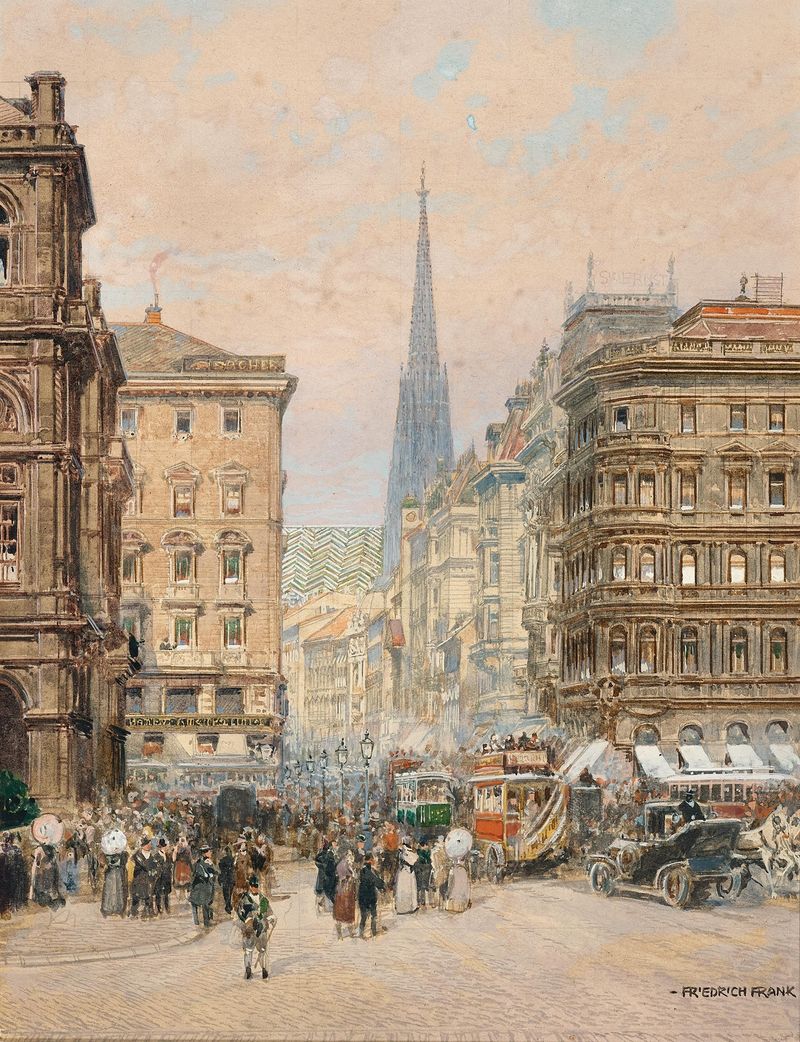
Vienna, Kärntnerstrasse, a view from the opera to Saint Stephen’s cathedral
Friedrich Frank

Saint Charles’s church in Vienna
Friedrich Frank
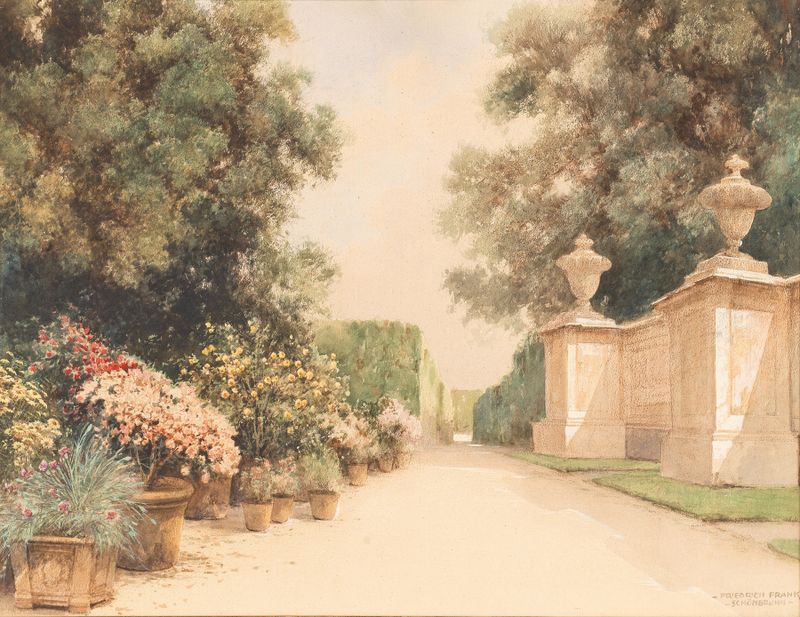
An alley in the Grand Parterre, flower pots and part of a wall in Schönbrunn park
Friedrich Frank
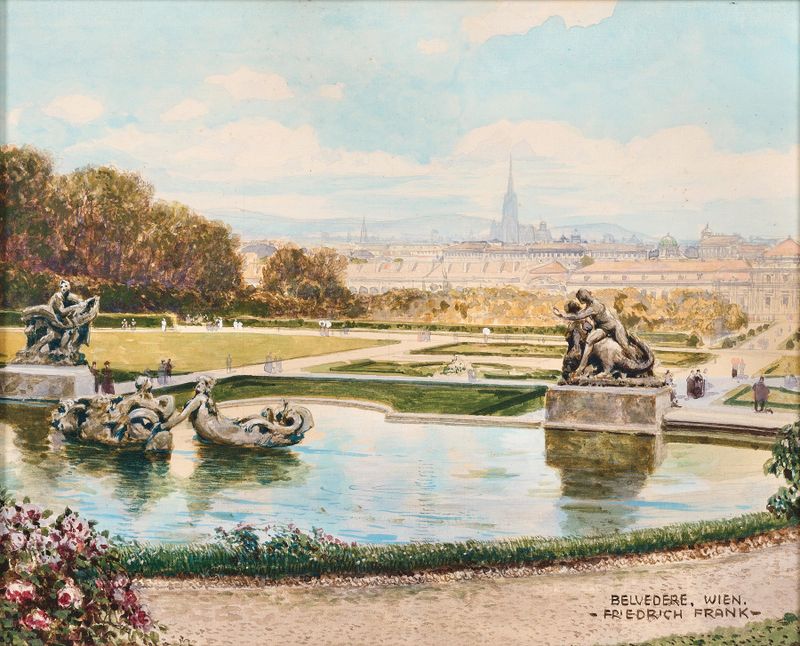
View from the Belvedere over Vienna
Friedrich Frank
A motif from the Salzburg country side
Friedrich Frank





