An alley in the Grand Parterre, flower pots and part of a wall in Schönbrunn park — History & Facts
Could beauty survive in a century of chaos? Look closely at the delicate interplay of light and shadow in the alley depicted. Notice how the flower pots, each a burst of color, stand resolute against the textured wall, their vibrancy echoing the intricate design of the surrounding architecture. The meticulous brushwork invites your gaze along the cobblestone path, leading you deeper into the scene, almost as if you could stroll down that very lane. As you explore further, consider the contrast between the organic beauty of the flowers and the sturdy, unyielding wall.
This juxtaposition speaks to the resilience of nature amidst human constructs. There’s a whisper of destiny in the way the blooms thrive in their confined space, suggesting that even in the most structured environments, life finds a way to assert its presence. Each pot seems to tell a story of survival, offering a glimpse of hope in an otherwise rigid world. Friedrich Frank painted this tranquil scene during a time when artistic expression was evolving rapidly, though the exact date of creation remains uncertain.
He was likely influenced by the burgeoning Romantic movement, which emphasized emotion and the beauty of nature. The Schönbrunn Park, a symbol of imperial power, provided a rich backdrop for his exploration of beauty’s endurance, reflecting the cultural shifts of his era. The artwork captures a moment where art and nature converge, inviting viewers to contemplate their own sense of identity amid the chaos of existence.
More Artworks by Friedrich Frank
Browse all →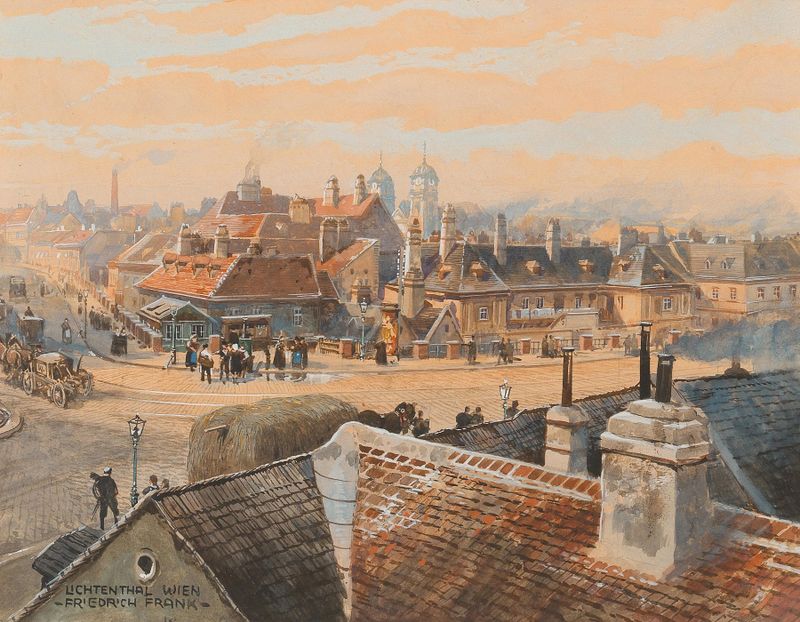
A view of the Viennese suburb Lichtenthal with Schubert church
Friedrich Frank
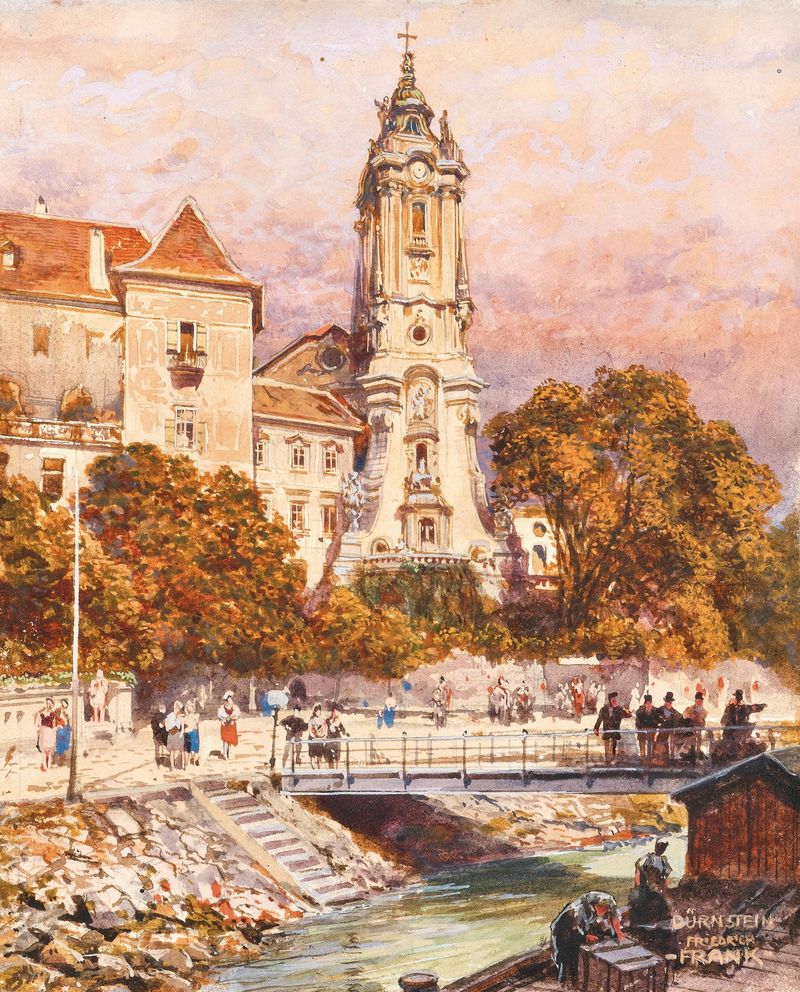
A view of Dürnstein monastery, the shipping pier in the foreground
Friedrich Frank
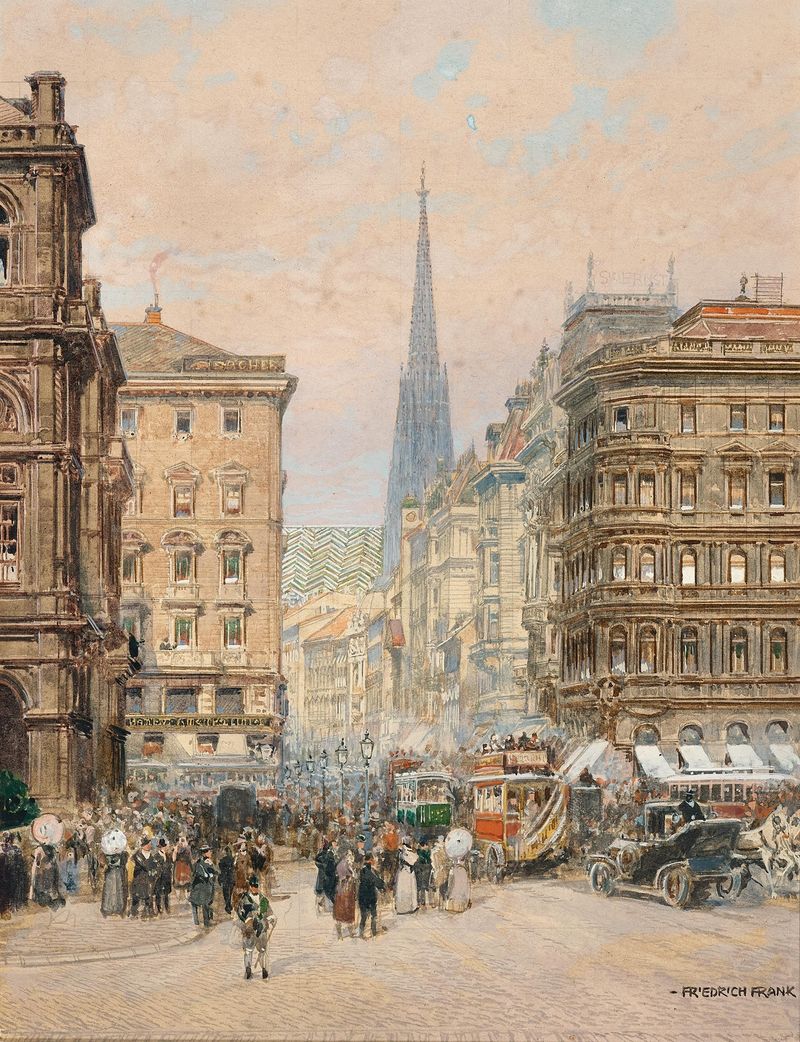
Vienna, Kärntnerstrasse, a view from the opera to Saint Stephen’s cathedral
Friedrich Frank

Saint Charles’s church in Vienna
Friedrich Frank
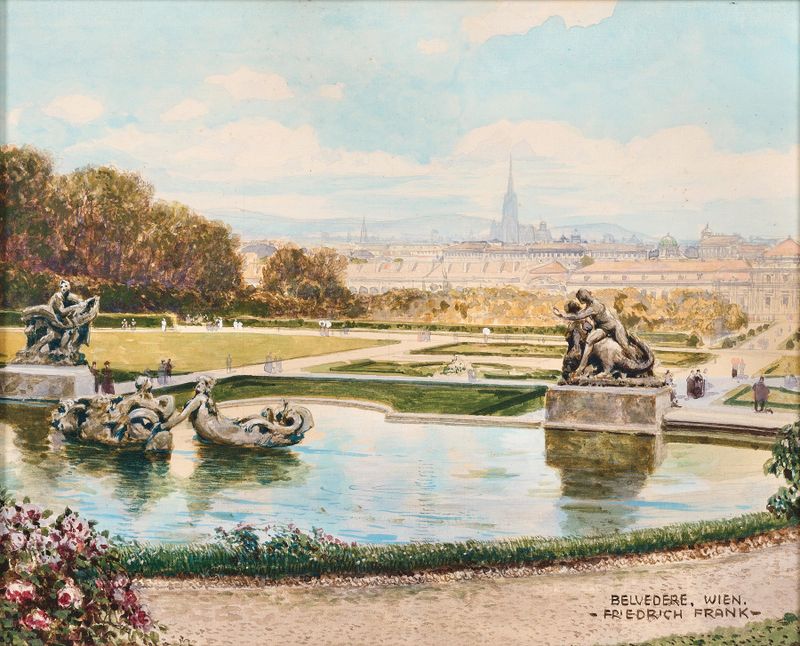
View from the Belvedere over Vienna
Friedrich Frank
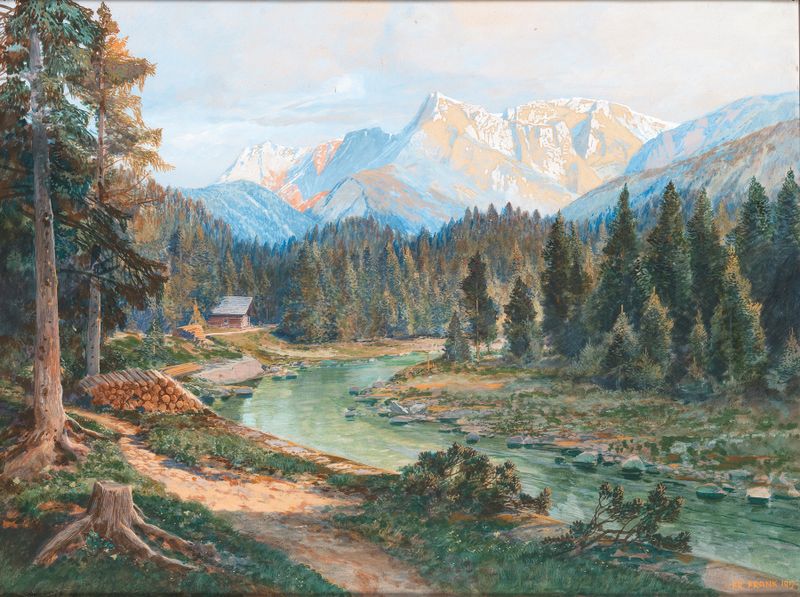
A motif from the Salzburg country side
Friedrich Frank