A village kermesse — History & Facts
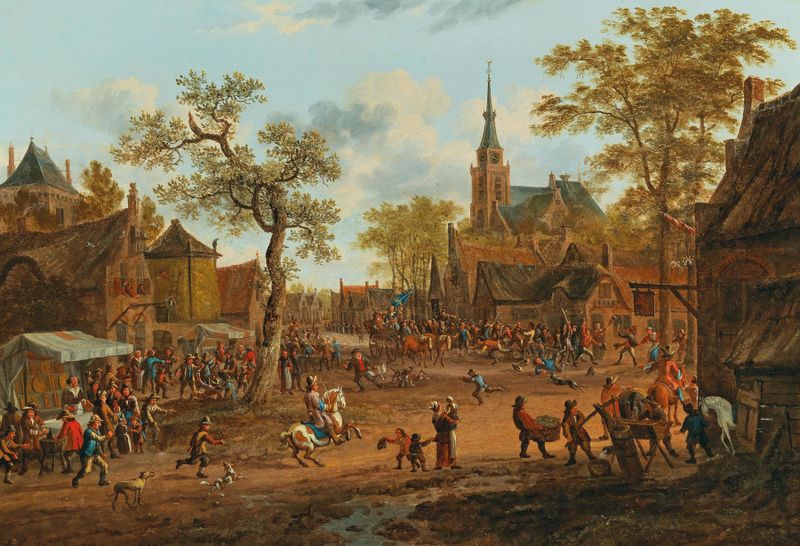
In the delicate dance of life, transformation often wears a mask, hiding the stories of struggle beneath a radiant surface. Look closely at the vibrant tapestry of figures clustered in joyous celebration, their expressions a mix of elation and yearning. Notice how the light cascades over the lively scene, illuminating the rich colors of their garments, while the shadows weave through the crowd, hinting at unseen burdens. Each brushstroke captures motion — a hand raised in laughter, a fleeting glance exchanged — encapsulating the spirit of a community caught in a moment of fleeting happiness. Yet, amidst the revelry, subtleties emerge: the weary eyes of an elder watching over the younger generations, or the hesitant posture of one who seems apart from the joy.
The contrast between exuberance and unspoken sorrows creates an emotional tension, inviting the viewer to ponder the layers beneath the surface. In every smile lies the weight of history; in every dance, the echo of past hardships transformed into fleeting joy. Rutger Verburgh painted this work during a time when the art world was shifting, with movements leaning towards the exploration of everyday life. Active in the 17th century, the artist found inspiration in the simplicity of village life.
His commitment to capturing the essence of communal experience reflects the socio-political landscape of his time, a world grappling with change while yearning for connection.