A village kermesse — History & Facts
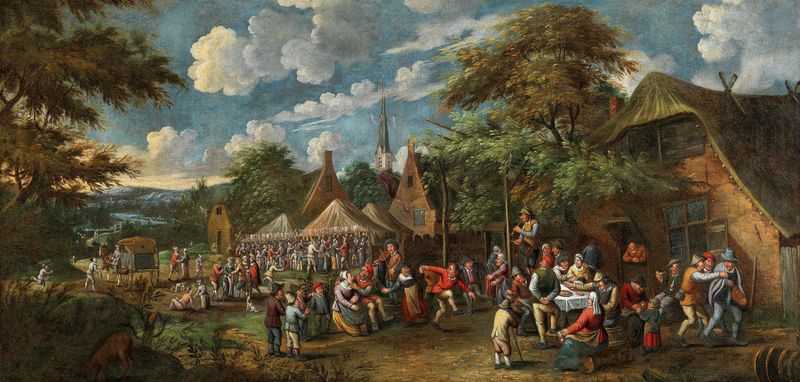
Could beauty survive in a century of chaos? In a world often shrouded in darkness, art remains a formidable beacon of hope, illuminating the human spirit through vivid scenes of joy and community. Look closely at the left side of the canvas, where the figures dance amidst a flurry of colors. The costumes of the villagers are a kaleidoscope of reds, greens, and yellows, contrasting sharply against the earthy tones of the landscape. The painter masterfully employs a warm palette, allowing sunlight to bathe the gathering, creating an aura of celebration.
The upwards swoop of arms and the gleeful expressions draw the viewer into the festive whirl, while the muted background anchors the scene in a tangible reality. Delve deeper into this jubilant portrayal, and you'll discover the contrast between the exuberance of the kermesse and the potential shadows lurking beyond its borders. The animated gestures suggest a fleeting moment, a pause in the relentless passage of time, while the distant hills may symbolize the challenges outside this village haven. These layers hint at resilience, where joy becomes a defiant act amidst the chaos of life, illuminating the strength derived from community ties. Rutger Verburgh painted this work during a time when the art world was grappling with profound transformations.
Though the exact date remains elusive, the context suggests a period of upheaval, where traditional forms collided with emerging movements. Verburgh’s focus on local culture amid societal changes reflects a yearning for connection and continuity, embodying the hope that binds people together through shared experience and celebration.