
A Village Road — History & Facts
In A Village Road, Cornelis Springer invites us to contemplate the legacy of a simple, pastoral life, hinting at stories buried beneath the tranquil surface of rural existence. Look to the foreground where a narrow, winding path beckons the viewer, flanked by grass and wildflowers that dance gently in the breeze. The arrangement of the buildings on either side creates a sense of enclosure, drawing our eyes further down the road toward the vanishing point on the horizon. Notice the brilliant interplay of light and shadow, with warm hues illuminating the cottages while darker tones hint at the encroaching evening.
This careful balance of color and composition evokes a feeling of nostalgia, inviting reflection on the lives of those who once tread this path. Within the imagery lies a rich tapestry of hidden meanings. The road, seemingly endless, symbolizes the journey of life and the inevitable passage of time, while the cottages stand as testaments to both personal and communal history. The quietness of the scene invites introspection, suggesting that the lives lived here, though unremarkable, resonate with universal truths.
Each detail, from the intricately painted rooftops to the lush landscape, speaks of a legacy that intertwines joy and sorrow, simplicity and complexity. Springer created this work in 1851, a period when the Netherlands was grappling with rapid social change and urbanization. Having established himself in the tradition of Dutch landscape painting, he sought to capture the charm of rural life before it faded into history. At this time, he was deeply engaged with the romantic ideals of nature and nostalgia, solidifying his reputation as a chronicler of the Dutch countryside's beauty.
More Artworks by Cornelis Springer
Browse all →
The Royal Palace and the Nieuwe Kerk on the Dam, Amsterdam
Cornelis Springer
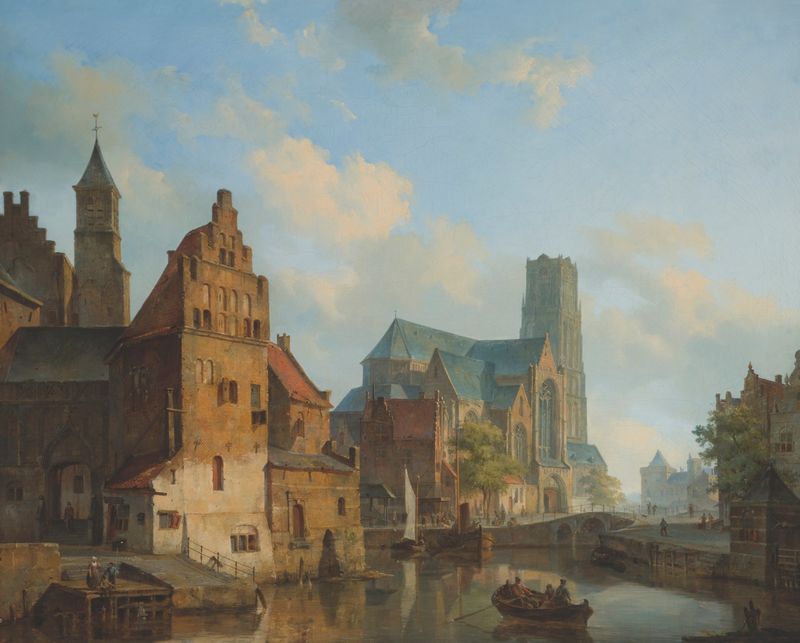
A View Of The Delftse Vaart And St Laurens Church, Rotterdam
Cornelis Springer

The Kerkgracht In Leiden
Cornelis Springer
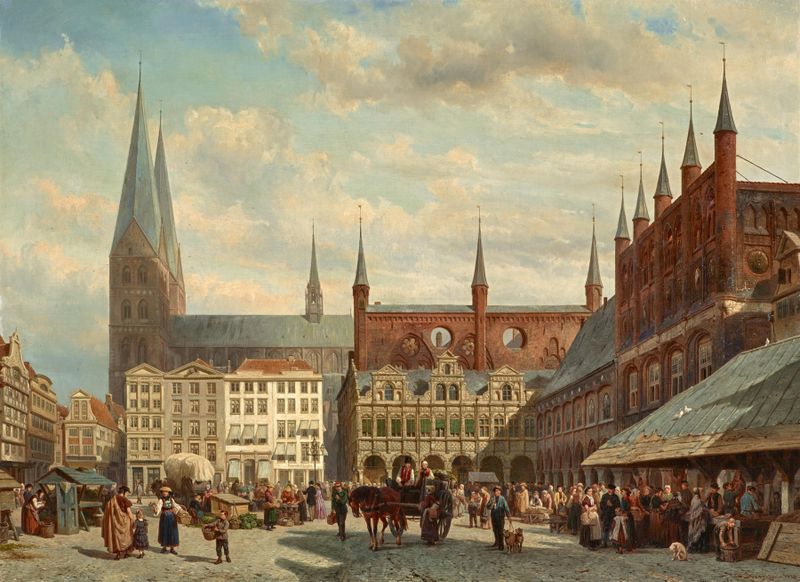
Ansicht des Lübecker Marktes
Cornelis Springer

View of The Hague
Cornelis Springer
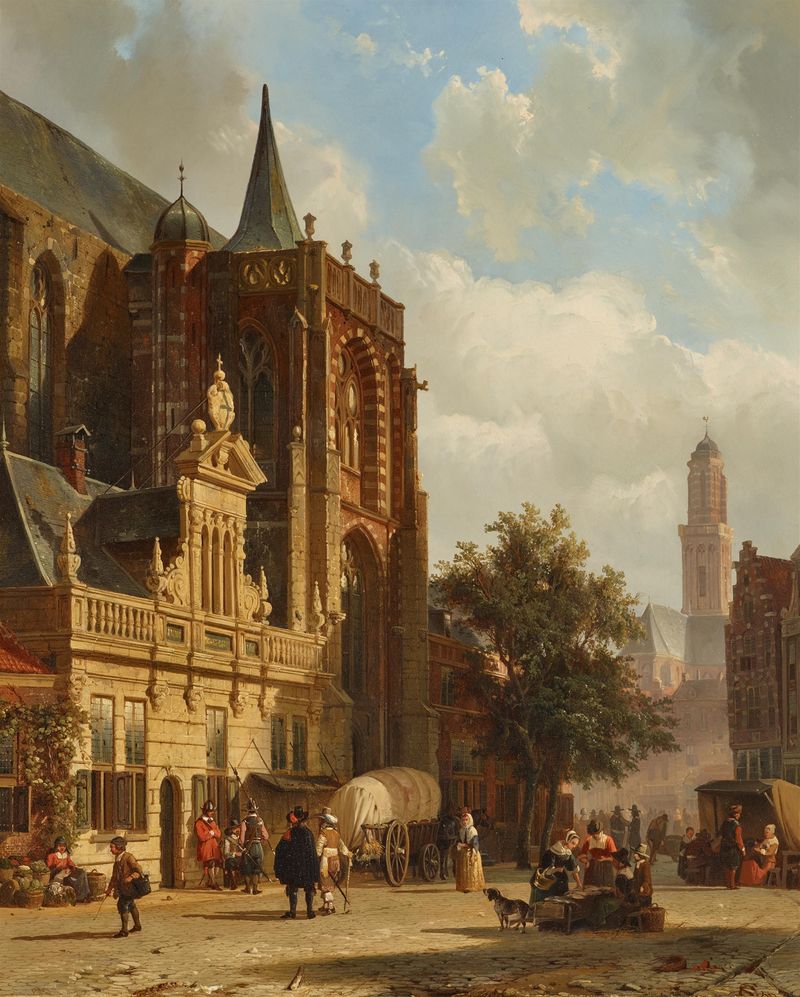
Der Grote Markt in Zwolle
Cornelis Springer
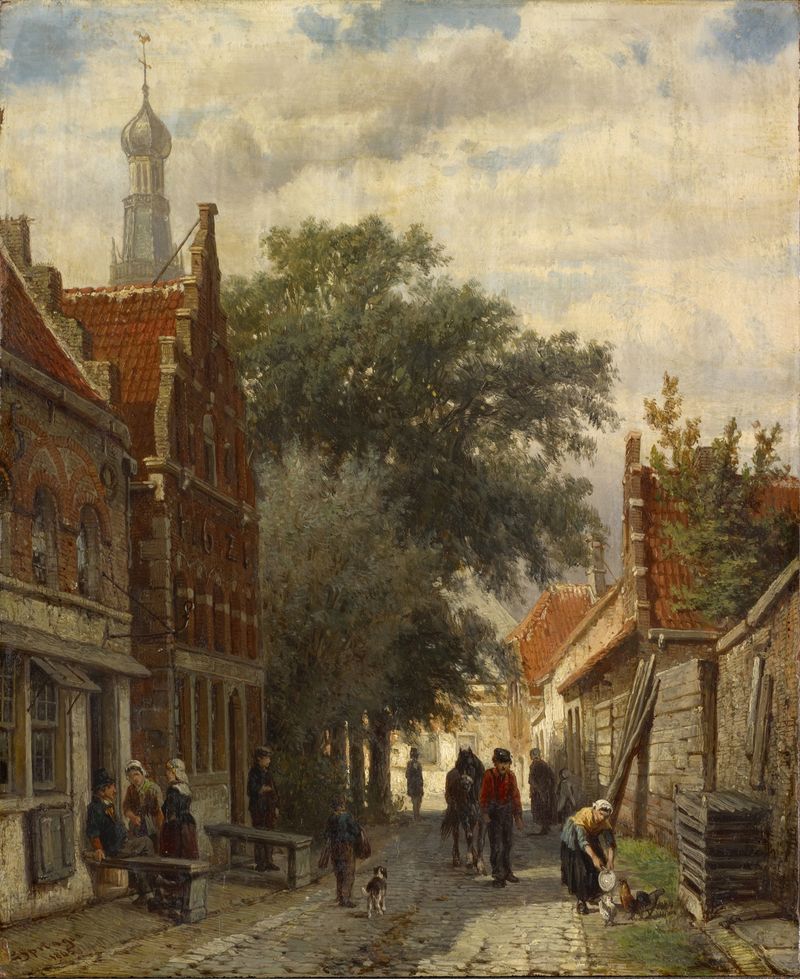
Street in Enkhuizen
Cornelis Springer

View of The Hague from the Delftse Vaart in the Seventeenth Century
Cornelis Springer
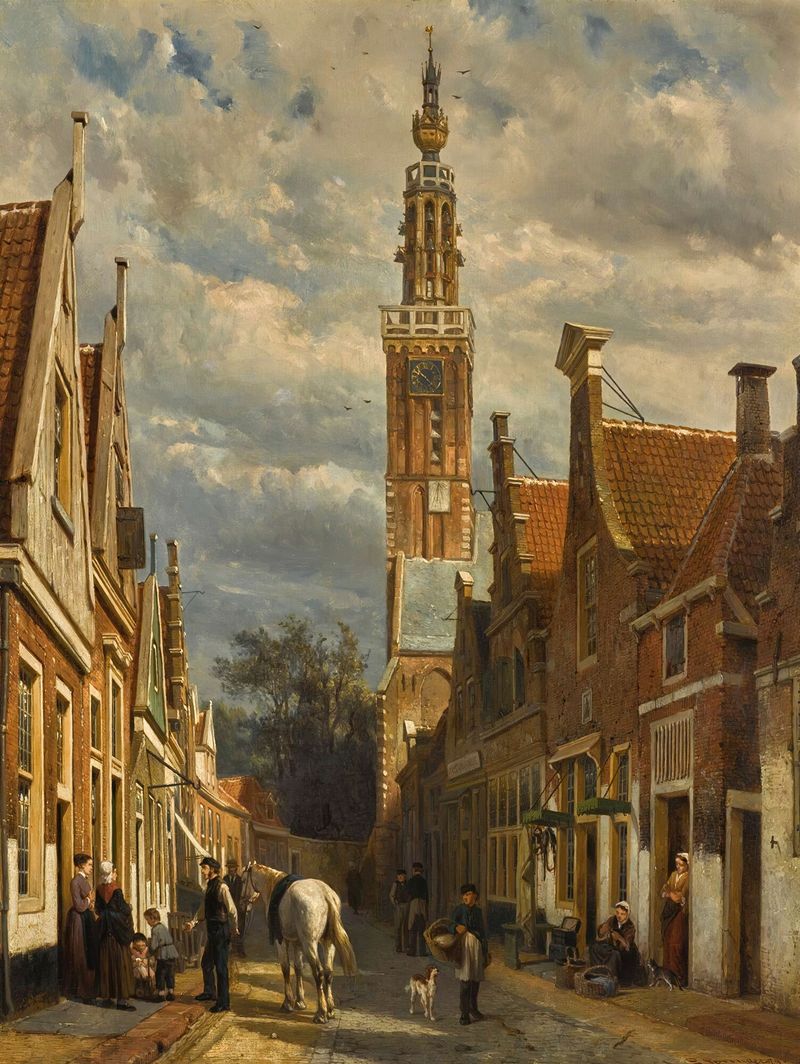
The carillon tower in Edam
Cornelis Springer
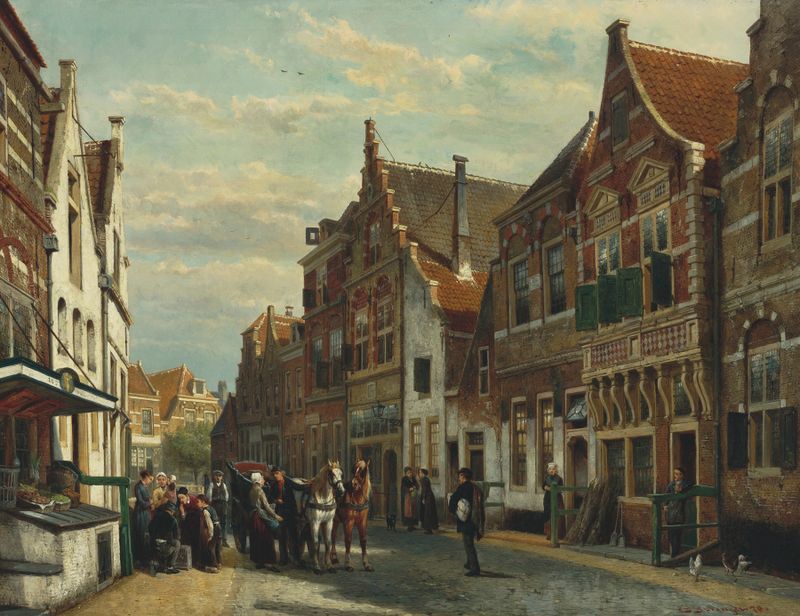
The Wijdstraat, Oudewater, in summer
Cornelis Springer





