
A watchman at a lookout post, Bengal — History & Facts
What if silence could speak through light? In the stillness of a solitary moment, the watchman stands poised at his lookout, embodying the delicate tension between vigilance and vulnerability. Each ray of warm sunlight spills across the scene, illuminating not just the figure but also the swirling emotions that ripple beneath the surface of this quiet tableau. Look to the left at the watchman, his gaze fixed on the horizon, the tension in his posture signaling an unseen threat. Notice how the light falls upon his figure, casting elongated shadows that stretch across the canvas, amplifying the sense of isolation.
The earthy tones blend into the rich hues of twilight, invoking a tranquil yet foreboding atmosphere, as if the encroaching darkness harbors secrets waiting to unfold. Here, the watchman’s solitude speaks volumes. The interplay of light and dark mirrors a deeper turmoil; perhaps he is guarding against betrayal, both from within and outside. The tranquil facade disguises an underlying anxiety, evident in the watchman’s vigilant stance and the distant horizon that hints at an uncertain future.
This layering of emotions imbues the scene with a profound sense of contemplation, as if inviting the viewer to grapple with their own shadows. George Chinnery painted this work during his time in India, likely between the late 18th and early 19th centuries. His life during this period was marked by a blend of adventure and melancholy, navigating the complexities of colonial life. Amidst the backdrop of burgeoning British interests in Bengal, he captured scenes like this, illustrating both the beauty and the tensions of a world poised on the brink of change.
More Artworks by George Chinnery
Browse all →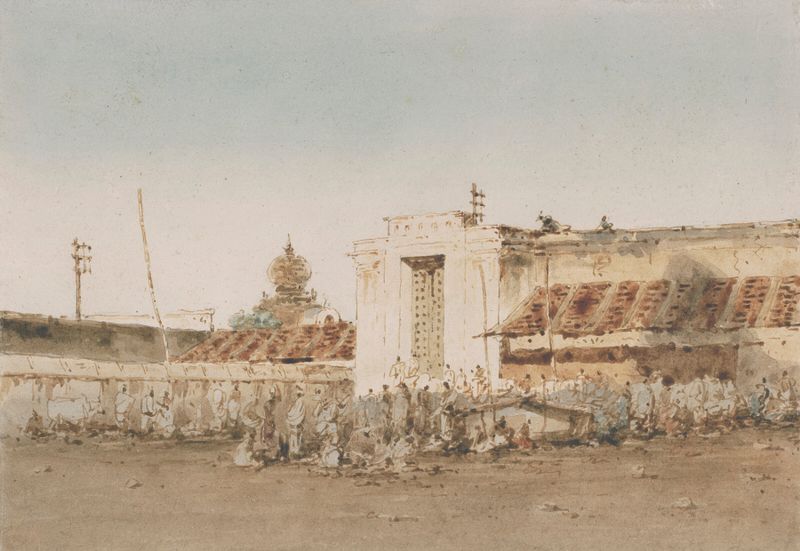
The entrance to ‘the Honourable East India Company’s pagoda’, Madras
George Chinnery
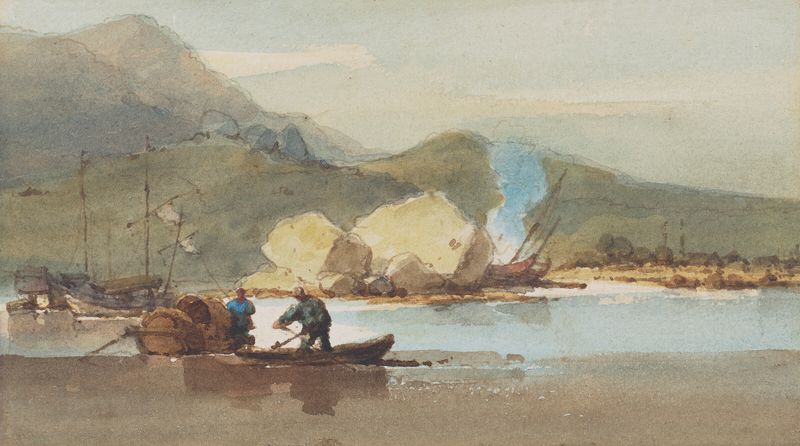
Junks and Tanka boats in a bay, with a beached junk and cooking fire beyond
George Chinnery
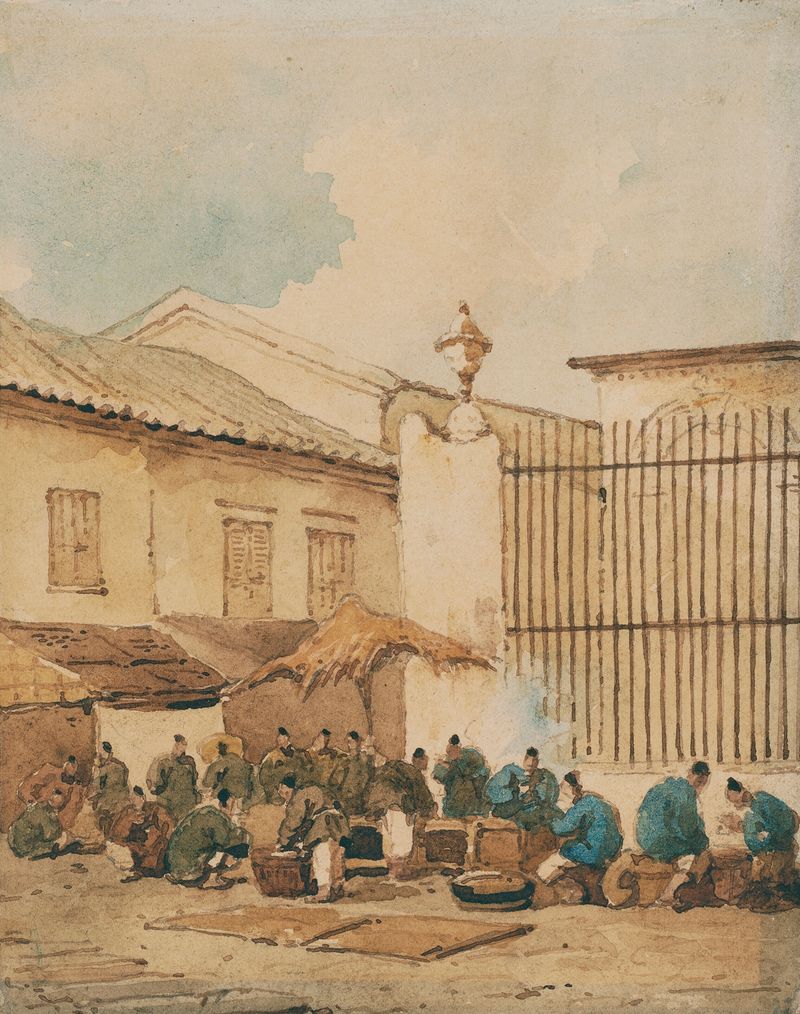
A market outside the railings of St. Dominic’s Church, Macau
George Chinnery

Temple by the Lake
George Chinnery

A River in Ceylon
George Chinnery
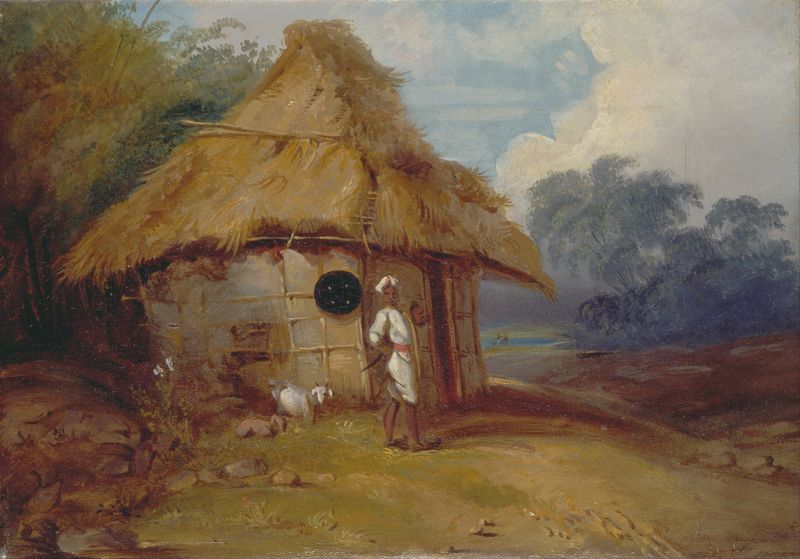
View in Southern India, with a Warrior Outside his Hut
George Chinnery
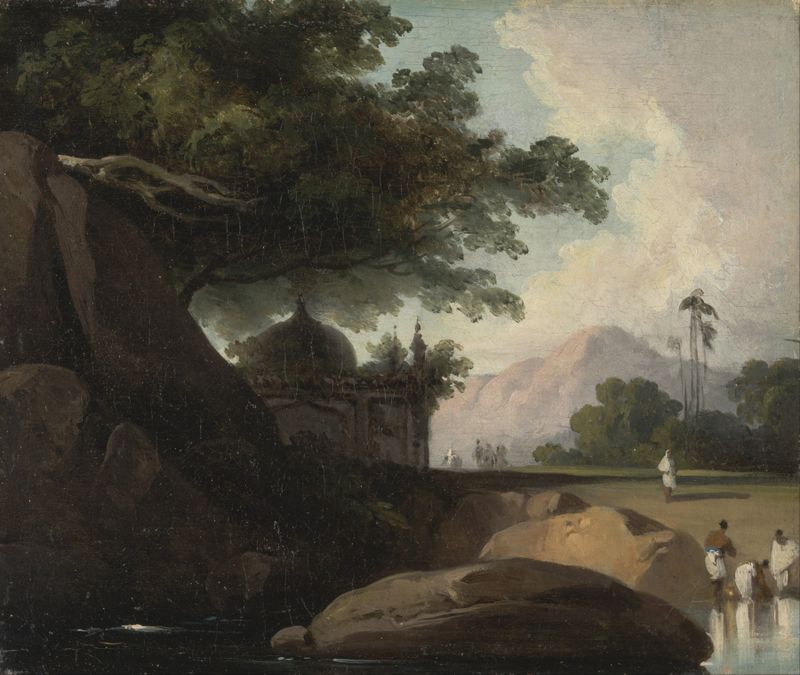
Indian Landscape with Temple
George Chinnery

Madras, a street scene
George Chinnery
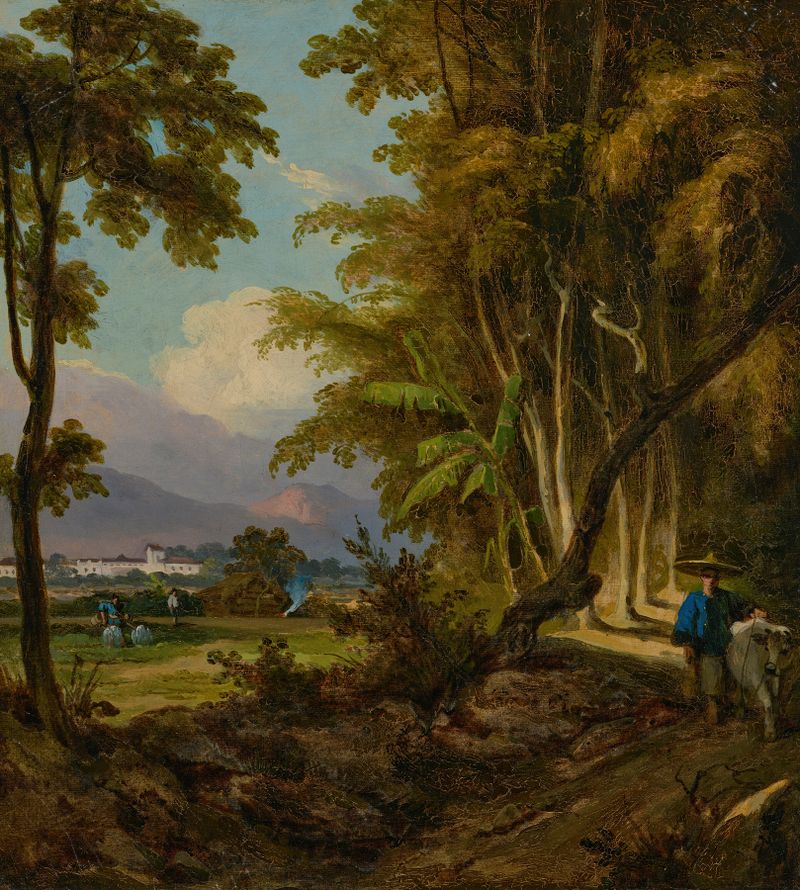
A landscape in Macau with a herdsman walking along a track
George Chinnery

Tanka boat off Macao
George Chinnery





