
A winter landscape — History & Facts
Can beauty exist without sorrow? In the stillness of a winter landscape, one feels the weight of time, where each flake of snow whispers stories of fleeting moments and forgotten warmth. Look to the horizon where soft, muted grays and whites blend seamlessly, creating an ethereal backdrop that invites contemplation. The delicate brushwork captures the frost-laden trees, their twisted branches reaching skyward, while the gentle slope of the snow-covered ground guides the eye into the depth of the scene. Notice how light emerges subtly, illuminating the landscape with a cold glow that transforms the ordinary into the extraordinary, evoking both peace and a sense of melancholy. There lies a contrast within this tranquility; the stillness of the landscape is punctuated by the sharpness of the winter chill, whispering of life that once thrived beneath the surface.
Hidden within the serene beauty are hints of decay, reminding us of the inevitable passage of time. The snow blankets the earth, but beneath it, life rests—waiting, perhaps, for the warmth that stirs the heart with hope. This duality—beauty intertwined with sorrow—leaves an imprint that resonates long after the gaze has shifted. The work emerged in 1871, a period when Johann Bernhard Klombeck was in the midst of his artistic development in Germany, capturing landscapes that evoked emotional responses.
At this time, the art world was embracing realism, focusing on nature with a reflective lens, as societal changes prompted a deeper connection to the environment. Klombeck's exploration of winter landscapes showcased not only a technical proficiency but also a profound understanding of the emotional landscape beneath the surface of his tranquil scenes.
More Artworks by Johann Bernhard Klombeck
Browse all →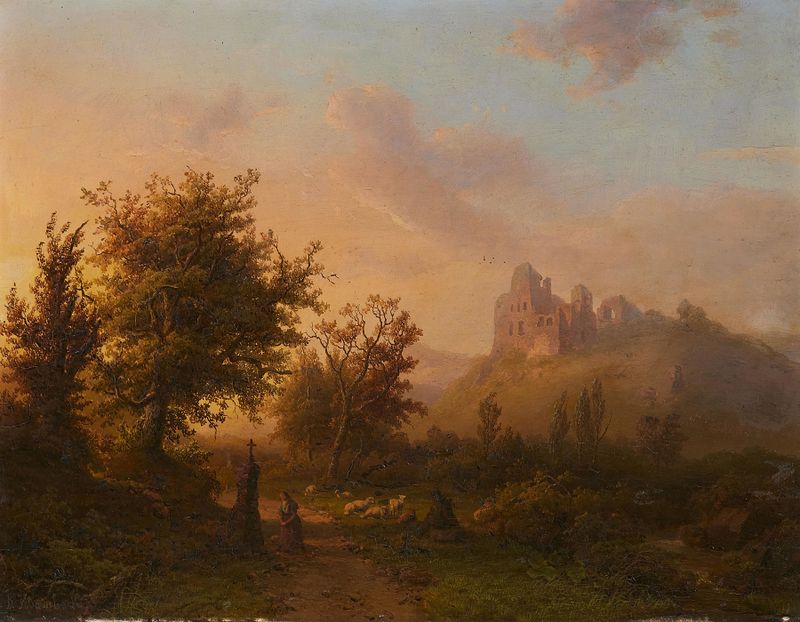
Landschaft mit Burgruine und einer Hirtin im Gebet
Johann Bernhard Klombeck
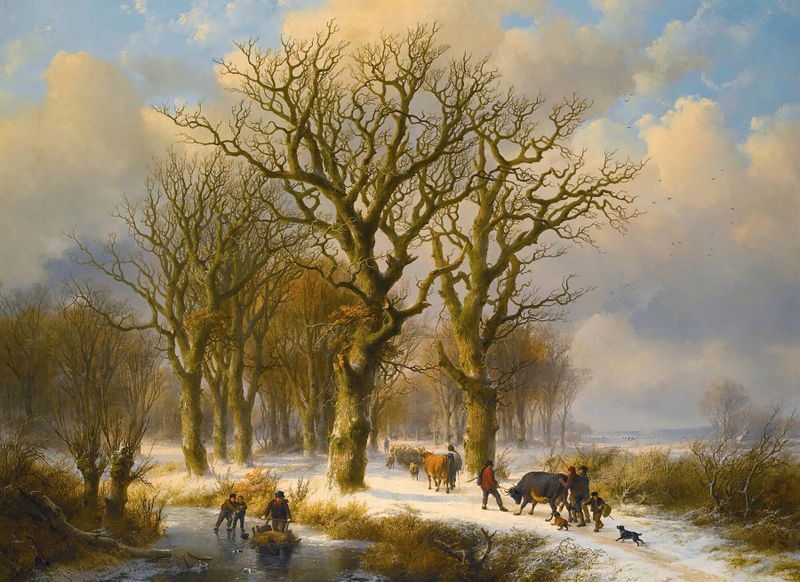
Winter Landscape With Cattle Drivers
Johann Bernhard Klombeck

Blick ins Rheintal
Johann Bernhard Klombeck

Winter Time
Johann Bernhard Klombeck
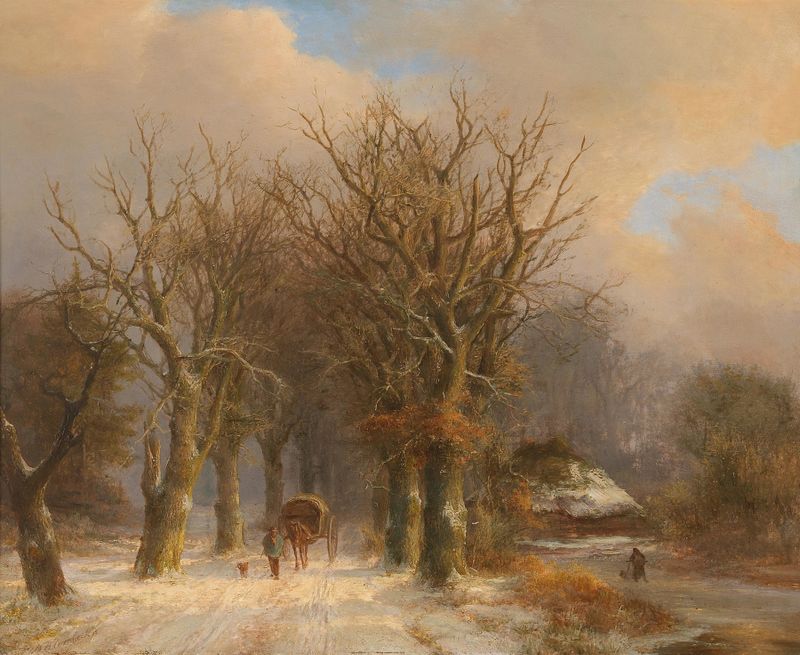
Winter Landscape with Horse and Cart
Johann Bernhard Klombeck
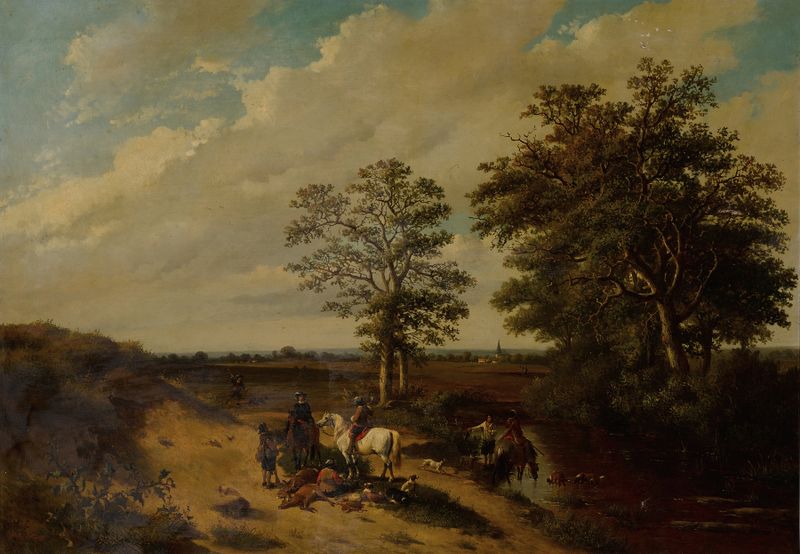
After the Hunt
Johann Bernhard Klombeck
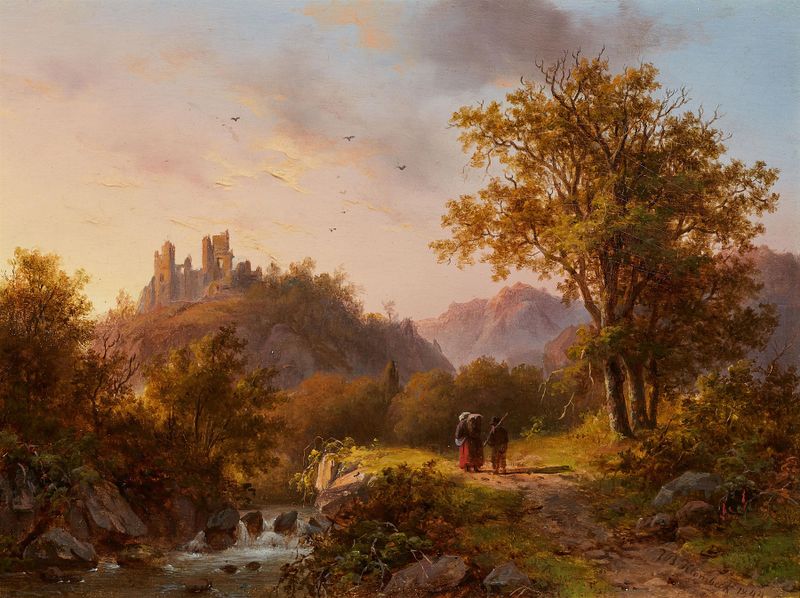
Heimkehr vom Markt
Johann Bernhard Klombeck

Wooded landscape with peasant couple returning home
Johann Bernhard Klombeck

Waldlandschaft mit Teich
Johann Bernhard Klombeck

Landscape With Peasants Walking Near A River At Dusk
Johann Bernhard Klombeck





