
Blick ins Rheintal — History & Facts
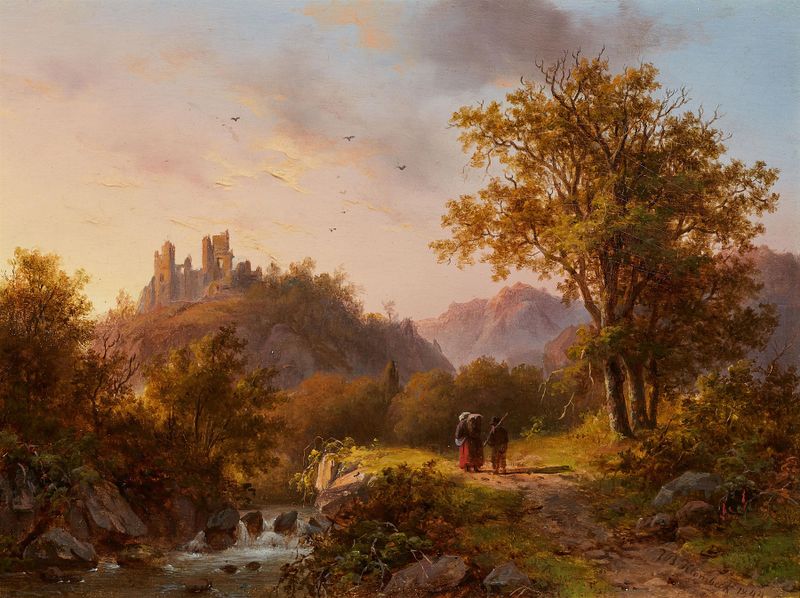
In the quiet embrace of a landscape, colors become the voice of nature, narrating a story without uttering a single word. Each hue carries the weight of emotion, inviting the viewer into a moment suspended in time. Look to the left where the rolling hills cradle the Rhine Valley, their rich greens and browns merging into a serene palette. The soft blues of the sky blend seamlessly with the distant water, creating a tranquil gradient that draws the eye deeper into the scene.
Notice the gentle brushstrokes that define the trees, offering movement yet stillness, as if they too are caught in the rapture of the valley's beauty. The attention to light, bathing the landscape in a warm glow, emphasizes the harmony of the elements, leaving a lingering sense of peace. Yet, beneath the surface tranquility, a subtle tension simmers. The contrast between the vibrant foreground and the muted distance evokes a yearning for connection, as if the viewer is invited to traverse the distance but is held back by the very beauty that captivates them.
The interplay of light and shadow hints at the complexities of nature—its beauty intertwined with an underlying melancholy, perhaps a reflection of human experience amidst the splendor. In 1845, Klombeck painted this piece during a time when the Romantic movement was flourishing, emphasizing the sublime beauty of nature. Living in Germany, he was part of a larger artistic shift that sought to evoke emotion through landscapes. This painting emerged during a period of personal exploration for the artist, who was deeply influenced by his surroundings and the evolving art world that celebrated the romantic ideals of nature and emotion.
More Artworks by Johann Bernhard Klombeck
Browse all →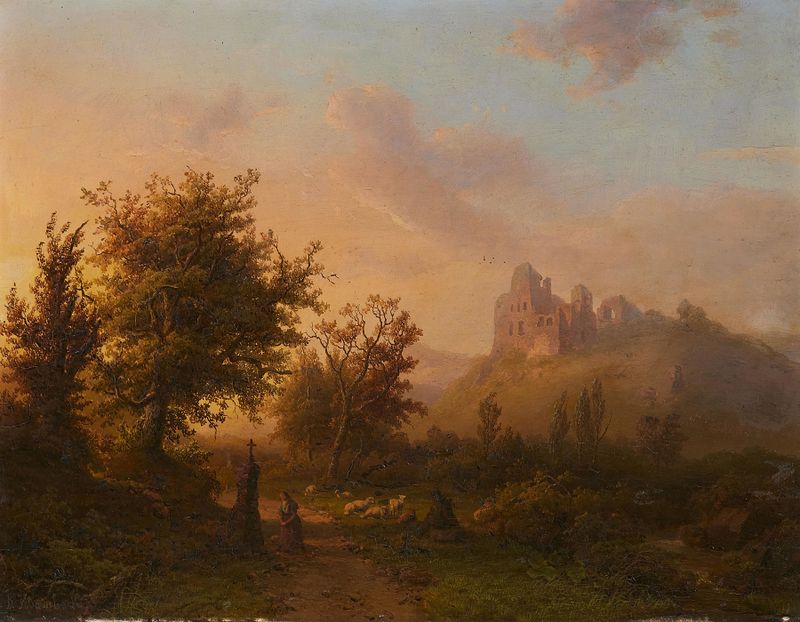
Landschaft mit Burgruine und einer Hirtin im Gebet
Johann Bernhard Klombeck
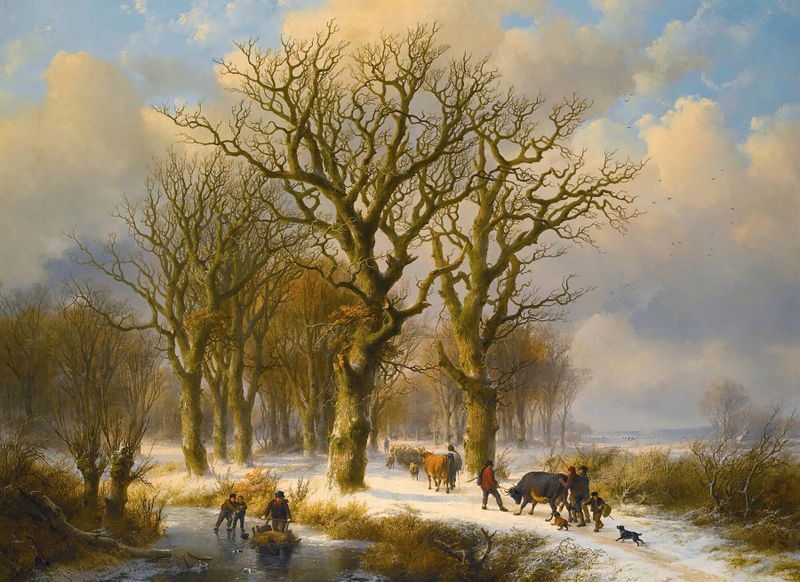
Winter Landscape With Cattle Drivers
Johann Bernhard Klombeck

Winter Time
Johann Bernhard Klombeck
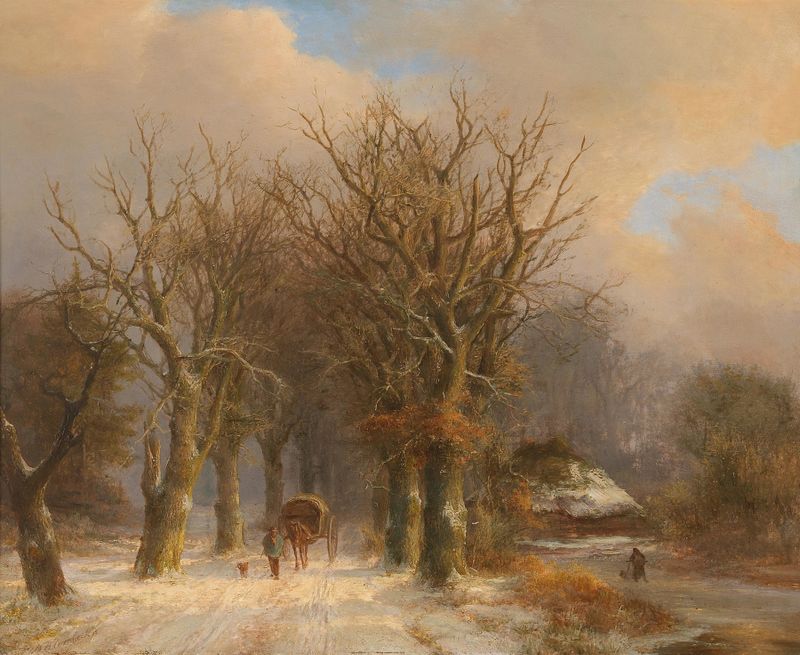
Winter Landscape with Horse and Cart
Johann Bernhard Klombeck
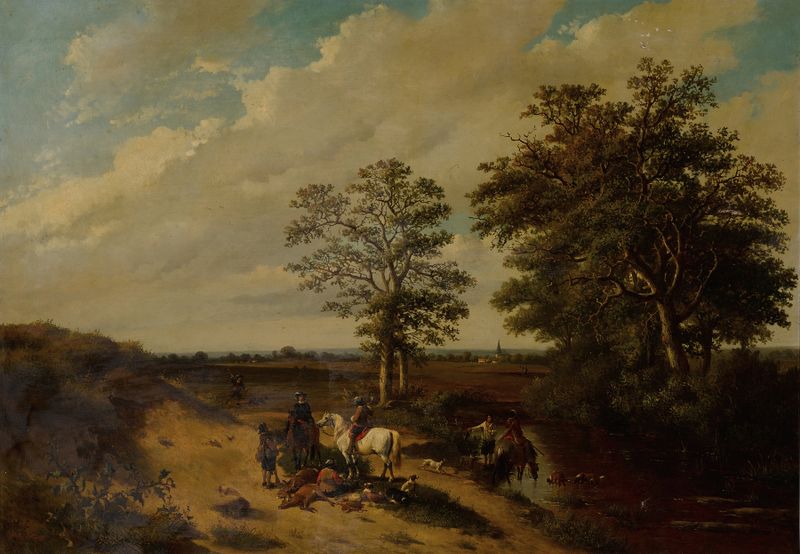
After the Hunt
Johann Bernhard Klombeck
Heimkehr vom Markt
Johann Bernhard Klombeck

Wooded landscape with peasant couple returning home
Johann Bernhard Klombeck

Waldlandschaft mit Teich
Johann Bernhard Klombeck

Landscape With Peasants Walking Near A River At Dusk
Johann Bernhard Klombeck
A winter landscape
Johann Bernhard Klombeck





