
After the Hunt — History & Facts
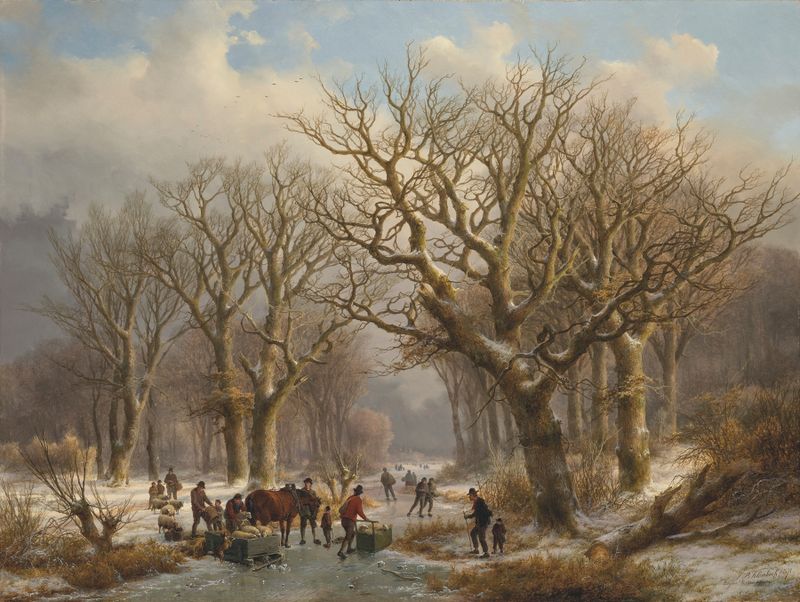
What if silence could speak through light? In the stillness of a moment caught between action and reflection, the weight of melancholy hangs like a soft mist. Look to the center of the canvas, where a solitary figure stands beside the remnants of the day’s hunt. Shade and light dance around him, the warmth of sunset casting long shadows across the ground. The muted colors evoke a sense of solemnity, with earthy browns and faded greens mirroring the fading light of dusk.
Notice how the painter captures the texture of the fur draped over the figure’s shoulder, a tactile reminder of both triumph and loss, urging the viewer to consider the price of victory. Hidden in the details, the intensity of emotion deepens—each droplet of blood on the ground contrasts sharply with the calm landscape, a quiet reminder of life and death intertwined. The distant trees stand resolute, silhouetted against the dimming sky, suggesting nature's indifference to human sorrow. This moment encapsulates a poignant reflection on the bittersweet nature of accomplishment, inviting a contemplation of the hunter's internal conflict. Created during an undetermined yet reflective moment in Klombeck’s career, this piece embodies the quiet tensions of a changing world.
The artist's exploration of the natural landscape coincided with the shifting sensibilities of 19th-century art, where the Romantic fascination with nature and the human condition grew increasingly intertwined. While specific details of its creation remain elusive, the work resonates with a depth that speaks to the universal experience of melancholy in the face of triumph.
More Artworks by Johann Bernhard Klombeck
Browse all →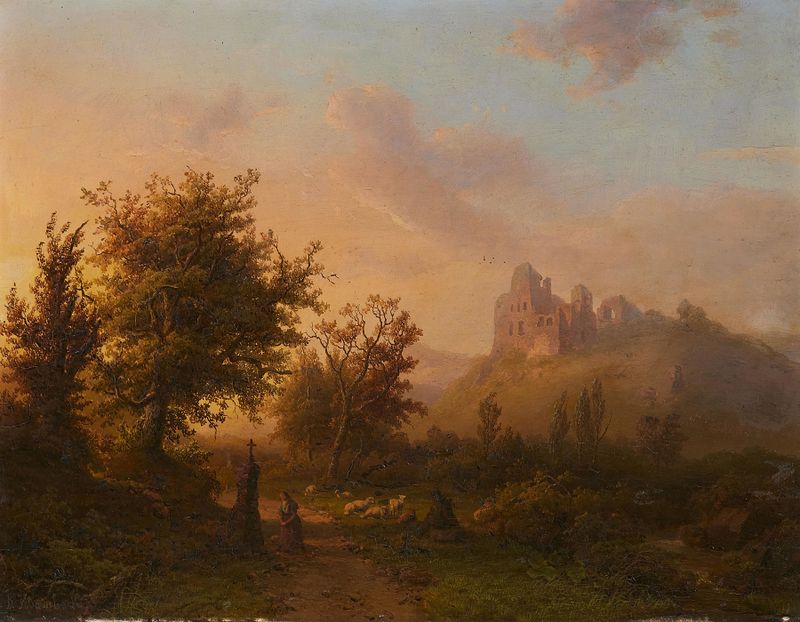
Landschaft mit Burgruine und einer Hirtin im Gebet
Johann Bernhard Klombeck
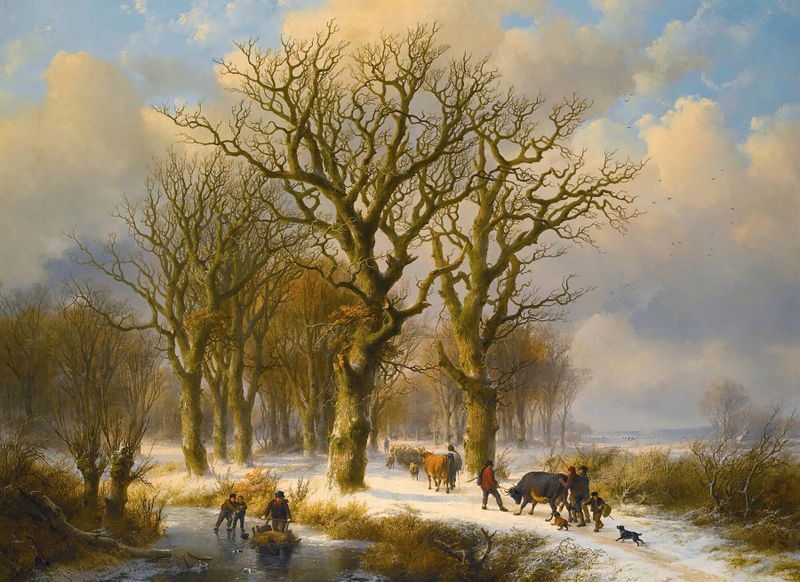
Winter Landscape With Cattle Drivers
Johann Bernhard Klombeck

Blick ins Rheintal
Johann Bernhard Klombeck

Winter Time
Johann Bernhard Klombeck
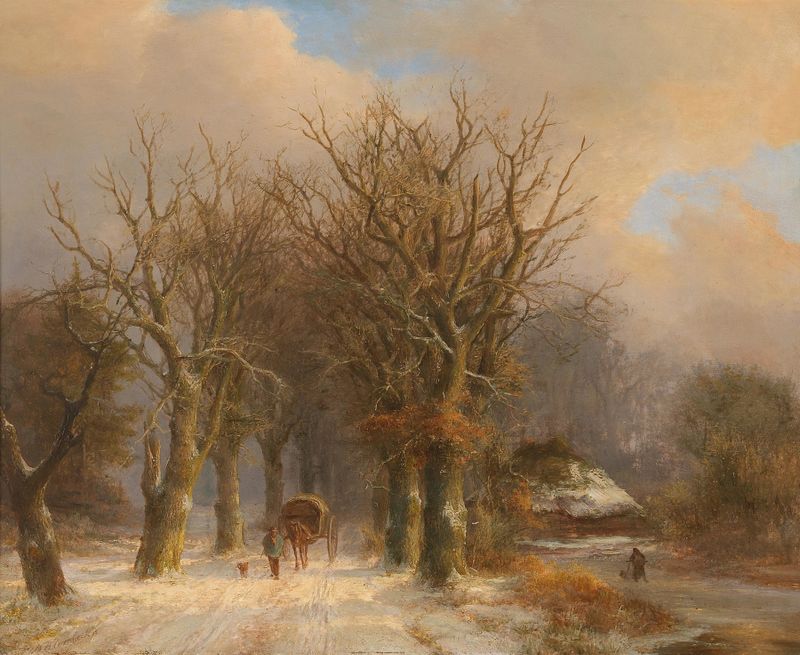
Winter Landscape with Horse and Cart
Johann Bernhard Klombeck
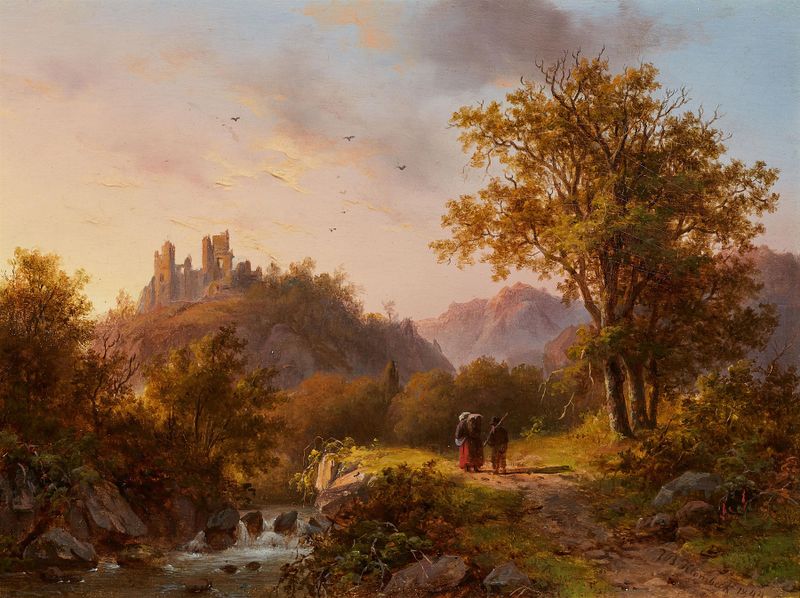
Heimkehr vom Markt
Johann Bernhard Klombeck

Wooded landscape with peasant couple returning home
Johann Bernhard Klombeck

Waldlandschaft mit Teich
Johann Bernhard Klombeck

Landscape With Peasants Walking Near A River At Dusk
Johann Bernhard Klombeck
A winter landscape
Johann Bernhard Klombeck





