
Winter Time — History & Facts
In the heart of winter, amidst swirling chaos, the artist captures a moment of unexpected serenity. To fully appreciate Winter Time, direct your gaze to the left, where the soft, muted colors conjure a snow-covered landscape that emanates tranquility despite the backdrop of tumult. Notice how the delicate brushstrokes depict the frosted trees, their branches heavy with snow, creating a contrast against the darker, more chaotic elements of the scene. The central figure, bundled warmly, stands contemplatively, with the light illuminating their face, encapsulating a moment of introspection amidst the surrounding chill. As you explore deeper, consider the contrast between the stillness of the figure and the restless snowflakes dancing in the air.
The chaos of the falling snow can be seen as a metaphor for the tumultuous emotions hidden beneath the surface of the serene scene. This juxtaposition serves to reflect the inner turmoil that often accompanies the beauty of nature, reminding us of the delicate balance between chaos and peace in both our surroundings and ourselves. Johann Bernhard Klombeck painted Winter Time in 1872, at a time when the art world was transitioning towards Impressionism. Living in the Netherlands, he was influenced by the changing landscapes around him, capturing the essence of winter in a manner that foregrounded mood over detail.
This period marked a shift in artistic expression, where personal emotion began to intertwine with the depiction of natural scenes, illustrating the complexities of human experience.
More Artworks by Johann Bernhard Klombeck
Browse all →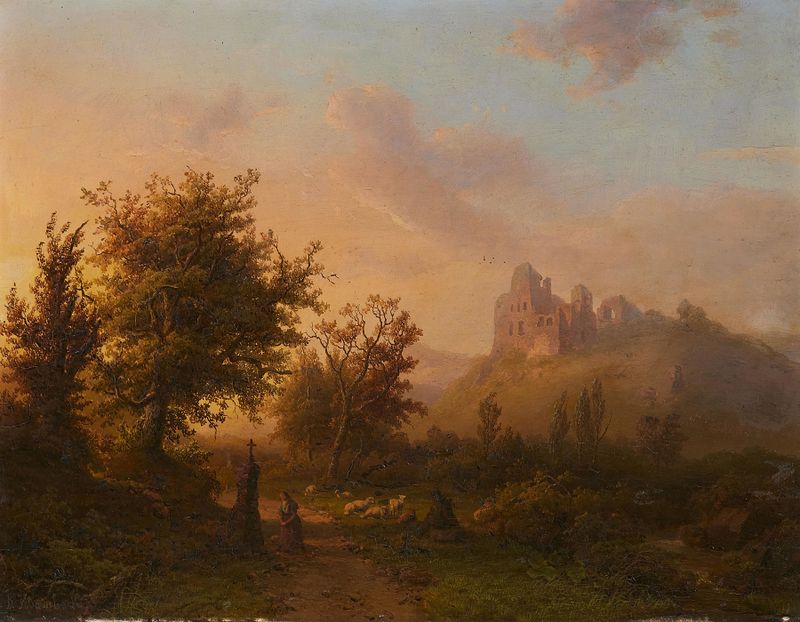
Landschaft mit Burgruine und einer Hirtin im Gebet
Johann Bernhard Klombeck
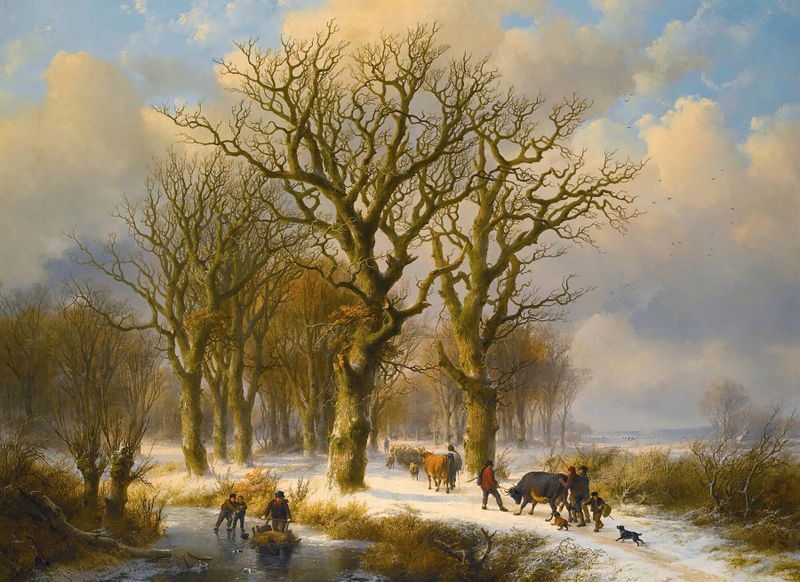
Winter Landscape With Cattle Drivers
Johann Bernhard Klombeck

Blick ins Rheintal
Johann Bernhard Klombeck
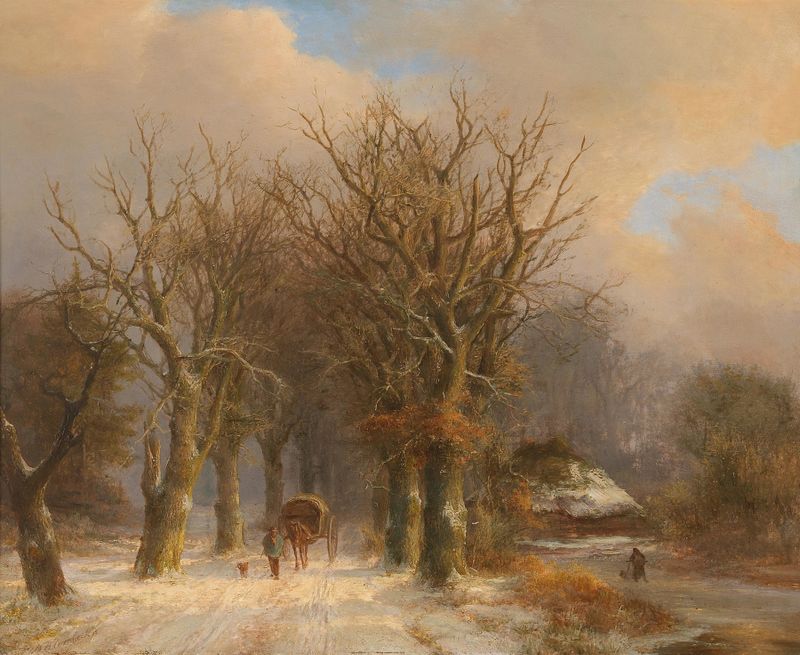
Winter Landscape with Horse and Cart
Johann Bernhard Klombeck
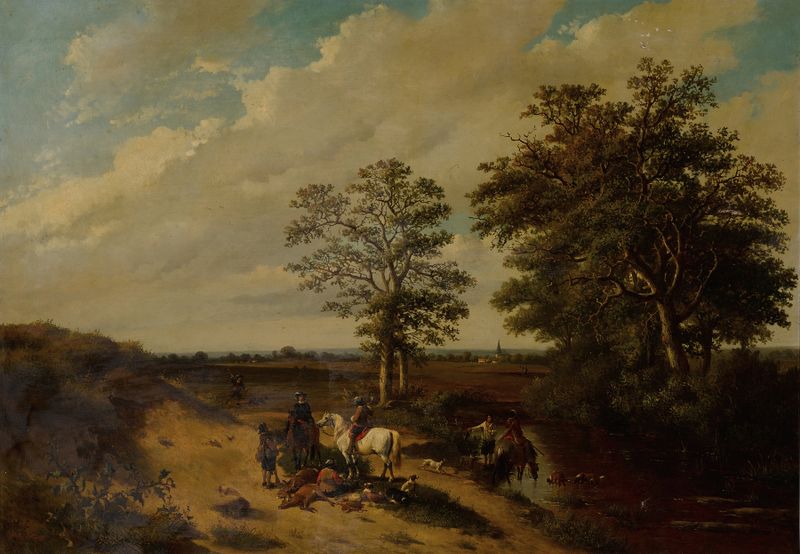
After the Hunt
Johann Bernhard Klombeck
Heimkehr vom Markt
Johann Bernhard Klombeck

Wooded landscape with peasant couple returning home
Johann Bernhard Klombeck

Waldlandschaft mit Teich
Johann Bernhard Klombeck

Landscape With Peasants Walking Near A River At Dusk
Johann Bernhard Klombeck
A winter landscape
Johann Bernhard Klombeck





