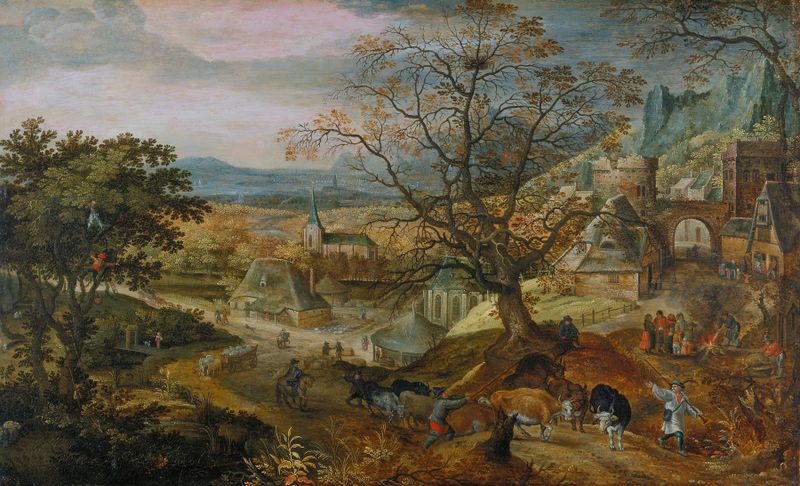
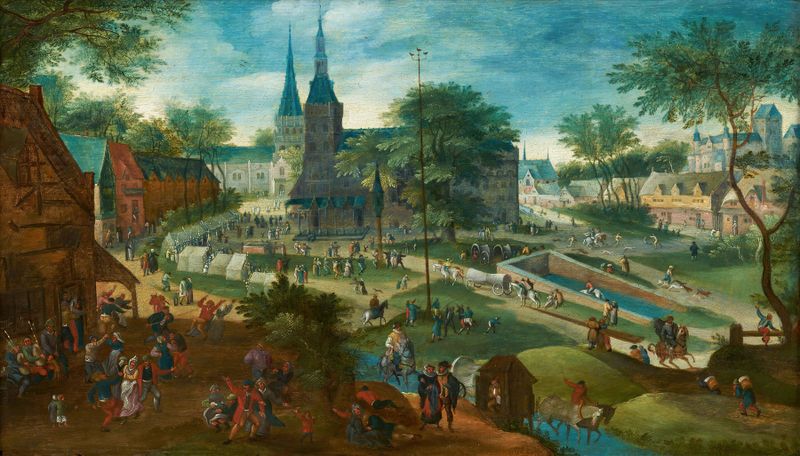
A winter landscape with peasants and cattle by a farmstead, with skaters on a frozen river beyond — History & Facts
Can paint confess what words never could? In the stillness of winter, amid the icy expanse, a quiet violence simmers beneath the serene surface of this frozen landscape. Look to the center, where the unforgiving cold envelops a cluster of peasants huddled together near the warmth of a modest farmstead. Each figure is carefully rendered, their breath visible against the crisp air. The palette—dominated by cold blues and muted earth tones—evokes a somber atmosphere, while sharp contrasts highlight the serenity of the skaters gliding effortlessly across the ice at a distance.
Notice the way the light plays upon the frozen surface, reflecting both the beauty and treachery of winter. Yet, hidden within this tranquil scene is a tension that speaks volumes. The juxtaposition of the hardworking peasants, possibly laboring under harsh conditions, against the carefree skaters hints at a divide—between the weight of survival and the fleeting joy of escape. The distant cattle, their forms shadowed by the chill, loom as a reminder of the responsibilities that tether the figures to the earth.
Here, nature's beauty intersects with the realities of human struggle, revealing the violence of life in a season that demands resilience. Jacob Savery the Elder painted this work during a time when landscapes were beginning to emerge as a prominent genre in the Northern Renaissance. Little is known about the exact date, but he was active in the late 16th century in the Netherlands, a period marked by social and economic changes. The serene yet complex themes in his work reflect the broader preoccupations of a society grappling with the harshness of nature and the human condition.