
A Wood-Line (Portrait Of Père Pidole) — History & Facts
In the delicate brushstrokes of the late 19th century, Émile Friant captures a profound illusion, challenging our perception of reality and the essence of human nature itself. Look to the left at the figure of Père Pidole, his gaze steady yet contemplative, inviting you into his world. The muted earth tones envelop him, while subtle highlights accentuate the contours of his aged face, invoking a sense of wisdom forged in the crucible of time. Notice how the background fades into an almost ethereal blur, grounding him in an embrace of natural harmony, yet setting his individuality apart as a focal point. This portrait encapsulates more than mere likeness; it reflects a deeper dialogue between presence and absence.
The juxtaposition of light and shadow on Père Pidole’s face speaks to the tension between his physical existence and the memories that have shaped him. Each brushstroke weaves the story of a life lived, an illusion of time suspended, where the viewer is drawn to ponder the unsaid narratives etched into his features. In 1885, when this work emerged from the artist’s studio in Nancy, Friant was at a pivotal moment in his career, rooted in the realism movement that sought to depict life honestly. The art world was transitioning towards Impressionism, yet he remained committed to portraying the subtleties of human emotion.
This creation reflects not only his personal artistic journey but also the changing tides of the broader artistic landscape of the time.
More Artworks by Émile Friant
Browse all →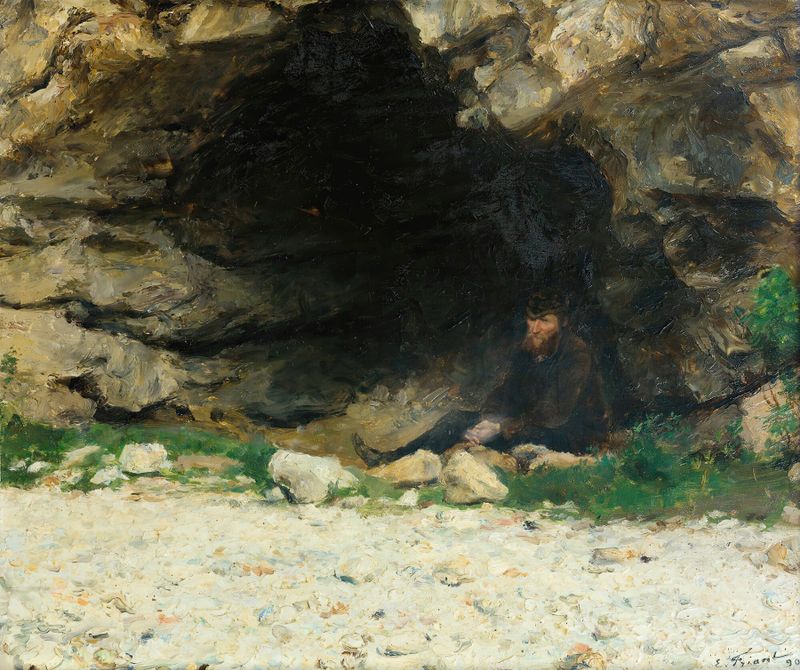


More Portrait Art
Browse all →
Las meninas
Diego Velázquez

Self-portrait with a Bandaged Ear and Pipe
Unidentified artist

Girl with a Pearl Earring
Johannes Vermeer

The Sampling Officials of the Amsterdam Drapers’ Guild, Known as ‘The Syndics’
Rembrandt van Rijn

The Hundred Guilder Print: the man seen on the back in the lower left corner
Rembrandt van Rijn

Portrait of Dr Gachet
Vincent van Gogh