Landscape Of The Suburbs Of Tunis — History & Facts
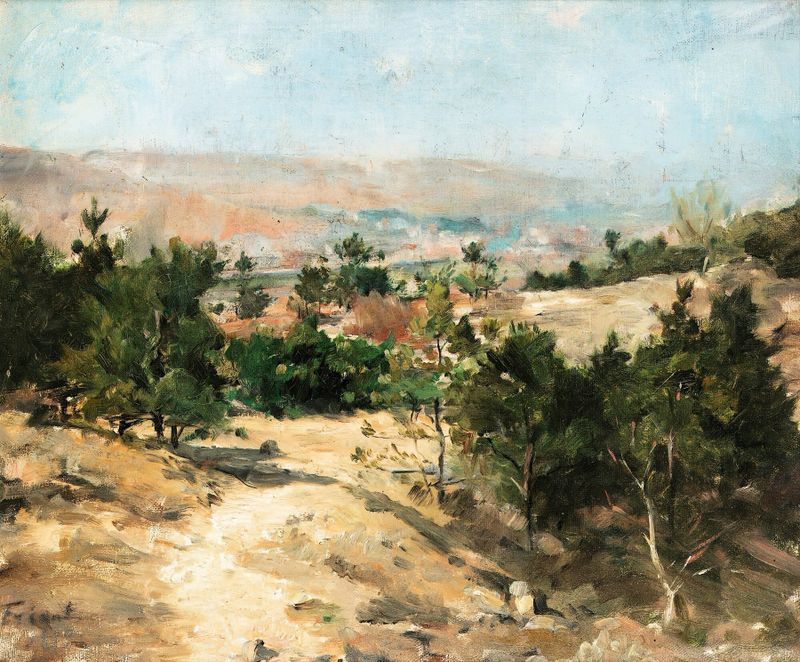
When did color learn to lie? The vibrancy of a landscape can conceal as much as it reveals, offering an invitation to venture beyond the surface. Look to the horizon where the soft hues of the sky blend seamlessly with the warm earth tones of the landscape. The brushstrokes create a sensation of movement, almost breathing life into the scene. Notice how the light dances across the fields, illuminating gentle rises and dips that lead the eye deeper into the composition.
The interplay between shadow and light draws attention to the delicate foliage, suggesting a whisper of life just beyond the frame. Yet, beneath this tranquil façade lies an undercurrent of tension. The sharpness of the foreground contrasts with the blurred outlines of distant hills, reflecting a world caught between clarity and ambiguity. The juxtaposition of stillness and motion speaks to the complexity of suburban life — a tranquil exterior masking the bustling energy of daily existence.
Each detail, from the intricate textures of the grass to the almost ghostly figures in the distance, invites contemplation of what lies beneath the surface. In 1887, Émile Friant painted this work during a period of significant change in France, as Impressionism was gaining prominence. He was exploring the evolving relationship between nature and urban life, reflecting a society grappling with modernization. This landscape mirrors his observations of suburban growth and the subtle beauty that emerges from the intersection of nature and human touch, capturing a moment in time that resonates with both peace and the inevitability of change.