Mount Vesuvius — History & Facts
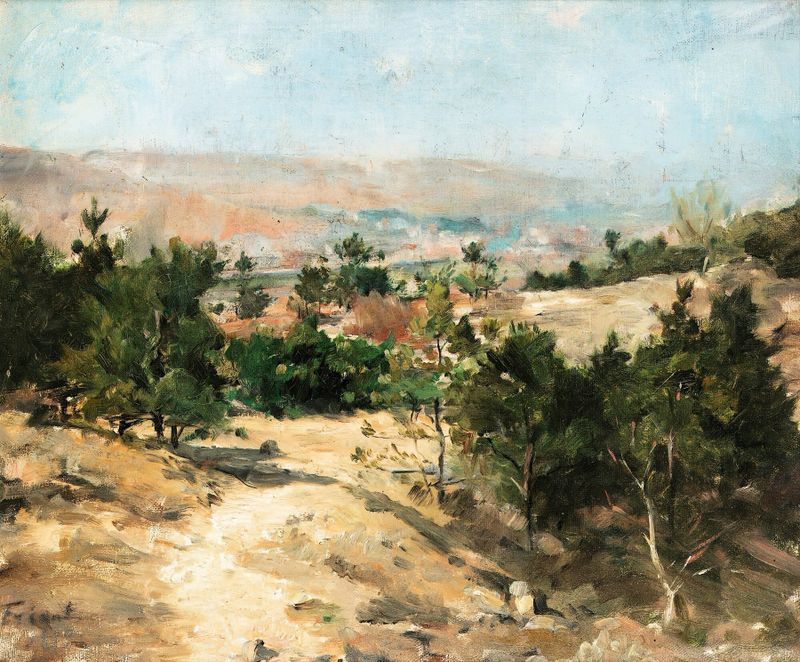
Can paint confess what words never could? In Mount Vesuvius, Émile Friant captures the deep yearning of the human spirit, inviting viewers to explore the complex interplay between nature's majesty and mankind's vulnerability. Look to the foreground where the verdant landscape unfurls, brimming with life yet dwarfed by the looming presence of the volcano. The vivid hues of green contrast starkly with the deep blues of the sky, creating a palpable tension. Notice how the clouds gather, swirling ominously around the mountain’s peak, suggesting an impending transformation, while the delicate brushstrokes evoke the textures of both flora and earth, uniting them in a moment caught between serenity and upheaval. Deeper meanings lie beneath the surface—here lies a duality of desire and fear.
The awe-inspiring beauty of Vesuvius serves as a reminder of both creation and destruction, reflecting humanity's eternal struggle with nature. Friant's deft use of light further amplifies this tension, illuminating the horizon with a golden glow that hints at hope, yet simultaneously casts shadows that forewarn of catastrophe. Painted in 1887, Mount Vesuvius emerged during a period of artistic exploration and innovation in France. Friant, inspired by the Romantic tradition and the emerging Impressionist movement, sought to evoke emotion through landscape, merging natural beauty with an undercurrent of existential introspection.
This work reflects not only his personal artistic journey but also a broader cultural engagement with nature's power and its influence on the human condition.