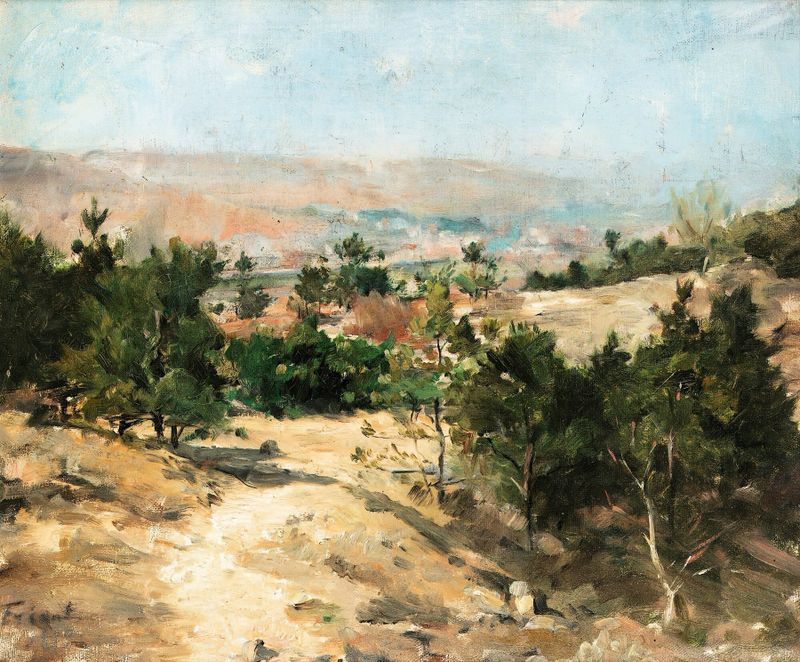
The Tramp — History & Facts
In The Tramp, a poignant interplay of faith and despair unfolds, inviting us to explore the deep connections between humanity and vulnerability. Look to the left at the figure of the weary traveler, his tattered clothing hinting at a life fraught with struggle. The artist's masterful brushwork captures the texture of his coat and the weary lines etched on his face, every detail evoking a sense of empathy. Notice how the soft, muted colors envelop him, contrasting starkly against the vibrant hues of the surrounding environment, emphasizing his isolation amidst a seemingly indifferent world. Within this composition lies a profound tension between hope and hopelessness.
The expression in the tramp’s eyes suggests a flicker of faith, an inner strength that defies his external circumstances. The juxtaposition of light and shadow reinforces this duality; while light spills gently across his form, it also casts darkened corners around him, representing the unseen struggles he endures. Each brushstroke not only captures the physical presence of the figure but also speaks to the universal plight of those marginalized in society. Émile Friant painted this work in 1890, during a time of considerable social upheaval and artistic transition in France.
As realism began to evolve into more expressive forms, he was focused on depicting the stark realities of life, influenced by the struggles of the lower classes. Seeking to elevate the everyday experiences of individuals often overlooked, Friant's work reflects both his dedication to social commentary and his growing belief in the transformative power of art.