Abbey Ruin — History & Facts
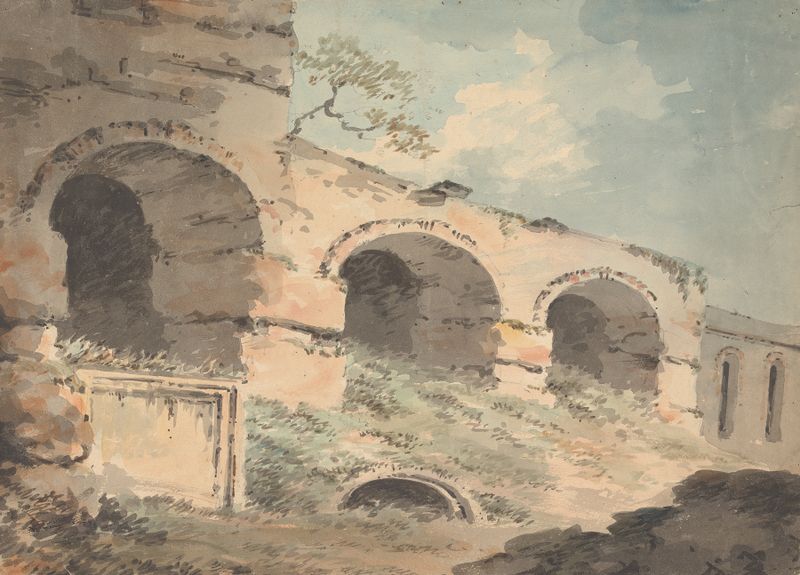
The ruins of a forgotten abbey stand silent against the backdrop of encroaching nature, whispering of lost histories and the passage of time. Melancholy permeates the air, inviting contemplation of what once was and what remains. Look to the left, where the crumbling stone walls of the abbey are bathed in soft, dappled light. The artist’s deft brushwork captures the interplay of shadow and illumination, lending life to the desolate structure.
Notice how the greens of moss and ivy weave through the stone, creating a tapestry of resilience amidst decay. The palette, composed of muted earth tones, evokes an atmosphere of nostalgia, drawing the viewer deeper into the emotional core of the piece. In the foreground, the juxtaposition of the vibrant foliage against the dilapidated stones speaks to the tension between nature's relentless progression and human fragility. Each blade of grass that pushes through the cracks seems to echo the hope of renewal, while the fading structure serves as a poignant reminder of impermanence.
This duality evokes a sense of melancholy, urging the viewer to reflect upon the transient beauty of existence and the inevitable cycle of life and decay. William Sawrey Gilpin painted this work during a time when the Romantic movement was flourishing in the early 19th century, a period marked by a fascination with nature and the sublime. While specific dates are unknown, Gilpin was deeply engaged with the landscape and ruins of England, often capturing the essence of both romanticism and melancholy. The push and pull between civilization and the relentless force of nature is encapsulated in this evocative portrayal, resonating with the artistic currents of his time.