Two Men on a Bridge — History & Facts
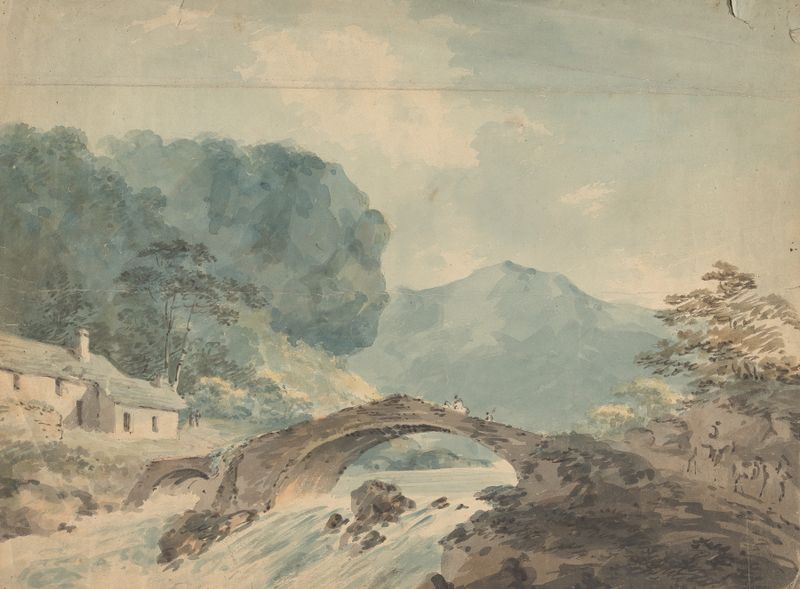
In the quiet allure of Two Men on a Bridge, the viewer is invited to transcend the ordinary, to glimpse a moment where humanity meets nature in delicate balance. Look to the left, where the figures of the two men stand poised against the slender arc of a bridge, their silhouettes softened by the muted hues of dawn. The palette, rich yet understated, evokes a sense of calm; earthy greens and gentle blues swirl together as the morning light kisses the surface of the water below. Note the subtle play of shadows, as the bridge's structure casts a delicate lattice upon the ground, guiding the eye towards the serene landscape that envelops them. The emotional tension lies in the interplay between the figures and their environment.
One man's posture suggests contemplation, while the other seems to be engaged in quiet conversation, hinting at a shared experience that transcends words. The bridge itself symbolizes connection, not only between land and water but also between the two men—each representing different facets of existence. This moment brims with the weight of unspoken thoughts, a rhapsody of solitude and companionship woven together effortlessly. William Sawrey Gilpin painted this work during a time of personal exploration and artistic development.
While the exact date remains uncertain, it reflects a period when he was deeply engaged with the nuances of landscape painting in England. The Romantic movement was gaining momentum, emphasizing emotion and individualism, which resonated with Gilpin's sensibility, providing a backdrop of cultural richness that infused his vision of nature and humanity.