
Ruin with Three Arches — History & Facts
In William Sawrey Gilpin's captivating Ruin with Three Arches, the artist invites us to ponder the transformative power of art amidst the remnants of a once-grand structure. Look to the foreground where crumbled stones and wild vegetation intertwine, creating a tapestry of decay and renewal. The three arches rise solemnly in the background, intricately painted with delicate strokes that suggest both strength and frailty. Notice how the soft light filters through the openings, casting ethereal shadows that dance across the debris, hinting at a forgotten history.
The harmonious palette of earthy tones intertwined with hints of verdant green conjures a sense of melancholy beauty, accentuating the transience of time. The interplay between the robust arches and the encroaching nature evokes a profound tension, symbolizing the struggle between human ambition and nature's inexorable reclaiming force. Each crack in the stone whispers stories of a vibrant past, urging us to confront the fragility of human constructs. Additionally, the lush greenery creeping through the ruins signifies hope and rebirth, suggesting that even in decay, there is potential for new life—a subtle nod to the revolutionary changes in both nature and society. Gilpin painted this piece amidst an era of romanticism in the late 18th century, where the sublime in nature and ruins was fervently explored.
During this period, he was deeply influenced by the picturesque ideals of landscape painting, which sought to capture not just the form but the emotional resonance of scenes. This work reflects his engagement with the natural world and the aesthetic shifts surrounding him, positioning him as a pivotal figure in the evolution of landscape art.
More Artworks by William Sawrey Gilpin
Browse all →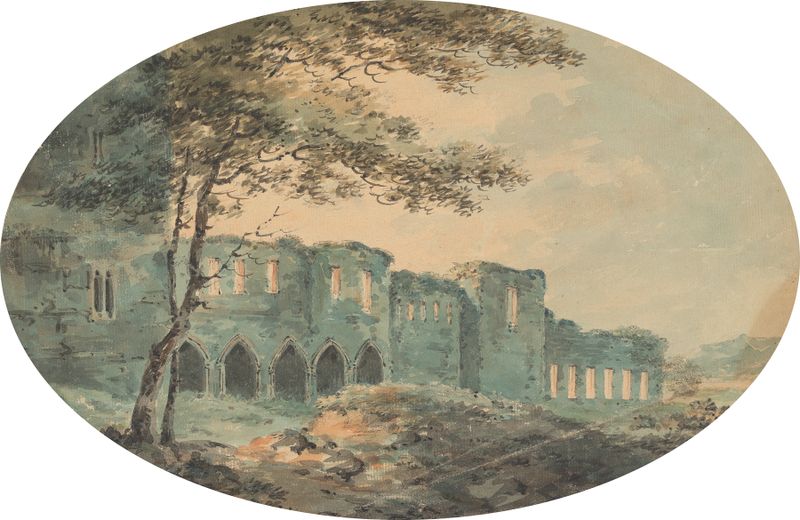


More Architecture Art
Browse all →
The statue of Liberty
Frédéric Auguste Bartholdi

View of Houses in Delft, Known as ‘The Little Street’
Johannes Vermeer

View of Houses in Delft, Known as ‘The Little Street’
Johannes Vermeer

The Cathedral in Rouen. The portal, Grey Weather
Claude Monet

The yellow house
Vincent van Gogh

The Church in Auvers-sur-Oise, View from the Chevet
Vincent van Gogh