Priory At Dover — History & Facts
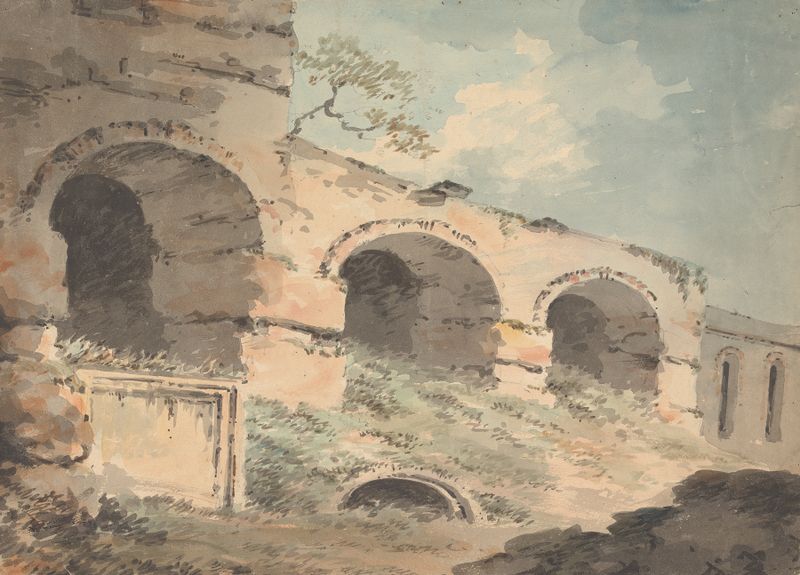
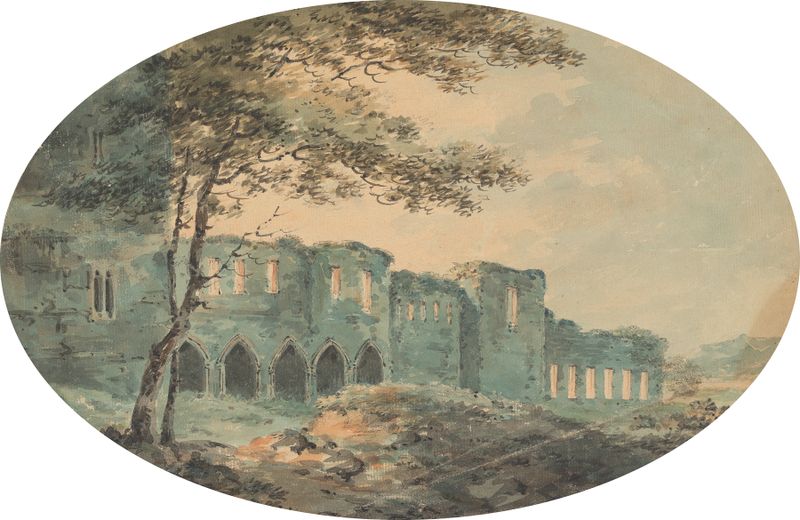
In the gentle slopes of the English countryside, a haunting stillness envelops the landscape, hinting at the turbulence beneath its surface. Look to the left at the small, crumbling priory, its weathered stones echoing centuries of whispered secrets. The muted greens and browns of the foreground draw your gaze, while the delicate interplay of light cascading over the scene creates a shimmering mirage of serenity. Notice how the clouds above, heavy and ominous, mirror the weight of history, suggesting both beauty and decay intertwined. In this seemingly tranquil setting lies a tension between permanence and impermanence.
The soft brush strokes evoke a sense of nostalgia for a time long past, while the looming shadows reflect the underlying uncertainty of change. The vibrant hues of dawn breaking in the distance hint at rebirth, yet the dilapidated structure speaks of loss, inviting the viewer to ponder the duality of history's beauty and its inevitable fragility. The artist painted this piece during a time when England was experiencing political and social upheaval—an era ripe with the ideas of revolution and transformation. While the exact date remains uncertain, Gilpin's work aligns with the Romantic movement, which sought to capture nature’s sublime beauty and the complexity of human experience.
Amidst this backdrop, he found inspiration in the quiet strength of the landscape, immortalizing both the glory and the scars of a changing world.