Abend am See — History & Facts
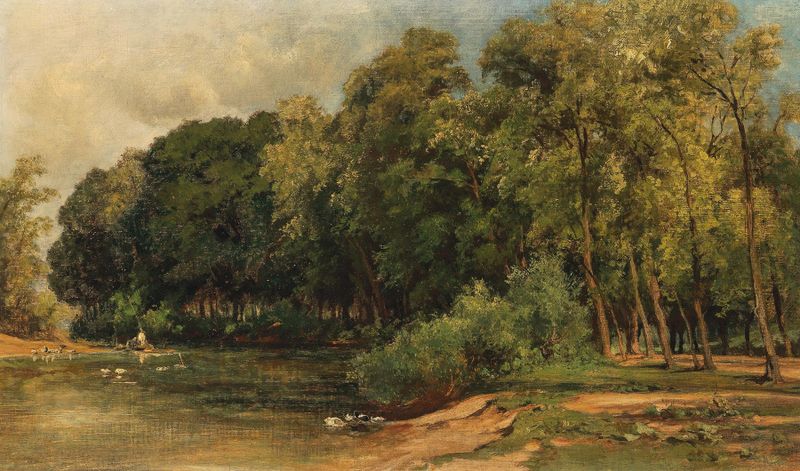
What if beauty was never meant to be finished? The delicate interplay of light and shadow in Abend am See invites viewers to ponder the ephemeral nature of existence itself. Look to the serene lake, its surface shimmering under the fading twilight. Notice how the soft blues and greens melt into deeper shadows at the edges, creating an inviting yet elusive atmosphere. The horizon blurs with hints of coral and gold, suggesting a day that is reluctant to end.
The gentle brushstrokes evoke a sense of tranquility, while the intricate details of the surrounding foliage draw the eye inward, prompting a quiet exploration of the scene’s depths. As dusk settles, the painting captures not just a moment, but the illusion of stillness—a fleeting respite from the chaos of life. The juxtaposition of vibrant colors against the more subdued landscape hints at an underlying tension between hope and melancholy. Here, beauty is both captivating and transient, urging us to reflect on our own experiences of longing and loss, a poignant reminder that perfection is often an illusion. Created in 1900, Abend am See reflects Albert Kappis's deep engagement with the Symbolist movement, which emphasized emotion over realism.
Working in Germany during a time of artistic experimentation, Kappis found himself inspired by the dualities of nature—light and darkness, joy and sorrow. This context influenced his choice of palette and composition, culminating in an artwork that resonates with viewers, inviting them to linger in its beauty while acknowledging its impermanence.