Heuernte in weiter Landschaft — History & Facts
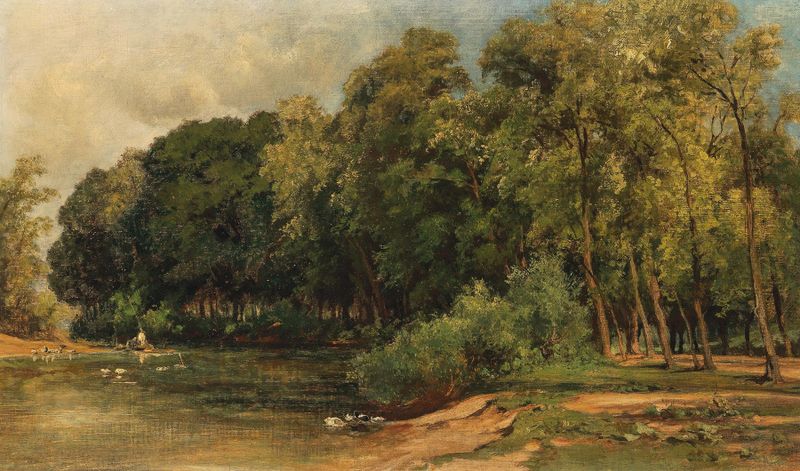
In a world bustling with chaos, the stillness of a moment can speak volumes, echoing the movement of life that surrounds it. Focus on the sweeping fields, where golden grasses dance gently under the caress of a soft breeze. The vibrant greens and rich earth tones guide your gaze across the landscape, inviting you to explore the tranquility held within these rolling hills. Notice how the light filters through the clouds, casting an ethereal glow over the laborers, their bodies engaged in the rhythmic labor of harvest.
Each brushstroke conveys not just color, but a palpable sense of motion, as if time itself has paused to witness their toil. Delve deeper into the scene and observe the contrast between the laborers’ intense focus and the serene nature that envelops them. The juxtaposition of human effort against the expansive landscape suggests a harmony between toil and tranquility, while the diagonal lines of the fields draw your eye toward the horizon, hinting at the promise of future harvests. It speaks to the unbroken connection between humanity and the earth, where each movement is both an act of survival and a celebration of life. The artist painted this work during a pivotal time in the early 20th century, likely reflecting personal and societal shifts.
While specific details about Kappis’s life remain sparse, this period saw a growing appreciation for rural themes in art, as artists sought to capture the essence of everyday life against a backdrop of industrialization. The landscape not only serves as a setting; it embodies the spirit of a world on the verge of transformation, where the enduring human connection to nature prevails amidst change.